

Why You Shouldn't Be Diving Into Homemade Ranch Immediately After Making It
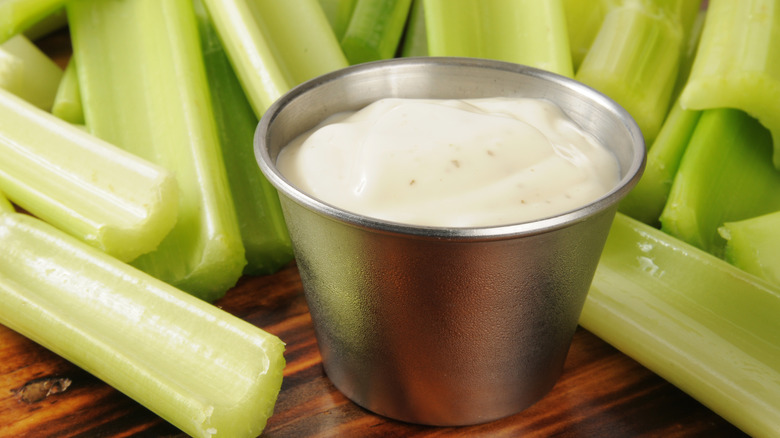
Ranch dressing is one of those ingredients that transcends its main function. While it's great on salads, we also dip veggies, french fries, chicken tenders, and chicken wings in it. It works great as a spread on sandwiches and wraps, and it even gives a flavor upgrade to tuna salad. And you can make it yourself at home with little effort and just a few ingredients. But smart cooks know better than to dig into their homemade ranch dressing as soon as it's made. They give it time. In other words, they know the importance of resting when it comes to ranch so the flavor and consistency comes out just right.
Ranch recipes generally consist of a mixture of sour cream and mayonnaise, a bit of milk or buttermilk, and a variety of seasonings. You can change it up in a number of ways, like adding a protein punch to your next batch of ranch dressing with cottage cheese, but the key to the flavor is the herbs and seasonings, which typically include salt, pepper, onion and garlic powders, along with dried herbs like parsley, dill, and chives. Dried herbs work best since they will last longer without spoiling. However, crispy dried herbs are counterintuitive to a creamy texture. Letting ranch rest will give the herbs time to soften in the wet ingredients, so you get the smooth consistency you're looking for.
While the ranch rests, it will thicken as it sits in the fridge, so don't worry if it's a bit thin once you're done mixing your ingredients. But what's more important is that during this resting phase, the ingredients will blend together so you get a complex, cohesive flavor, the kind you expect from a ranch dressing.
Resting is well-worth the time it takes

Whether you are making a simple ranch dressing or a luxurious rack of lamb, you need to understand the value of resting your food. It's actually a crucial step in cooking all sorts of foods. Trying to make a brisket without letting it rest after it cooks is a big mistake, since the meat needs the time for the juices to distribute evenly throughout the meat. This makes your meat more tender and flavorful. Without this step, your meat is likely to wind up dry and blah. But the question is, how long does resting need to work its magic?
In some cases, the longer you let things rest, the better the results, but in some cases, you don't want to rest too long. Meat, for example, needs to rest for at least a few minutes to let the muscles relax so the juice is evenly distributed, but if you let it rest for too long, it will become tough and dried out. For meat, you want to check on different recommended resting times for different cuts and sizes. But with homemade ranch dressing, you want to give it at least 30 minutes for the dried herbs to become tender if you don't have a whole lot of time to play with. But if you've got plenty of time to spare, you can give it two or so hours for the flavors to mingle and achieve maximum punch.