

The Exact Number Of Eggs You Need For A Traditional French Omelet
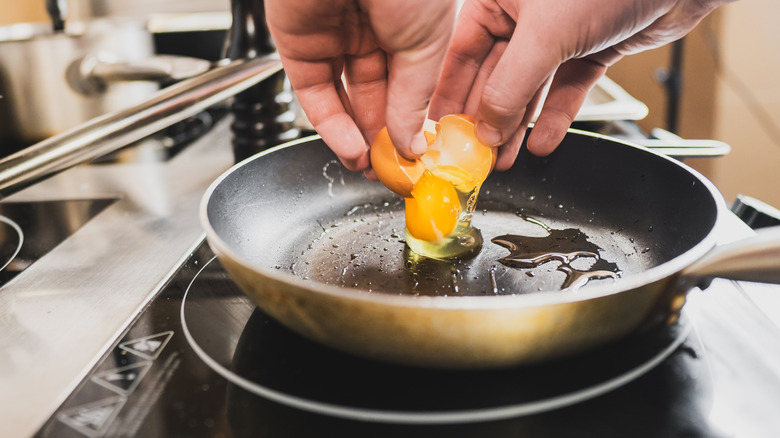
When it comes to cooking, the French definitely know what they are doing. Chefs around the world head to France year after year to study the craft. There, they learn to perfect the five classic mother sauces, delectable coq au vin, and buttery croissants. They also work to master the traditional French omelet, a challenge many home cooks find intimidating. There are plenty of questions: What technique is best? Do you roll it or fold it? Should you add any other ingredient other than eggs? While those are valid concerns, none matter until you nail down the basic issue at hand: Exactly how many eggs make the perfect omelet?
At many restaurants, a standard order is a three-egg omelet with a variety of add-ins such as cheese, vegetables, and breakfast meats. This formula isn't surprising, since a traditional French omelet also starts with three eggs, seasoned with salt and pepper, and beaten until fully blended. It is one of the most basic things a chef must master. When cooked correctly, it delivers simple perfection, suitable for any meal of the day.
But should you find yourself short an egg, you don't have to rush to the store before breakfast. You can still make a beautiful omelet with just two eggs, though you may need to bulk it up by adding some vegetables such as spinach, zucchini, or mushrooms. Doing so not only gives you more omelet to work with but also help you keep your calories down without compromising on flavor.
Build on the basics
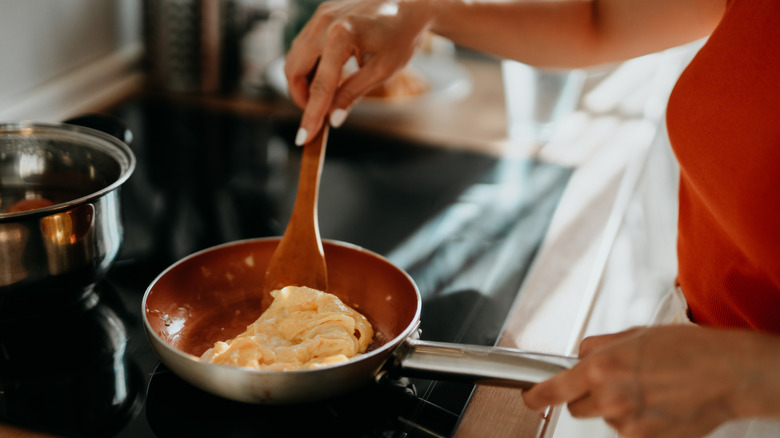
Some chefs like to take some liberties when making omelets and pull it off, but usually only after mastering the traditional techniques needed for a flawless version. Take chef José Andrés, for example. The two-Michelin-starred chef has perfected making the creamiest omelets in the microwave. However, for those of us who don't have any coveted Michelin stars under our belts, all hope is not lost. Cut yourself some slack and enjoy the trial-and-error creations that come with learning how to make an omelet the right way.
Once you've nailed the number of eggs and the basic seasonings — salt and pepper — it's time to practice. Begin with a hot pan, add some fat (either butter or oil), then pour in your eggs and stir. Play with heat and timing so the underside is set, and the top is softly scrambled. When you fold it over, the outside should be firm while the inside stays creamy. From there, you are free to decide whether to stick to the traditional formula of a plain omelet that showcases the flavor and texture of the eggs, or veer off on your own and build on the French technique by adding ingredients to create a unique flavor profile.