

What It Means When You Spot A Strawberry With Yellow Flowers
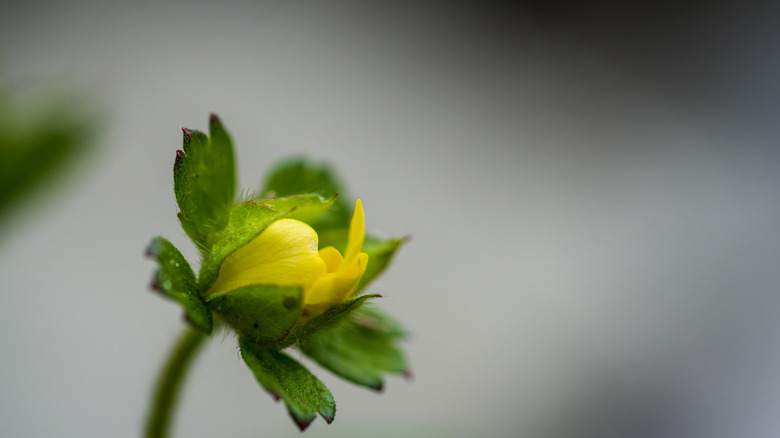
Stumbling upon a clutch of berries growing wild and free is certainly a sight to see. A burst of bright colors in a thicket can signal something majorly delicious. Take, for example, the strawberry: small, tangy, tasty, and the perfect pairing for a super springy matcha latte. You can find them growing wild, accompanied by a spray of white flowers. But what if you spot a batch of strawberries with yellow, rather than white, petals? We hate to burst your bubble, but strawberries with yellow flowers are no strawberries at all — they're a garden variety mimic. Mock strawberries, also known as Potentilla indica, are low-lying plants native to eastern and southern Asia that can also be found in cultivated areas across the United States.
They look similar to actual strawberries but have some key differences. For one, mock strawberries have the signature yellow, rather than the white or pink blossoms of true strawberries. Both plants produce small, red berries. However, the surface of a true strawberry is smoother in texture, with small seeds (or, rather, fruits that have the appearance of seeds) on the outside. Mock strawberries, on the other hand, have a notably bumpier surface. Luckily, mock strawberries aren't poisonous, so don't worry if you picked a handful hoping for a treat. Still, you might want to toss them rather than eat them, as they're often bland, dry, and unappealing. So maybe skip these beguiling berries next time you see them.
How to deal (with mock strawberries)
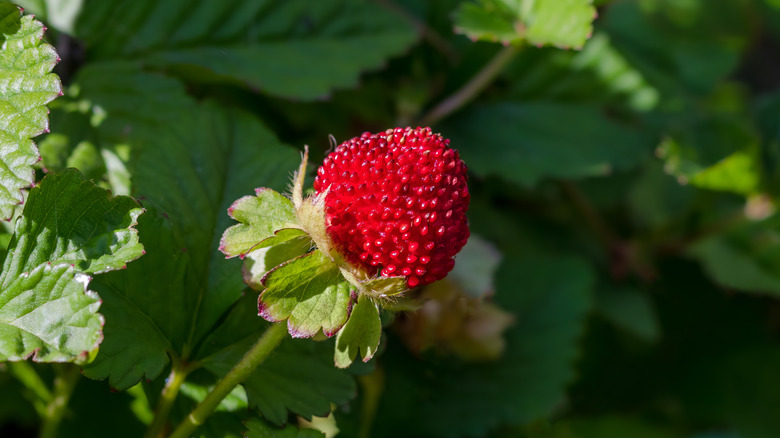
So what, then, should you do if you spot mock strawberries growing wild near your garden? While mock strawberries aren't particularly dangerous to humans, they might spell disaster for your other plants. The species is incredibly hearty and has the potential to overtake other crops, displacing or smothering them completely. For this reason, you might want to go ahead and remove mock strawberries if you find them.
It's also worth noting that in many parts of the United States, mock strawberries are considered to invasive. Because aren't native to the American ecosystem, they may pose a risk to native flora due to its opportunistic nature. Some states, such as Minnesota, encourage residents to report their presence. Be sure to check out your state's guidance on how to deal with the false-bud.
The presence of such a beguiling fruit as the mock strawberry might also serve as a lesson to any amateur foragers. Be careful to ensure that the berry you're picking is the one you're actually after. After all, while wild blueberries may taste sweeter than the kind found on farms, the similarly hued pokeberry is incredibly poisonous. And though muscadines are great for a home-brewed batch of scuppernong wine, be sure you're not plucking a common moonseed — unless you're planning on taking a trip to the emergency room.