

Only This Part Of Lemongrass Is Actually Edible
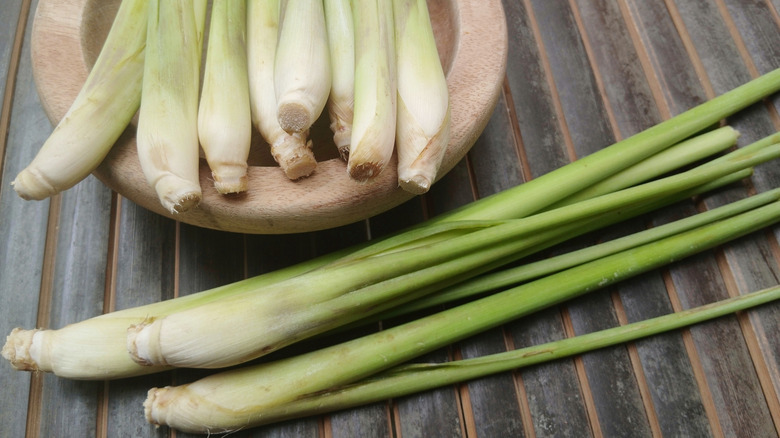
Lemongrass is a core component of Southeast Asian cuisine that adds depths of fragrant flavors to a range of dishes from warming soups to comforting curries and beyond. The blend of citrusy and fresh floral notes makes this stalky herb a celebrated ingredient in cuisines like Thai, Vietnamese, Malaysian, and Sri Lankan. Lemongrass's herbaceousness complements the spices and seasonings that distinguish each regional cuisine, alluding to its versatility that transcends global borders.
For those passionate about low- or zero-waste cooking, lemongrass is fantastic, as nearly every part of the herb can be put to use. However, only the bottom third of the stem, which is encased in the fibrous layers of the stalk, is actually edible. The edible section is paler and more tender than the rest of the plant and can be discovered by peeling away some of the tougher layers. This portion can be ground up with a mortar and pestle, finely minced, or processed into a smooth paste in a food processor. Even the edible pieces of the lemongrass stem add a stringy texture that can be off-putting, especially when they get stuck between your teeth, but there are a few precautions you can take to ensure a good result.
Unique ways to use lemongrass in cooking
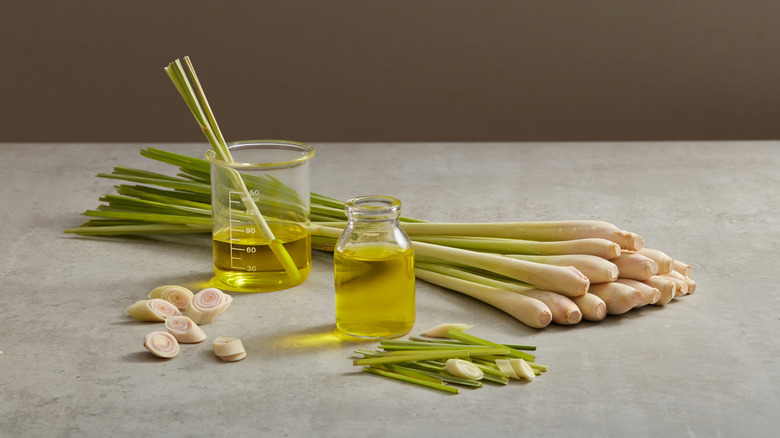
When cooking with lemongrass, keep in mind a few important factors to ensure a hassle-free prep for the edible portion of the plant. Make sure to aim for very delicate slices or dices or a ground paste for easier eating. To extract maximum flavor from stalks of lemongrass, look no further than the satisfying technique of smashing the stalks with a mallet or the flat end of a heavy knife (with caution, of course).
Once you've used up the tender, edible stem, don't toss out those tougher stalks just yet. The part of the stalk that remains can be used to infuse flavor to broths and soups like a fusion Panang curry and tomato bisque, or an aromatic Thai-inspired pumpkin and coconut soup. They can be used to make herbal tea by simmering the stalks and leaves in water with other aromatics and herbs like ginger and mint for a soothing brew that can be savored both hot and iced. Cocktail connoisseurs can explore ways to brighten up innovative drinks with lemongrass, by making a flavored simple syrup. Try using the sturdy part of the lemongrass stalks as skewers for your outdoor grilling, so each bite becomes infused with a subtle lemony essence.
You can also make lemongrass oil by blending the coarse pieces of the stalks and aromatic leaves with a neutral oil such as sunflower oil, heating the mixture, and straining the oil out. This fragrant oil can be used to boost the flavors of your Southeast Asian-inspired meals.