

Your Guide To The Different Types Of Cooktops, And How To Choose Which One Is Best For Your Kitchen

The kitchen is truly the center of every home, whether you spend a lot of time in it or not. After all, the ability to transform raw food into cooked food is an important part of survival — and your stove plays a big part in that. Soups, stews, sautés, and more are all made possible with a stove, and the last thing you want to do is to buy a large and expensive appliance that doesn't fit your space or your needs. Whether you're renovating your current kitchen or taking stock of the kitchen of a potential new home, your mind may be boggled by the differences between different cooktops. Is it worth springing for an induction cooktop? Which type of stove will drain your energy bill the least? And is a gas stove really that much better than electric?
In order to answer these questions (and more), we sought some help from the professionals: Bar Zakheim, CEO of Better Place Design & Build in San Diego, and Thomas Borcherding, owner and lead designer of St. Louis-based Homestar Design Remodel. They shared some of their insights about the different types of cooktops and what all homeowners should consider when deciding which type to install in their kitchen.
Induction cooktops
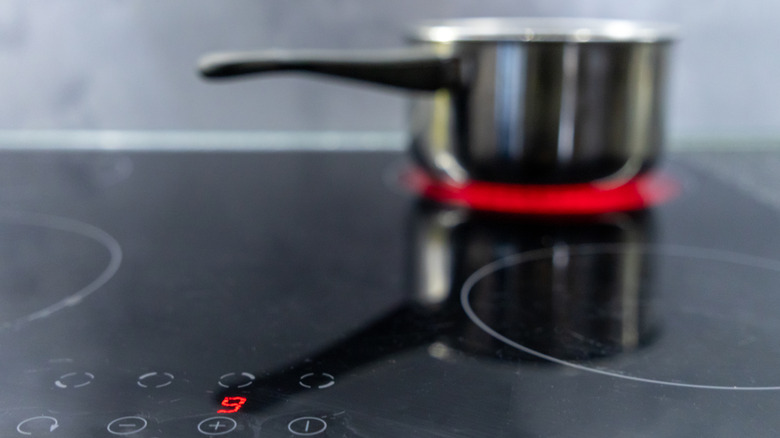
You may have noticed that more and more homes nowadays are featuring induction cooktops — particularly newer ones. While electric stovetops are seemingly a thing of the past, induction is paving the way to the future. Thomas Borcherding, owner and lead designer of Homestar Design Remodel, is partial to induction cooktops. He explained that these cooktops work by heating the cookware directly using electromagnetic energy, which differs from normal electric stovetops, as those rely on heating elements. The result? A way more efficient appliance. "Most models convert around 90% of their energy into usable heat," Borcherding said. Another perk is this modern cooktop's safety feature: Since it heats the cookware directly, it's cooler to the touch, making it a better option for forgetful cooks or kitchens occupied by families with young children. Bar Zakheim, CEO of Better Place Design and Build, also listed more precise temperature control as a benefit over a standard electric stovetop.
However, induction cooktops come with two major drawbacks. Both of our experts noted that not all types of cookware work on an induction burner. While stainless steel or cast iron can be used on an induction stovetop so long as it's protected, copper or aluminum pans won't work. So, you'll want to take a look at your copper cookware collection to decide if you'd want to replace the entire set just to have an induction stovetop. Borcherding explained that induction stovetops can also have a higher initial investment, meaning they may not be ideal for folks renovating their kitchen on a small budget. "Still, for homeowners who prioritize speed, safety, and sustainability, induction offers an excellent long-term value," he said.
Gas cooktops

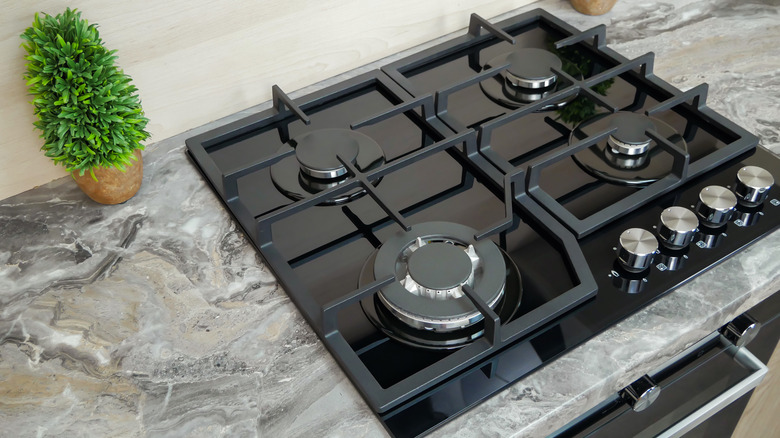
Gas stove snobs, raise your hands. There's a mantra out there that once you cook on a gas stovetop, you can't go back — and we'll give some credence to that. Bar Zakheim explained that two of the perks of cooking on a gas stove are that it heats up very quickly and allows for more precise temperature control. He also explained that gas stoves are very energy efficient, and as long as you have a gas line installed in your kitchen, it can be relatively cheap to put a gas stove in. However, it's the gas line component that can make installing this type of stovetop tricky. Thomas Borcherding explained that some houses and even some communities don't have access to a gas line, which makes putting in a gas stove impossible or, at least, even more difficult.
Another reason why people may not want to install a gas stove in their home is due to concerns over air quality. "Gas burners emit small amounts of carbon monoxide and fine particles," Borcherding said. "For this reason, many municipalities have begun to phase out gas." One study published in the International Journal of Environmental Research and Public Health in 2023 indicated a link between gas stoves and the development of asthma in children. The likely reason for this is due to the stove's nitrogen dioxide emissions, though more research will need to be completed to strengthen the relationship between the two. Research from the National Library of Medicine also suggests that gas stoves leak methane even when they are shut off, which may not only contribute to climate change (seeing as methane is a heat-trapping greenhouse gas), but it may also worsen air quality.
Coil electric cooktops
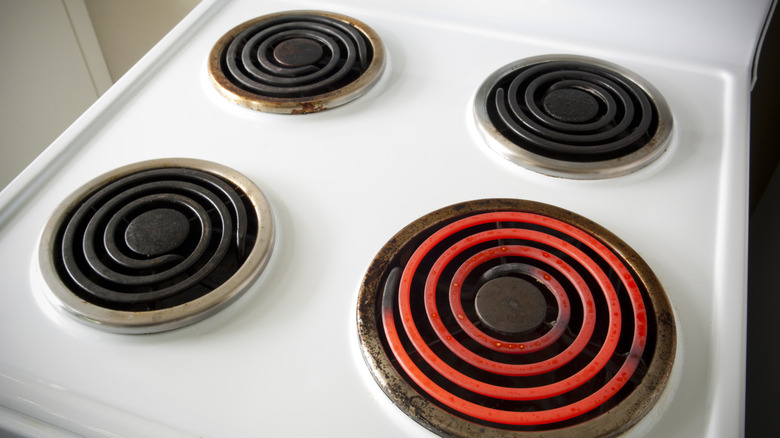
If you grew up in an older model home, chances are you've seen (and used) one of these coil-topped electric stoves before. These models work by passing an electric current through a metal coil, which heats it up. There are some benefits to these types of stovetops, especially if you're shopping on a budget. "Coil models, while increasingly dated in appearance, are budget-friendly and easy to replace," said Thomas Borcherding. Bar Zakheim agrees, calling them a "budget-friendly option." "They're the cheapest to buy up front, they work with any kind of pan, and they're simple to install," Zakheim said. They've likely been around for so long because they're so durable; you won't have to worry about scratching their surface like you would an induction or flat-topped electric cooktop.
However, coil electric stoves come with more drawbacks than just their vintage appearance. Coil burners tend to heat up relatively quickly, which can come in handy if you're trying to get dinner on the table faster. But, because they're made with coils, they don't cool down as fast as other options. This can not only delay your cleaning time, but it can also pose a safety risk to children because they stay hotter for longer. The coils themselves are also not a breeze to clean. While you can simply wipe down a smooth-top electric or induction stovetop, removing the coils and cleaning underneath them can be a pain. Their performance may also not be ideal. "They're not as precise or responsive as induction or gas stoves, so culinary types don't like them," said Zakheim.
Smooth-top electric cooktops
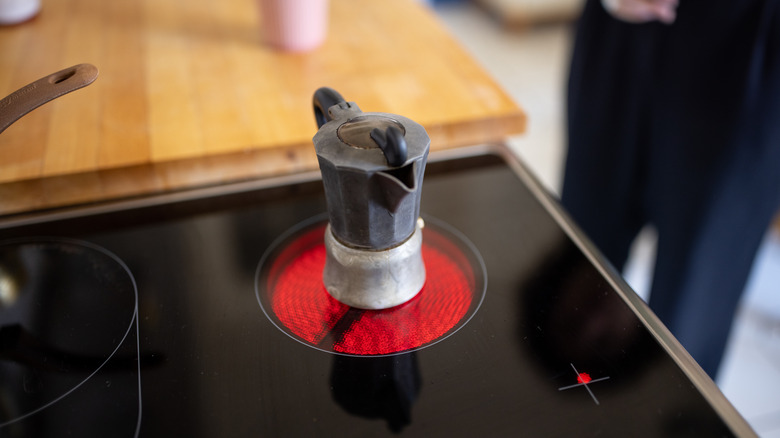
If you want a stovetop that's a little more modern but don't want to abandon the affordability and ease of use of an electric cooktop, you may want to opt for a smooth-, flat-, or glass-topped model over a coil one. While they look a lot like induction cooktops, they are heated by a different mechanism. The coils sit underneath a ceramic surface, meaning they provide heat to the bottom of your pans more evenly than coils do. However, this comes at a cost; the flat-topped models can take longer to heat up than the coil ones because they are less efficient. In terms of the ease of cleaning, though, flat-tops take the cake. Once you're finished operating the stove and it has cooled down, just give it a wipe down, and you'll be all set — no need to worry about detaching and reattaching the coils.
There are also some aesthetic benefits to these types of electric stoves that may give them a leg up on coils for you. "Smooth-top electric cooktops offer a sleek, low-profile look that fits into almost any kitchen design and are relatively easy to clean, although care must be taken to avoid scratching the glass," said Thomas Borcherding. That said, if you plan on cooking with heavy cast iron or a ceramic Dutch oven, you may want to look at a more durable option.
Downdraft cooktops
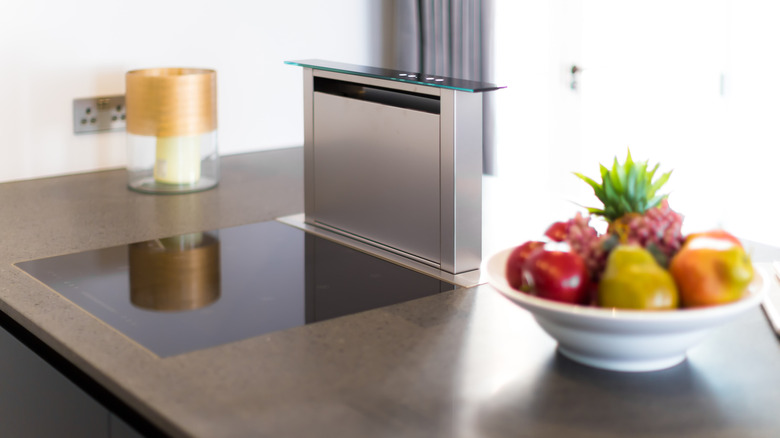
Downdraft cooktops look like something out of the future, and that's kind of because they are. "Downdraft cooktops combine cooking and ventilation in a single appliance, using a built-in exhaust system to pull smoke and odors downward rather than relying on an overhead range hood," said Thomas Borcherding. The system can either vent grease, steam, and smoke outside via ductwork or into a system that filters and recirculates the air back into your space. He explains that these types of cooktops are quite useful in open-concept kitchens or islands where installing a large hood may not be practical. The other nice thing is that these systems can be installed for both ranges (combined cooktop and oven units) or just cooktops so that you can find a model and a style that works for your space.
However, this almost-sci-fi technology comes with a steep cost and a more extensive installation. As expected, the upkeep and maintenance on downdraft cooktops can also come at a price, seeing as they can jam or break easily if they're not cared for properly. They're also not as common as other types of cooktops or traditional range hoods, which can further drive up the initial cost and long-term upkeep fees.
Commercial-style cooktops
If you're looking to bring the restaurant into your home, you may want to invest in a commercial-style cooktop. "These units typically feature oversized knobs, heavy-duty grates, and high-BTU burners that can handle anything from boiling pasta water in seconds to searing meats with precision," said Thomas Borcherding. If you want to live out your "The Bear" fantasy or churn out restaurant-grade meals every day, these functions might pique your interest. However, if you're after affordability (and as much as we hate to say it, overall practicality), this might not be the best type of cooktop to go for.
Borcherding shared that bigger everything — knobs, flames, and heat — results in a bigger upfront cost. While they can create what he calls a "striking visual focal point" in your kitchen, not every space is suitable for one. "Installation often requires professional help, especially if ventilation or gas upgrades are needed, and the size of these units can overwhelm smaller kitchens," he said. Depending on the size of your burners, you may also need to purchase a ventilation system that can accommodate the fumes, further racking up the cost of your installation.
Important considerations to make when selecting a cooktop

Our experts shared a lot of insights about what makes each of these cooktops different, but the decision as to which one is best for your kitchen depends a lot on, well, your kitchen itself. The first thing you might want to look at is the space and functionality you already have. For example, if you have a gas line already installed, it may make sense to go with it over an electric or induction cooktop. You might also want to consider the ventilation required to operate that type of stove, which could put the kibosh on your commercial-style cooktop dreams.
Then, it comes down to personal preference. If you like to have a little more temperature control over your cooktop and would prefer it to heat up fast, an induction or gas stove is going to be your best bet. Naturally, this will also tie back into your budget; are you willing to pay more for a more precise stovetop, or can you settle for something a little less high-end, even if it means a less efficient model? When in doubt, consult the experts, including kitchen design pros, appliance retailers, and the like, to help you decide which type of cooktop is best for you and your kitchen.