

You've Been Cutting Salmon All Wrong: How To Portion For Perfection
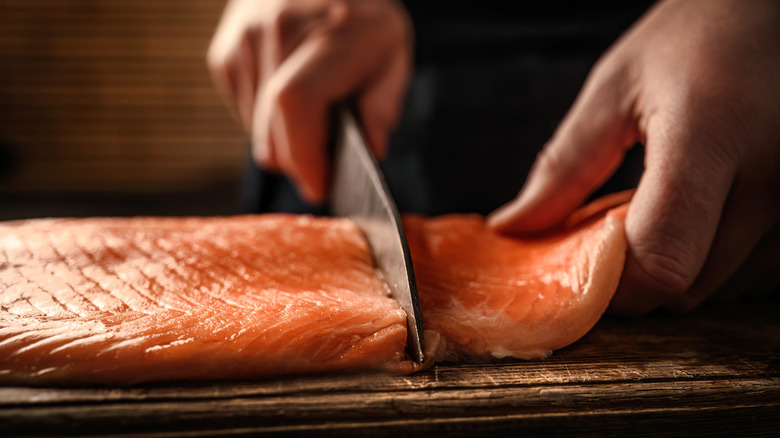
When you come home from the grocery store with a major piece of salmon on your hands, the idea of cutting it into portions can be overwhelming. While there's certainly nothing wrong with grilling or oven-roasting an entire salmon fillet, you may find that it makes more sense to slice it up and freeze or refrigerate some pieces so you and your family can enjoy them later. Thankfully, it's not so tough to figure out how to perfectly portion a serious slab of Atlantic, king, sockeye, or other type of fresh salmon.
Whether you go with farmed or wild salmon, the portioning process is the same. The key to portioning your salmon is to aim for similar weights — not necessarily pieces that look physically similar. This means that the thinner areas of your salmon will likely be sliced into longer strips, while the thicker areas of your salmon will likely be sliced into squares. A food scale can help you get the hang of portioning out salmon correctly — you'll want to aim for 5 to 6-ounce portions.
Storing fresh salmon so it holds up over time
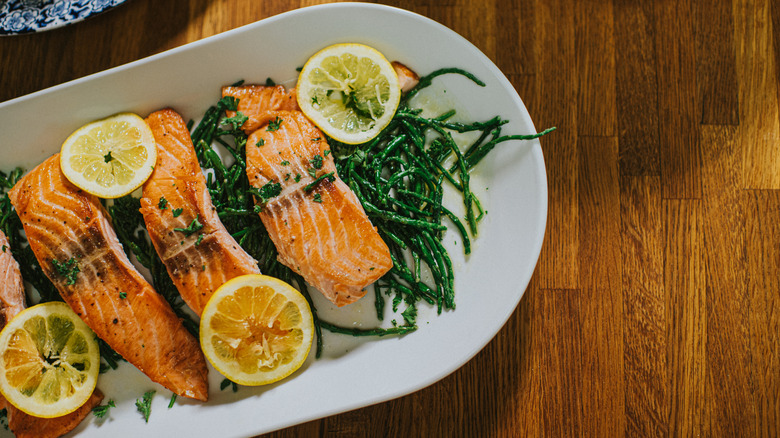
Once you've cut your salmon into perfect portions, it's time to store it so that it stays fresh until you're ready to enjoy. If you're not grilling, broiling, or pan-searing your salmon right away, you'll want to pop it into the fridge or freezer. Generally, salmon stays good for one or two days in the fridge, so this is a good option if you're planning to use your salmon relatively soon. If it's going to be a while before you put your freshly cut fillets to good use, you'll want to put your salmon in the freezer instead, where it will last for up to three months.
Bonus: no matter how you store salmon, you can add lemons, garlic butter, or other flavors that will infuse into the protein while it's stored (try storing your salmon in a garlic honey sauce for a sweet and savory taste).
To prepare salmon for storage in the fridge or freezer, rinse it, then pat it dry with paper towels. Add any sauces, seasonings, or citrus fruits that you'd like to include. After that, wrap it tightly in plastic wrap (or use a food sealer), then wrap it in foil. Don't forget to write the date on the salmon so that you remember to use it in time.