

The Easiest Way To Pit Your Olives Without An Olive Pitter
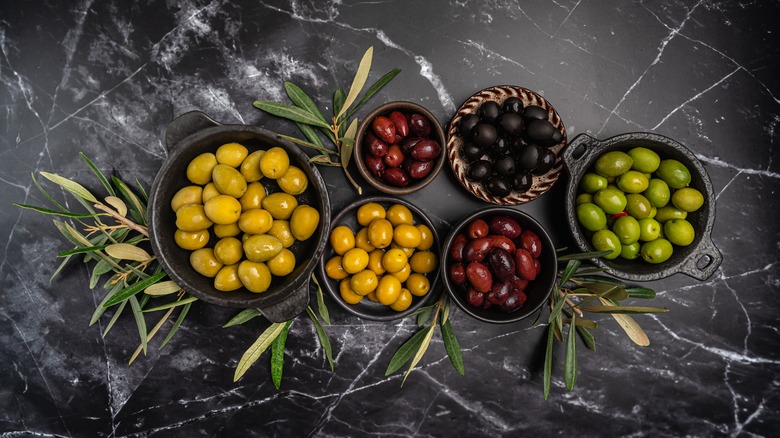
From salads to pasta, from pizzas to wraps, olives add a bold, briny flavor to your dishes that might not be for everyone, but it's safe to say that the olive family has a committed fan base. Though fresh olives are inedible as they are overly bitter and unpleasant to taste, the cured and brined olives that you can find on grocery store shelves or fresh outdoor markets in the Mediterranean are pantry staples in almost every olive-loving household. However, when you buy olives with the pits intact, removing the pits can be a hassle, to put it mildly. Unlike cherry pits, which can easily be removed using household tools like paper clips and chopsticks, some olives cling onto their pits more effectively. This is why even a dedicated olive pitter might not be worth the money.
Fortunately, there are handy kitchen hacks that make removing stubborn pits quick and easy, using what you already have at home. All you need is a conventional chef's knife. Simply place the olives on a flat surface like a cutting board and carefully press down the flat side of the chef's knife to break the olive flesh open. Now, you can easily pull out the pit with your hands. This technique works for most types of olive varieties, and you can handle multiple olives at a time. Whether you're making a simple snack board or whipping up a hearty meal, this olive hack eases the prep process without the need of any special gadgets.
What about pre-pitted olives?

With all this talk about the most efficient way to pit olives, you may be wondering, why not just opt for pre-pitted olives instead? After all, it saves time, effort, and the cleanup that comes with crushing the pits out of each olive. But before you buy them, know that pitting olives in advance affects the flavor and texture. When the pit is removed, the brine enters the olive and get absorbed into the inner flesh. This results in a saltier flavor and mushier texture compared to olives that still have their pits. This change in texture might not be as noticeable in firmer green olive varieties like Picholine and Castelvetrano olives as they are in softer black olives.
Pre-pitted olives come in handy for dishes where the olives get cooked down or blended into a tapenade or for any recipe that calls for finely chopped olives, where any textural difference is likely to go unnoticed. It's also a convenient option, because who wants to manually pit olives for a potluck or dinner party with dozens of guests? On the contrary, for small-scale gatherings, an elegant charcuterie spread, or just to treat yourself to an elegant, home-cooked meal, unpitted olives are a gastronomic treat. Plus, pitting your own olives adds a natural, rustic appeal to the dish.