

Andrew Zimmern's Simple Tip For Keeping Homemade Dumplings From Bursting

Pierogi. Gyoza. Wontons. Empanadas. Pot stickers. Most cultures have some form of a dumpling, and while they vary slightly, they're all delicious. If you've tried to make dumplings at home before, it's likely you've experienced some messy mistakes. You lay out your dumpling shell, and the amount of filling you're placing in the center seems just perfect — exactly the bite you'd want to have as you devour each delicious result of your hard work. When you try to close your dumpling, however, you find that you've overestimated the strength of your dough, leaving a soggy, dough-y mess (and a pile of wasted ingredients).
If you're a chronic dumpling over-filler, you're not alone — and chef and TV personality Andrew Zimmern shared some of his top tips on "Rachael Ray" for getting dumplings just right (including how to correctly fill dumplings so they stay securely closed). Zimmern explained that no matter what type of dumpling you're making, the only mistake you can actually make is to overfill it. In a clip shared to Facebook, he demonstrated by placing about a tablespoon of filling into the center of each dumpling, leaving about an inch around the filling on each side. This left plenty of room to close the dumpling easily, without worry about tearing the dough while attempting to keep the filling inside. So, if your dumplings tend to burst before they even make it to your plate, go easy on the filling.
More dumpling tips from Andrew Zimmern
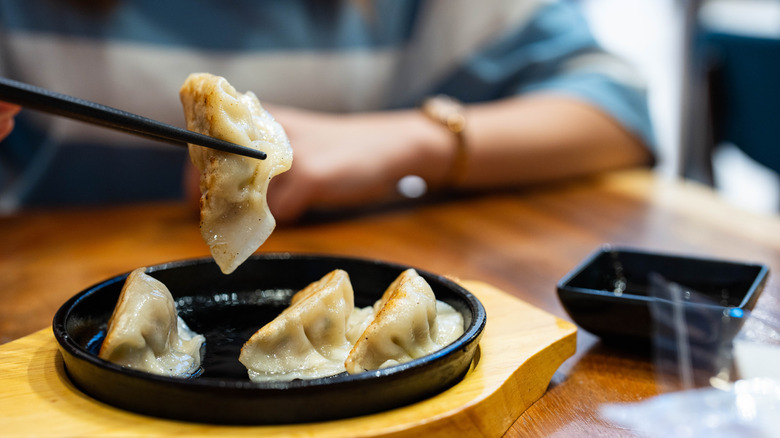
While you can make a wide variety of flavors work in a dumpling, there are a few logistical things you'll want to consider, according to Andrew Zimmern. He says that you can use chicken, pork, shrimp — whatever meat you like — or you can even create vegetarian dumplings. If you go meatless and stick to veggies, however, you'll need to be careful to set yourself up for success. "If you use all vegetables, by all means, make sure that they're cooked and there's no spiky pieces of carrot to pierce the dumpling skin," Zimmern told Rachael Ray.
Whether you're making gyoza, pot stickers, or another type of dumpling, technique matters to ensure that the filling stays put, says Zimmern. He recommends wetting your fingers and creating a light ring of water around the dumpling filling before you close it up. "The most crucial thing is pinch at the top. Move your finger around to occlude all the air and seal the dumpling," he shared. "Then, go the other way. That way, if anything sneaks out, at least you have all the air done, and all you gotta do is crimp it a little."
While store-bought dumplings can be good, there's nothing quite like making them at home on your own. After you've put in the hard work of carefully sealing each dumpling according to Zimmern's tips, be sure to freeze your dumplings so you're able to enjoy them for weeks (or months) to come.