

The Difference Between Drawn Butter And Melted Butter Explained
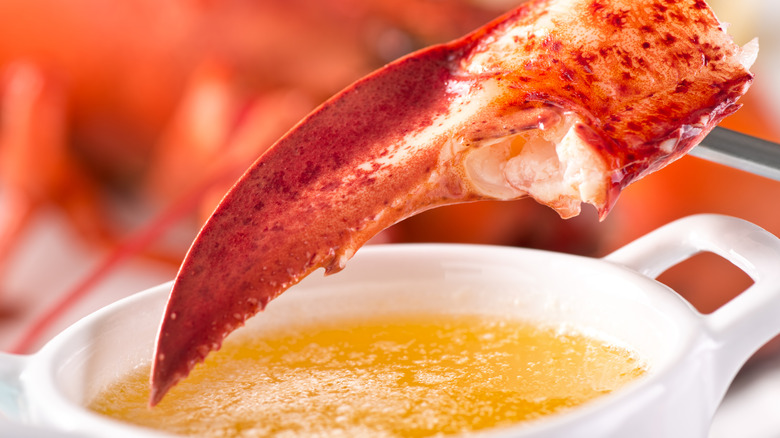
Nothing quite gets your mouth watering like the food porn vibes of dousing a luscious morsel of food in liquified butter. Whether it is a succulent chunk of lobster or a perfectly charred steak, melted butter is a lavish accompaniment that takes flavor and mouthfeel to an entirely different level. You may have seen the tempting liquid iteration known as drawn butter listed on restaurant menus or offered up by an eager server, but what exactly is drawn butter as opposed to melted butter?
Interestingly, the clarification is a bit controversial. In some culinary circles, drawn butter is simply melted butter. In others, it is only considered drawn if it is clarified, or heated and skimmed of its milk solids. The result is pure butterfat commonly called "liquid gold." In this case, it is a bit of a hyponym. All drawn butter is melted butter, but not all melted butter is drawn butter.
To further complicate matters, there is the topic of ghee. If you continue cooking the butter at a higher temperature so that all of the water evaporates and the solids begin to brown before removal, your clarified butter would end up becoming ghee.
What does it mean to remove milk solids
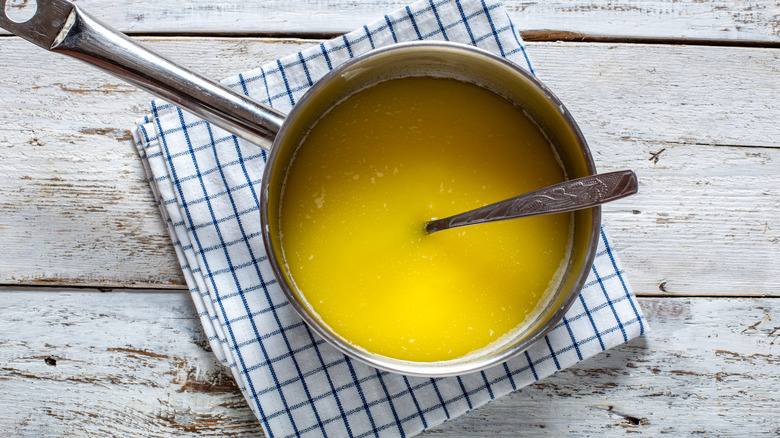
Let's start with the basics. Butter is made of churned cream and contains about 80% fat (in the United States). When you heat the butter, the milk solids (namely the protein casein) drop to the bottom, and the whey foams up to the top. What's left in the middle is the pure butterfat. By removing the solids, you are essentially removing the dairy, which makes clarified butter more tolerable for those who struggle with lactose.
You are also left with a product that has a higher smoking point and is more shelf-stable, since there is less moisture. Ghee takes this concept to the extreme, since almost all of the water evaporates with the higher heat and longer cooking time, which is why an unopened jar can last for almost two years.
Butter with its milk solids removed has a more concentrated flavor that leans more savory than sweet, which makes sense as the creamy milk solids are no longer present. It ideally complements meats, seafood, and eggs, and shines in sauces like a lemony hollandaise sauce. Just keep in mind that drawn or clarified doesn't always mean better. For example, don't try to use melted butter in certain baking applications, like cinnamon rolls, where cold butter (complete with all of its milky solids) is essential for the perfect bake.