

Are You Supposed To Let Bourbon Breathe Before Drinking?
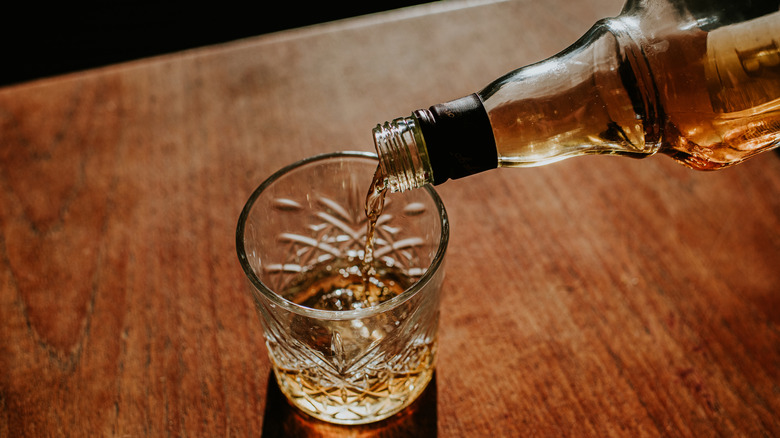
Any whiskey connoisseur will tell you that bourbon isn't the kind of liquor you should choke down or drown in sugary mixers on a night out — it's meant to be savored and appreciated for its nuanced flavors, especially if you splurge on expensive bourbon. With that in mind, some drinkers choose to partake in certain rituals when breaking out their bourbon, including aerating it, much like you would a nice bottle of wine. But just how important is this step to the enjoyment of bourbon?
Chowhound turned to Chris Blatner, executive bourbon steward and the founder of Urban Bourbonist, as well as the executive director of Bourbon Charity, for answers. According to the whiskey expert, "letting bourbon breathe can absolutely help, especially with higher-proof bottles or anything that feels a little closed-off on first sip." Though tannins are more strongly associated with wine, bourbon actually has them from the oak barrel aging process as well. And just like in a tannic wine whose flavor opens upon aeration, Blatner says that "oxygen can tease out more nuance and allow some flavors to bloom or develop" in bourbon as well.
One thing to note though is that not all bourbons need to breathe and some are excellent even without aeration. The best way to know if your bourbon could do with some aeration is to give it a good whiff. "If it smells really hot in terms of high ethanol aromas or tastes a bit tight or unflavorful, give it some time in the glass [to breathe] and try it again," says Blatner
Use this method to improve the taste and texture of bourbon
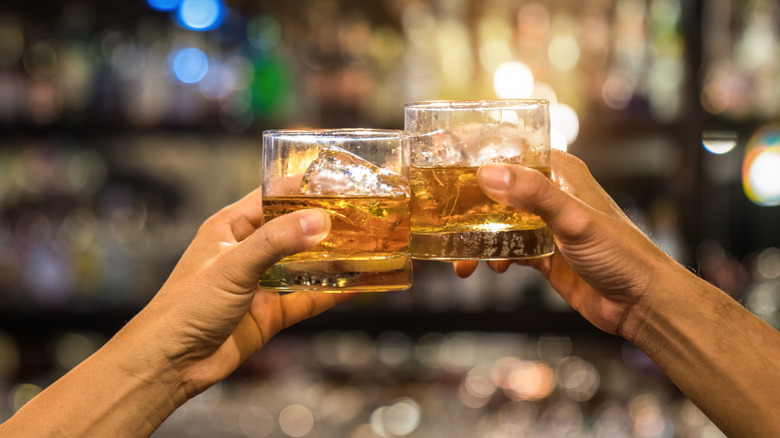
Fortunately for whiskey novices, it's easy to test out the effects of aeration on bourbon yourself, without investing in anything expensive or time consuming. The simplest and most straightforward way to aerate bourbon is to just pour it in your glass and wait. "Swirl it, let it sit while you settle in. You don't need fancy decanters or hours of patience, just five to 10 minutes can make a difference," Chris Blatner advises. However, some bourbons will need longer: "If it's a special pour, revisiting it over 30 minutes or more can be a rewarding experience," Blatner says, noting that, "Bourbon evolves in the glass, just like it evolves in the barrel." Don't be afraid to take your time sipping your glass, either. After all, tasting whiskeys, like bourbon, can be a multisensory experience if treated with time and care.
If you typically shy away from bourbon due to its strong, sharp taste, you might find that allowing it to breathe makes it significantly more palatable. "It often softens the alcohol burn and brings out more layered flavors like fruit, spice, vanilla, even floral notes. The mouthfeel can seem rounder and less sharp," Blatner says. Aerating is an easy tip to upgrade the taste of cheap bourbon, and while it may not necessarily take a bottle from the bottom to the top shelf, it can have a profound impact with enough time. "You'll typically notice different flavors and aromas the longer it sits," he explains, going on to add that, "It's not magic, but it's noticeable. Breathing gives the bourbon room to show it's layers, and that can make for a more enjoyable sip."