

The Reason Southerners 'Don't Put Sugar In Cornbread' — And Why They Sometimes Really Do
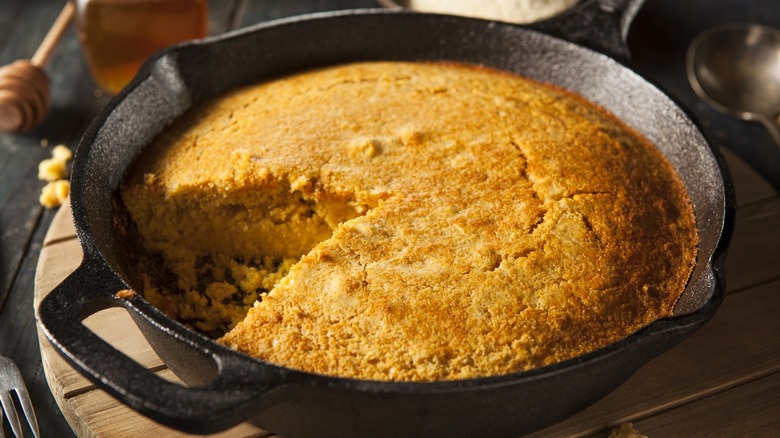
The greatest cornbread debate divides the Northern and Southern United States on the sweetness of cornbread. Should cornbread have sugar? If so, should it be evident in the recipe? Because cornbread has a larger presence in the Southern food scene, some Southerners scoff at the idea of putting sugar in cornbread, attributing it to some Yankee nonsense. Similarly, some Northerners find cornbread in the South to be dry and flavorless. The simplest way to distill the debate is this: Northerners treat cornbread like a cake, and Southerners treat cornbread like, well, bread.
Cornbread in the South has a thick, spongy consistency and is served alongside savory food with the purpose of absorbing ingredients around it. It's meant for spreading butter on top or dipping into the juices and gravy of meat dishes. It's super filling, so people only put one or two pieces on their plate at a time. This magic doesn't happen when the cornbread is too sweet, fluffy, or moist (or too dry and crumbly). However, many Southerners add a bit of sugar to their recipes or put a spin on boxed cornbread mixes that include it — but not enough to overwhelm cornbread's function as a bread. The key is a slight sweetness that seems to come from the corn, rather than any supplemental ingredient. Half the point of serving cornbread in a cast iron skillet is so it can absorb the flavor from the last food you cooked.
Corn cultivation shaped the North and South
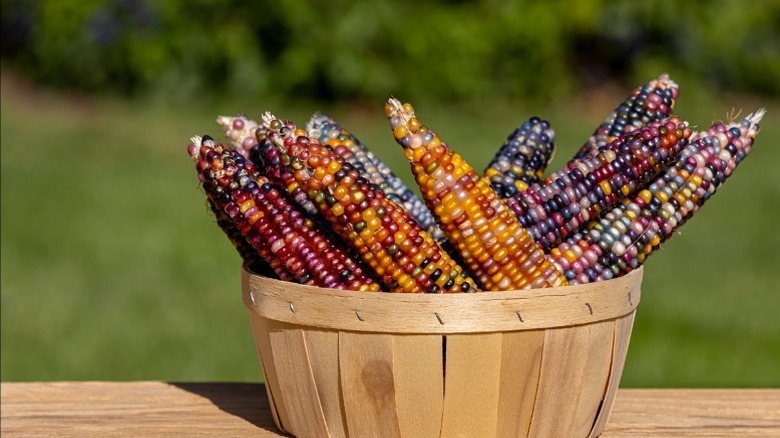
If there's one food that can be cemented as American cuisine, it's cornbread. Maize is native to Mexico, and unique varieties of the species spread throughout North America over centuries of Indigenous cultivation techniques. The first iterations of cornbread predate the United States itself; these recipes were made with corn and water as the main ingredients. Each Tribe's take on the dish would vary by what their lands offered. These influences mark the start of cornbread's contentious recipes.
One of cornbread's relatives is the johnnycake, known as a Rhode Island classic. The first recorded mention of it appears in a 1739 issue of the South-Carolina Gazette. These johnnycakes were made from flint corn, which is rough in texture and earthy in flavor. Flint corn was common in the Northeast, and the unleavened, pancake-like johnnycake was a great use for it. The problem is that flint corn wasn't the most efficient crop, having lower yields than the dent corn of the Southeast.
Dent corn has a higher yield rate, and the South had outpaced the North in maize agriculture before the Midwest's "corn belt" became the largest corn producer in the country. Dent corn was softer and sweeter, making it malleable and easy to mix with other ingredients. Given corn's abundance in comparison to wheat, Southerners used corn as a bread, hence, cornbread. Its natural sweetness came from the corn and stone-ground milling techniques of the time — no sugar necessary.
Cornbread changed with the times
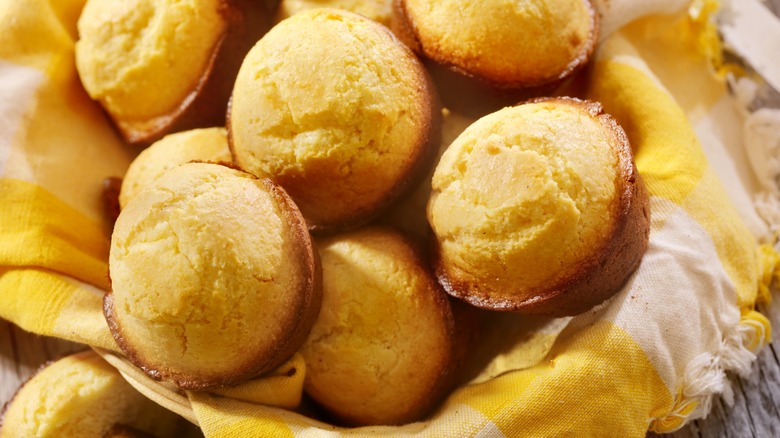
After the Civil War, the North had plenty of wheat to make bread, so there was no need to make it from corn. Here, cornbread was more of a novelty, like a sweet and fluffy corn cake or muffin. Cornbread in the South was an everyday meal, common among poor folk. Formerly enslaved people developed the flavor of cornbread by cooking it with burnt leaves and lard, which is why this dish is considered Southern soul food.
Agriculture in all of the United States began to change with the Industrial Revolution. Corn breeding changed which varieties were available to consumers, and old stone-milling techniques were replaced with more efficient processes that turned it into a more powdery texture. As a result, corn's natural sweetness didn't come through in the same way. With more ingredients available due to industrialization (and the inevitable store-bought mixes), people were able to add their own twist to cornbread recipes. That sometimes included adding a bit of sugar to the mix — just not too much.