

The Swiss Meringue Tricks That Are Bound To Delight Your Taste Buds
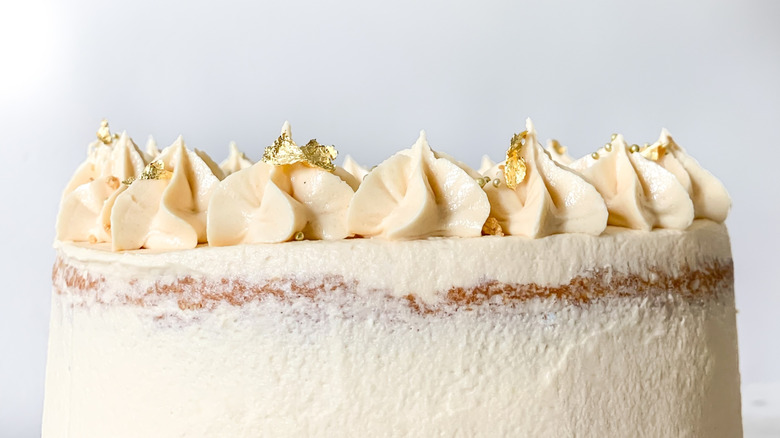
Swiss meringue buttercream might sound fancy, but it's surprisingly simple to make. Once you try it, you might never go back to powdered sugar frostings. This silky, rich treat starts with just a few staple ingredients (egg whites, sugar, cream of tartar, and vanilla), but there are two tricks that makes Swiss meringue special: heating it to a higher than usual temperature, and whipping it at a high speed.
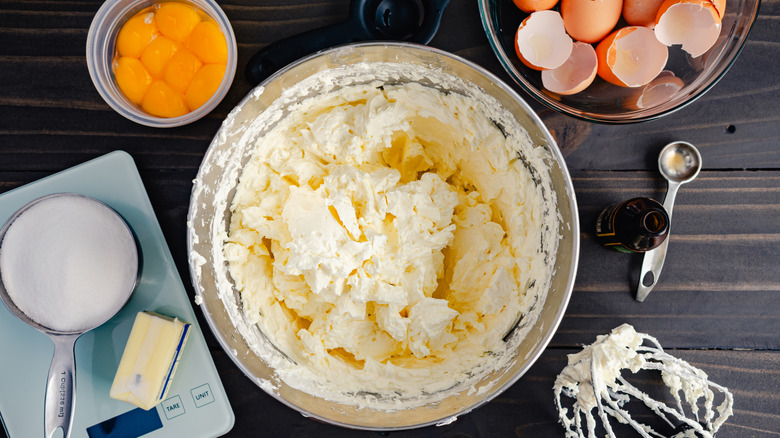
To follow Stella Parks' method to make a Swiss meringue buttercream, combine egg whites, a bunch of sugar, a pinch of salt, cream of tartar, and vanilla bean seeds in a heatproof bowl. Set it over a pot of gently simmering water and get it to a temperature of 185 degrees Fahrenheit while stirring constantly, until the mixture is smooth. Other recipes only go up to 160 degrees Fahrenheit; the extra heat in Stella Parks' recipe removes any raw, eggy flavor and helps with the final whipped texture.
Next, take your mixture off the boiling water, transfer it to a stand mixer, and whip it at high speed until it forms stiff, glossy peaks. Most recipes don't specify a whipping speed, or use medium to medium-high, but the higher whipping speed combines with the higher heat to better maintain the meringue's temperature when it's time to slowly add softened butter. At first, your frosting might look soupy or broken, but keep going — it comes together into a dreamy, light meringue buttercream. You know it's ready when it's fluffy and about room temperature. This switch from high heat to room temperature is what gives Swiss meringue that super heavenly texture. This process is different from baking a meringue because your sweet treat stays as a creamy frosting rather than being baked into those airy, sugary bites.
What makes Swiss meringue special?
Unlike French meringue, which is light but unstable, or Italian meringue, which is super stable but heavy, Swiss meringue hits the sweet spot of being reliable, silky, and incredibly versatile. One of its standout features is texture. Because the egg whites are cooked with sugar, the final result is smooth and safe to eat, even without baking. By using a bit more sugar than other versions, the buttercream avoids that too-heavy, thick feeling, plus it helps cut through the richness of the butter. Meanwhile, cream of tartar keeps the meringue stable and bright.
Because Swiss meringue is more stable, you can make it ahead of time. Store it in a zip-top bag, flatten it, and stash it in the fridge for up to two weeks (or in the freezer for months). When you're ready, just bring it back to room temperature, whip it again, and you're good to go. This hack is particularly ideal if you're planning a party or get-together and don't want to do all of the cooking at once.
The best uses for Swiss meringue buttercream
The great news about this creamy, rich icing is that it's incredibly flexible. It works great on a variety of cakes, from a red velvet cake to a standard vanilla cake. Because the meringue is so thick, it can be used to get a bit more architectural with your frosting; don't be shy about trying to pipe out some flowery ornamentation. It also makes a stunning base for a layered cake, holding its shape beautifully between tiers. Though it may seem a bit blasphemous, Swiss meringue also works great on a wide range of Italian cakes, from a lemony dolce di Amalfi to spongy, fruit-packed cassata.
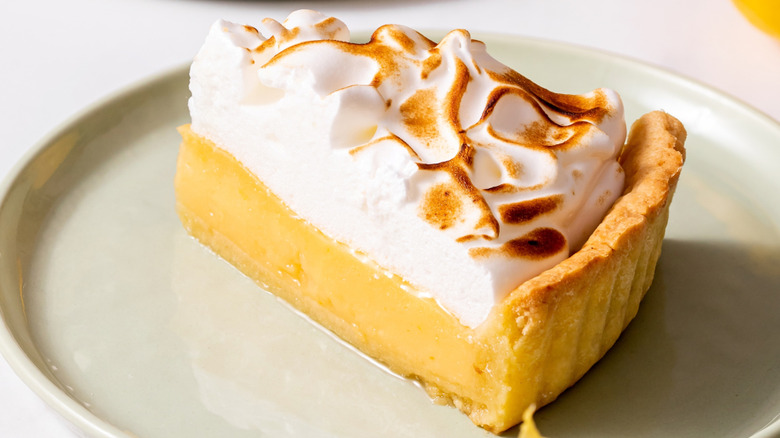
It's also good for more than just cakes. Meringue works great on a pumpkin pie, bringing a creamy sweetness to balance out the earthy, warm pumpkin flavors, or on a lemon tart. You can even use this stable meringue to frost cupcakes for an elegant finish, piping it into tall, silky swirls. For a simple treat, try spreading your meringue buttercream over cookies, or sandwiching it between macarons, for an extra indulgent delicacy.