

Cast Iron Vs Stainless Steel For Grilling: What You Need To Know
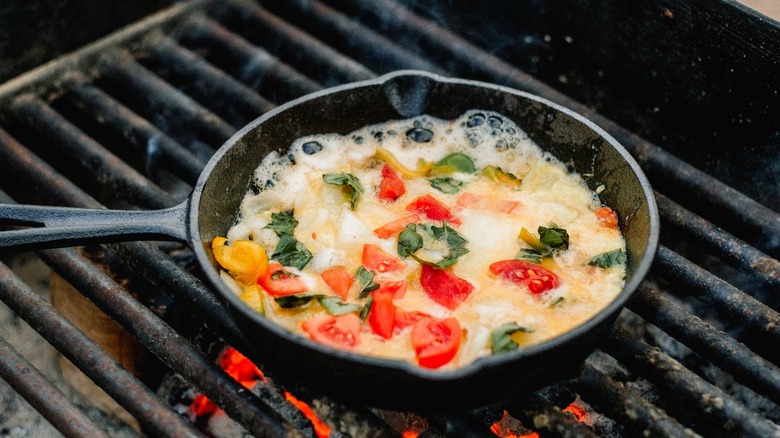
Summer nights are perfect for cooking food over an open flame. Preparing steak and barbecue is light work when grilling, but scraping off stubborn burnt messes afterward is another story. Some people love the taste of straight-up char on their burgers, but not everyone is looking for that kind of seasoning. To ensure even heat distribution without a mess, consider reaching for a skillet. You can cook delicate foods such as veggies or fish that don't always grill well, and the right kind of cookware will withstand and retain heat for hours.
Cast iron is the best cookware for grills and campfires. It's always made for high-heat cooking, whether it's skillets, grill pans, griddles, or Dutch ovens. Cast iron is a reliable and durable material for making a variety of meals, which is what makes it a timeless kitchen essential. The main drawback is that it can't handle high acidity, so foods with vinegar and lemon marinades are better left out here.
Stainless steel is less predictable for grilling, and it's prone to staining or damage on this surface. Stainless steel is suitable for smaller flames or indirect heat, but it doesn't retain heat as well as cast iron. Carbon steel cookware has the feel of stainless steel but with the "non-stick" properties of cast iron. Avoid using glass, copper, and non-stick pans on your grill to minimize the risk of material damage or chemicals leaching into the food.
Cast iron and carbon steel are ideal for outdoor cooking
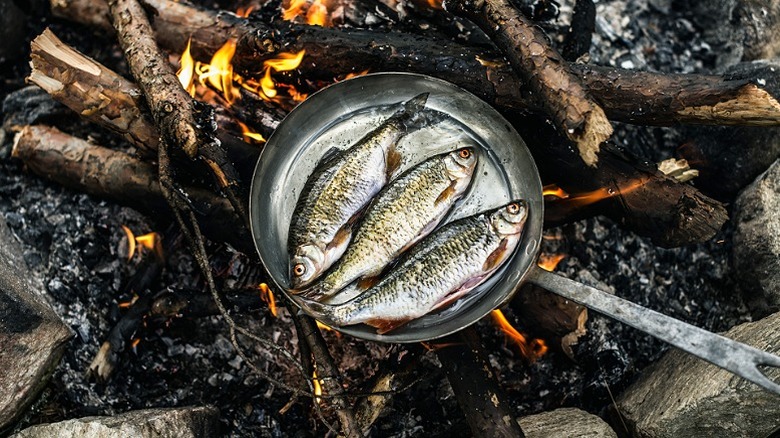
Propane grills have become the standard due to their ease of use, safety, and cleaner burning fuel, but there are still many people who appreciate the smokiness and heat of charcoal grills. Charcoal grills can reach much higher temperatures than propane grills, and cast iron cookware is the only cooking material that can really withstand that intensity. Many campsites and parks offer free public grills that anyone can use, but the catch is that they require you to bring your own charcoal or wood. Having a cast iron skillet on hand allows you to cook any meal without charred or rusted grill grates coming into contact with your food. Just be sure to brush up on some myths when cooking with cast iron skillets.
You don't have to use a grill to enjoy open-flame cooking, either. Wilderness survival enthusiasts (and those who love to watch them on TV) know that some type of pot or pan is necessary for cooking while camping. If you know how to responsibly maintain a campfire, a cast iron skillet can handle almost anything you throw at it. The downside is that cast iron is heavy and needs a small amount of fat to stay seasoned, though you should be able to retain that layer of grease with every dish — something you can't do with stainless steel. Carbon steel needs even less fat to prevent food from sticking, and it's lighter than cast iron, making it convenient for backpacking and bringing on the go.