

What You Absolutely Need To Know Before Buying Unrefrigerated Beer
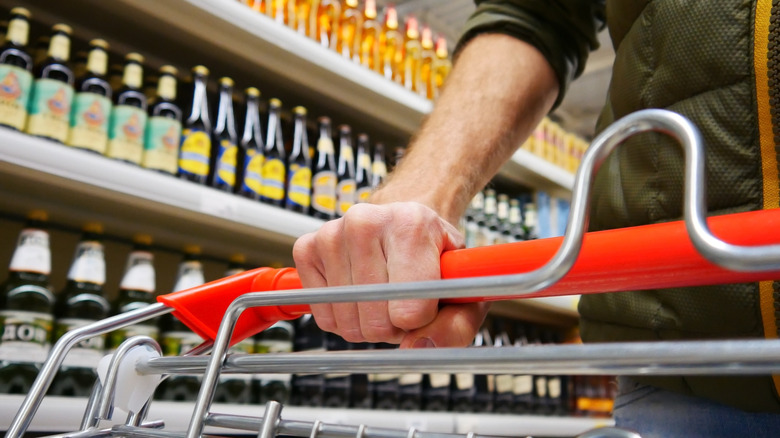
Whether it's at your local grocery store or at a shop wholly dedicated to booze, you've probably seen stacks of beer that were unrefrigerated. If you've ever wondered whether you should avoid these and instead grab your beer from the refrigerated section, the answer is it's a possible red flag you should be looking for while beer shopping. Unrefrigerated beer isn't necessarily a deal-breaker, though. It depends on a few factors, including how long it's been there, the kind of beer it is, and the temperature at which the beer is being stored.
The major concern here is oxidation, a chemical process in which natural compounds react with oxygen in the beer to produce unpleasant flavors reminiscent of cardboard, metal, or sherry. The beer can also lose some of its hoppiness. Storing beer unrefrigerated can speed up this process. This isn't the same thing as a beer getting "skunky," which, contrary to popular beer myths, is a light problem rather than a temperature issue: Ultraviolet light can cause a chemical reaction that produces off-putting flavors in the brew. With unrefrigerated beer, there are a few other aspects to consider before purchasing it.
What to consider with unrefrigerated beer
Among the factors you need to know to make an informed decision on buying unrefrigerated beer is whether it's a craft beer or something from a larger commercial brewery. Typically, large brewers pasteurize their beer by running it through a hot water bath to kill off any bacteria or living yeast. A lot of craft breweries don't do this; while these craft-made beers are perfectly safe, they don't last as long without being kept cold and should be consumed within about 60 days of their production date.
Hoppy beers, such as IPAs, can be especially vulnerable to oxidation. Other beer styles, such as stouts or some saisons, can be stored unrefrigerated, making them beers that are okay to buy warm. Even so, the shelf life on all beer is shortened if stored in warm conditions over long periods. There's a pretty simple rule for figuring this out called the 3-30-300 rule relating to how a beer's flavor is impacted under certain temperatures. Beer experiences the same amount of flavor loss whether it's stored for three days at 90 degrees Fahrenheit, 30 days at 72 degrees Fahrenheit, or 300 days at 38 degrees Fahrenheit. As you can see, keeping beer cold extends its shelf life quite a lot. When buying unrefrigerated beer, be sure to look at its production date and factor in these considerations to ensure you get the best brew for your buck.