

How To Give Microwaved Pasta The Perfect Al Dente Bite With Virtually No Effort
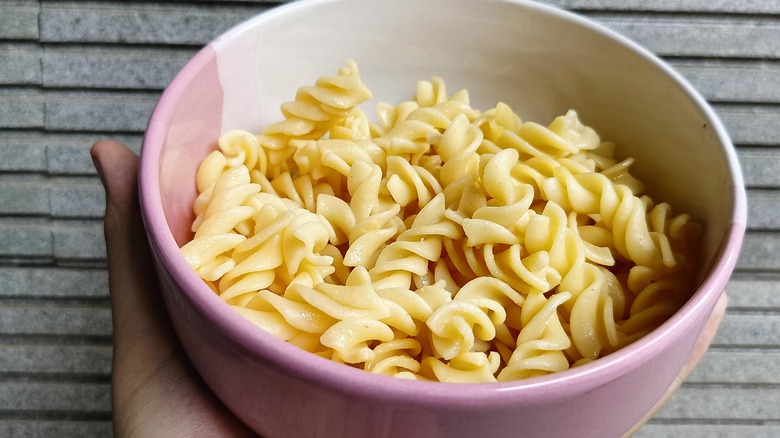
For the everyday home cook, pasta is one of those convenience meals that delivers taste, nutrition, and variety. Could it possibly get any easier than cooking a box of pasta, stirring in your choice of sauce, adding your preferred protein and veggies, and calling it a day? Turns out, it can, as there is one coveted kitchen appliance that does the trick. The jack-of-all-trades microwave comes in clutch to save you time and the extra effort of hovering over the stove to check on a pot of water that never seems to boil. While this technique may throw the traditional Italian cook for a loop, it certainly does the trick to deliver the perfect al dente bite, proving that sometimes there is a space where easy shortcuts and traditional cooking methods can co-exist in harmony. After all, there's a reason why renowned chef David Chang thinks we ought to be using the microwave more.
All you need is water, dry pasta, a large microwave-safe bowl, and a microwave (obviously). Keep in mind that the microwave method works best for cooking shorter pasta shapes, so choose wisely to ensure the final product is of the desired texture. Pour the dry pasta into your bowl and cover with water, ensuring that the water line is at least a couple of inches above the submerged noodles. As a general guideline, you should cook the pasta for the time listed on the packaging plus a couple extra minutes. Begin by microwaving the pasta on high for four to five minutes, and stir the noodles to prevent them from sticking. Continue to microwave for one to two minute intervals, stirring regularly, until the texture passes the taste test.
Mistakes to avoid with microwaved pasta
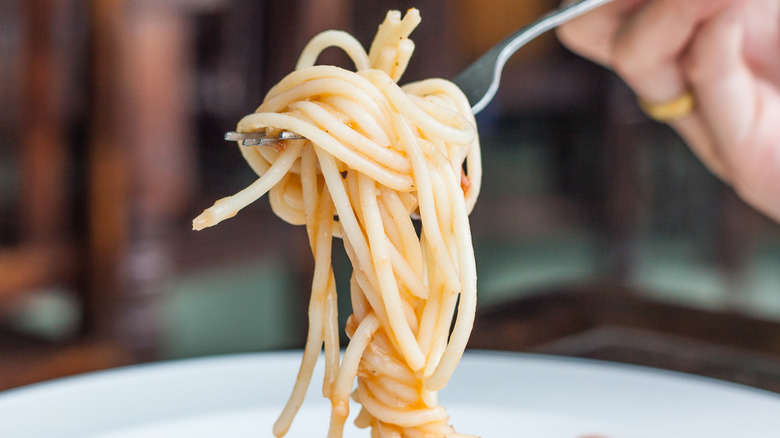
Though the microwave is a beneficial tool that can ease your pasta prep, some of the common mistakes people make when cooking pasta on the stovetop can also ruin your microwaved pasta. One of the biggest fumbles is not using enough water. Pasta needs room to absorb water and expand to cook evenly, so if the water level is too low, you'll end up with pasta that's gummy, dry, or unevenly cooked. Make sure the microwave-safe bowl you use is large enough to account for the extra space required for the expanding pasta as it cooks, and the amount of water needed to ensure that each noodle is thoroughly cooked. Plus, a larger vessel helps avoid any mess from water boiling over in the microwave, saving you the hassle of cleaning up afterward. Additionally, just like how stirring the pasta cooking on a stovetop prevents it from clumping together and ensures that it cooks evenly, the same applies to the microwave approach, which is why stirring every couple of minutes is essential.
Moving on, while you can always salvage undercooked microwaved pasta by giving it extra cooking time, the same cannot be said for overcooked mush. Keep a close eye on the cooking time, checking on the pasta's texture at regular intervals, as the transition from undercooked to al dente to overcooked can happen in a matter of a few minutes, depending on the power of your microwave. Last but not least, salt the pasta water to improve the flavor of the pasta itself, and not just the sauce. With these basic tips up your sleeves, a kitchen hack that was meant to ease the process won't turn into the bane of your entire day.