

Why You Shouldn't Add Baking Soda To Homemade Beans
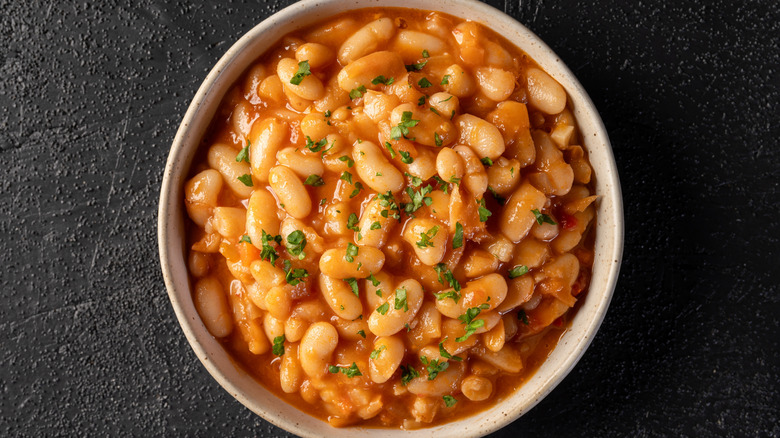
Though the health benefits of beans are rich and varied, one of their not-so-redeeming qualities is the effect they have on our digestive systems. There are various ways to try and mitigate gas from beans, from soaking them overnight to using a slow cooker (never cook dried kidney beans without soaking them first) or a pressure cooker (it turns out the best way to cook dried beans is also one of the easiest).
Some say that, in addition to other unexpected uses for baking soda, adding a little of the versatile powder to your beans while cooking will help with the dreaded bloating and gas after eating too much chili. However, Chowhound spoke exclusively with Marc Marrone, executive chef at Arriba Abajo Rooftop Cantina in Austin, Texas, and he says this is probably bad idea.
"It does help reduce cooking time by softening the beans, but baking soda also can give the beans a soapy texture," Marrone says. "I'd just soak them properly before cooking and do it the classic way."
Why it's best to stick with soaking beans
The sugars that are the responsible for beans' bad reputation when it comes to bodily functions are called oligosaccharides. The problem is that our bodies don't produce enzymes to break them down, so they move undigested to the large intestine where bacteria give us a hand by fermenting the sugars for us. The result? Those embarrassing post-bean moments where you definitely don't want to be caught in an elevator with other people.
Soaking beans can remove up to 90% of the gas-producing oligosaccharides, making beans significantly easier to digest. Soaking also tends to result in softer beans once they are done cooking. The ideal texture for beans is soft, but still firm enough to keep their integrity. Marrone says that adding baking soda will help soften the beans, but they could also end up too mushy.
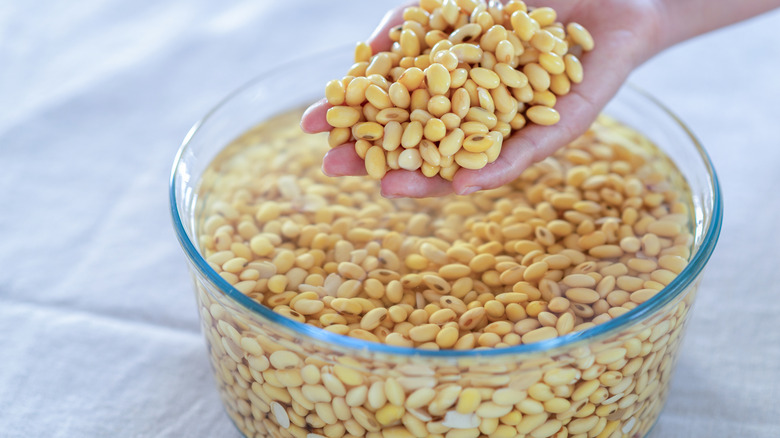
There are two options when soaking beans: an 8-12 hour soak or a quick soak. No matter which option you choose, it's important to remember to change the water before cooking, because the oligosaccharides will have dispersed into the water that the beans were soaked in. Ideally, you should empty the water and rinse the beans once every three hours when doing a longer soak for optimal results.