

Easily Repurpose This Piece Of Furniture Into A Pantry
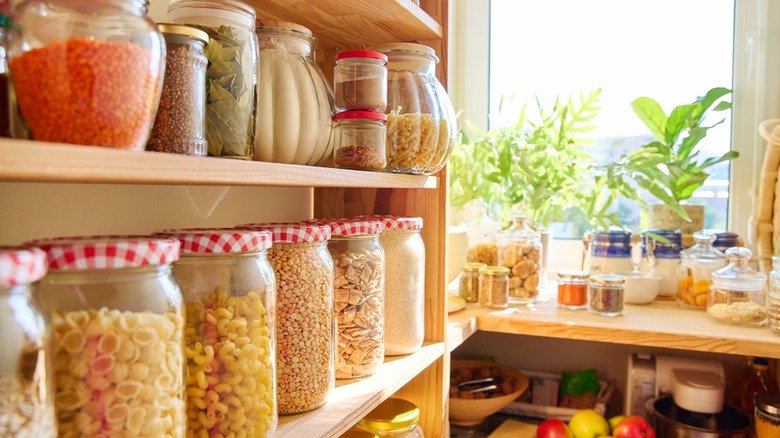
If you have an old bookshelf lying around, you have yourself a brand new kitchen pantry. It just makes sense: It's a pre-built shelf that's sturdy enough to hold a massive amount of books, so it can definitely handle the weight of all your dried goods and sauces. All you need to do is slide it in where it fits, and you've instantly upgraded your kitchen storage options. It's smart, sustainable, and affordable.
What's especially great is this storage hack works for most types of kitchen, depending on the bookshelf. The open shelving helps maximize space in galley kitchens while making them feel less constricting, and narrow bookshelves can add a ton of additional storage for tiny kitchens. With a fresh coat of paint, you can make a seamless kitchen upgrade without any renovations just by matching the bookshelf's colors with what's already established.
Since you're already using repurposed furniture to store your food, you can also make your pantry even cuter by organizing it with other repurposed items. You can, for instance, use cheap office organizers to make pantry storage a breeze. You can also add dividers to your bookshelf and make cubbies for maximizing your kitchen storage. By mixing and matching aesthetics, you can come up with a chic-looking pantry that falls anywhere you choose between quirky and rustic. You just need to make sure the material it's made of is ready for use in the kitchen.
How to make a wooden bookshelf kitchen-ready
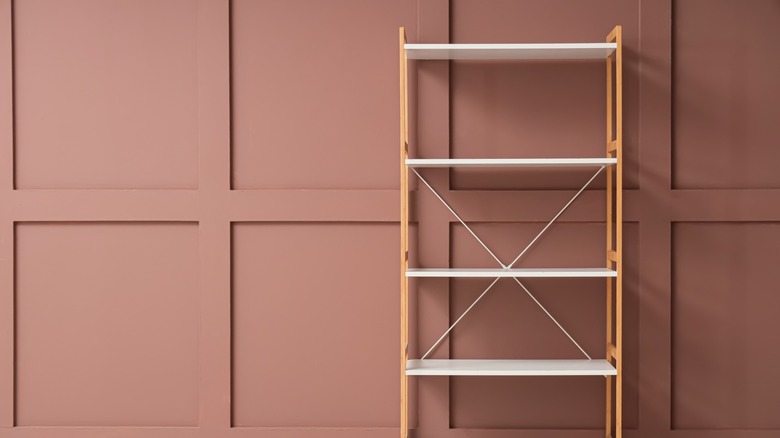
If you're using a wooden bookshelf, the first thing you need to do is make sure the surface is food-safe. Typically, this involves finding out if the wood is finished with a non-toxic material, such as carnauba wax or linseed oil, and then applying one if it isn't. You don't want toxins from the paint, varnish, or even the finish itself to leach into your food.
At the same time, kitchens are an entirely different environment from living rooms. They're warm, steamy workplaces, and an extended amount of time in the kitchen can slowly degrade your bookshelf. Heat can dry out the wood, leading to cracks and splinters. Steam, on the other hand, can result in excess moisture being absorbed into the wood, causing it to weaken and warp. Some experts recommend using a combination of mineral oils and beeswax to protect wood from excess heat and moisture: The oils prevent your bookshelf from drying out while the beeswax adds water-resistance.
Lastly, make sure your bookshelf is treated against insects. Any place that stores food runs the risk of attracting pests, and the last thing you want is for your improvised pantry to become a nesting ground for creepy crawlies. Linseed, mineral, and tung oils are all food-safe ways to help with this. To keep ants out specifically, you can also try using an ant-repelling powerhouse that's already in your pantry to begin with.
How to make other bookshelf materials safe in the kitchen
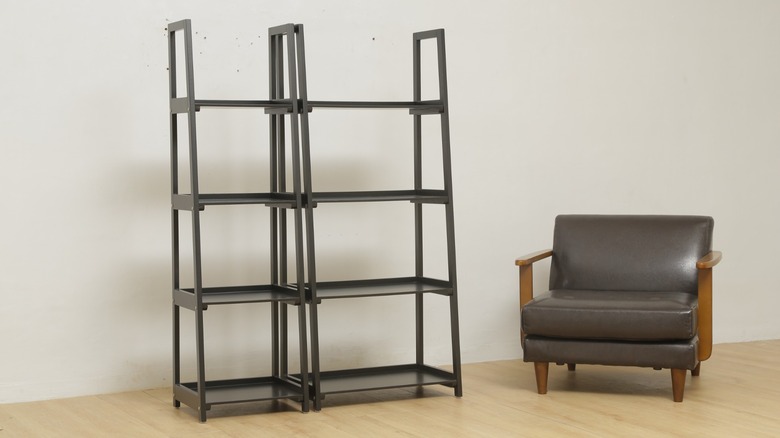
If you're keeping any metal in the kitchen longterm, it should be resistant to the corrosion caused by excess moisture. Aluminum and stainless steel are fairly common bookshelf materials that are naturally rustproof, so they're a safe bet. If you're going with aluminum, just make sure to keep it away from any acids or bases (such as vinegar and baking soda, respectively) since these can corrode the metal. Copper is also good for the kitchen.
Glass shelving is typically okay in your kitchen's environmental conditions; it's the weight of your pantry items that's more of a concern. The weight capacity of glass depends on two main factors: Thickness and composition. The thicker the glass, the more weight it can hold. For example, a shelf that's about 6 millimeters thick can support around 25 pounds whereas an 8 millimeter shelf can hold 50 pounds. If the glass is reinforced, such as tempered glass, it can carry even more. It's better not to push glass shelves to their capacity, however, since heat, moisture, and abrasion can all affect their integrity.
Lastly, for a plastic bookshelf, follow the same rules as you would with food containers. This means BPA-free plastic is preferred, since there's a real risk of health issues if it leaches into your food. You also want to keep the shelf away from the sink and heat sources, since these can accelerate the degradation of the material and introduce microplastics into your kitchen.