

Common Mistakes You're Making When Watering Basil
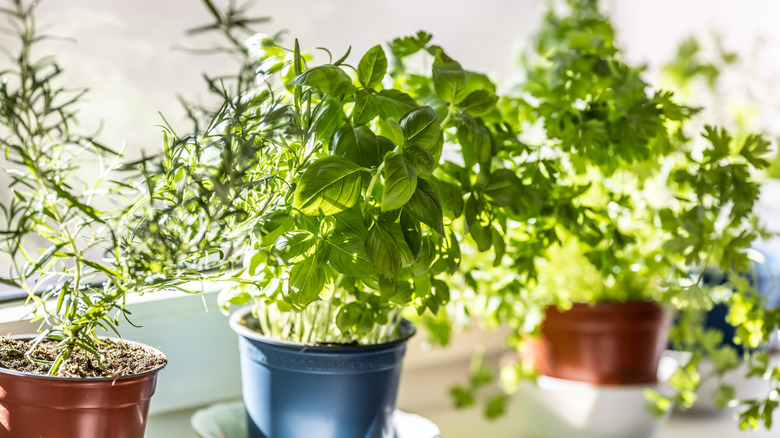
Whether you grow herbs on the windowsill in your kitchen or you have an outdoor garden, you might find that you have some trouble getting basil to grow strong and tall without turning yellow. While your basil plant needs plenty of sun each day, it isn't likely to thrive on daily watering — and a healthy plant is key for cooking with basil.
Frequent shallow waterings — meaning, watering just the surface of the soil — is one of the most common herb garden mistakes with basil. Typically, a mature basil plant needs to be watered about once a week. Deep watering is key, which means you want to water the plant at longer intervals but enough to moisten the deeper layers of soil each time. When you're watering your garden, take some extra time to be sure basil gets a heavy hit. Water around the base of the plant until you see it starting to pool. A good way to check if your basil is watered enough is to stick your finger into the soil near the plant, about an inch below the surface. If the soil feels dry, it's time to water again.
Why does basil need moisture so far below the surface? It's all about growing a strong, robust root system. When water is available far below the surface of the soil, basil is encouraged to grow deeper root systems, which can add stability for your plant. Be sure to give your basil plant plenty of room for the roots to grow as well — if you're using a pot, it's recommended that you provide at least nine inches of soil for the roots to take hold as the plant matures.
More tips for helping basil plants thrive
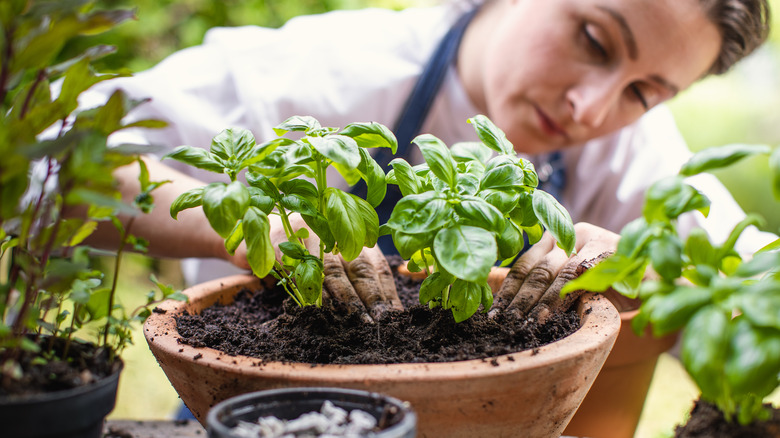
Basil is one of the easiest herbs to grow, but it's important to understand the different watering needs of indoor versus outdoor basil plants. Indoor basil plants need to be watered every day when they're seedlings that are just starting to grow, and you can pare down to only watering whenever the soil gets dry (typically every few days) as the plant matures. Watering frequency for outdoor basil plants is more temperature-dependent. In hot weather, daily watering may be necessary. In cooler weather, you'll only need to water your plants once every five to seven days.
You don't have to rely on watering alone to keep your basil plant hydrated. Basil is able to absorb water through its leaves, so misting it a few times a week can help to keep it happy. It provides humidity to the basil plant without creating overly damp soil.
Understanding the signs of over and underwatering can help you know what's going on with your plant. If you notice wilting leaves, super-dry, crumbly soil, or sagging stems, there's a good chance you're underwatering your plant. If you notice brown spots on the leaves, a yellow-ish hue (as opposed to vibrant green), or a bad smell, you're likely overwatering and need to give your basil plant a chance to dry out a bit.