

What You Should Know About Farm-Raised Fish
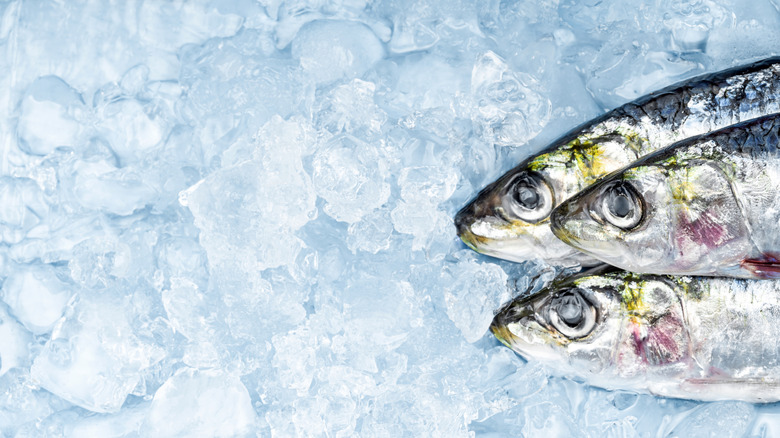
Any chef worth their salt will tell you that the first step of making any truly delicious dish is sourcing the best ingredients possible. It's often said that the truest skill of a chef is in making ingredients taste like themselves – and when you have great ingredients, that makes your life considerably easier. When it comes to buying fish, this often sparks a debate — farm-raised fish, or wild-caught? Knowing the difference is important, but equally important is knowing how to get the best of each. To find out a little more about what you should look for when shopping for farm-raised fish, we spoke exclusively to Matt Ranieri, VP of Technical Services at Acme Smoked Fish.
"There are some key features to look for when shopping for farm-raised fish at the raw seafood counter or smoked seafood case," he told us. "These can include source and certification (an indicator of farm practices and environmental impact of farming), freshness, and origin of the fish."
When it comes to choosing between fresh, raw fish, or ones that have been prepared in advance, Ranieri said to consider how much time you can allot to prepping your meal. There's no need to shy away from pre-cooked fish, as ready-to-eat smoked seafood is the busy cook's best friend. "There are great fully cooked portions in the smoked seafood case that a consumer can take home, open, and add to a salad, pasta, or grain bowl!" Ranieri explained.
What should you be asking your fishmonger to get the best farm-raised fish?
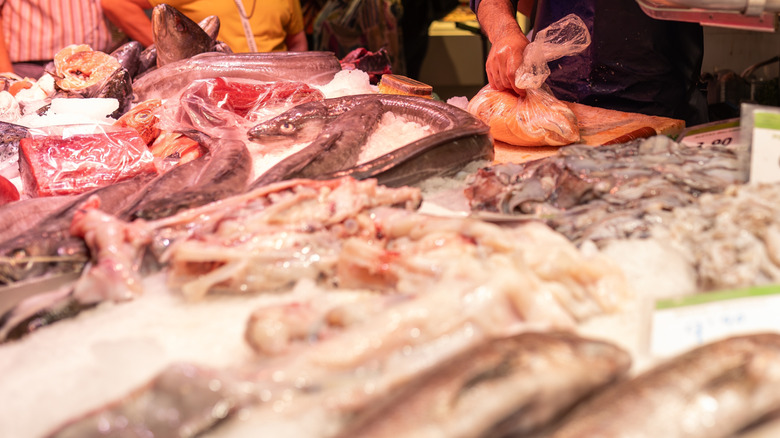
When shopping for fish, prioritize your fishmonger — they'll have the best, freshest fish you can buy, along with the expertise to help you find what you're looking for. Don't be afraid to ask questions. A good fishmonger will be willing to give you advice, and this can help set you up for success. When it comes to farm-raised fish, there are a few questions you should keep in mind. Where the fish was farmed is a big one, according to Matt Ranieri, but there are more technical queries too, if you're really committed to buying the best-quality, most sustainably sourced fish.
For instance, Ranieri says to ask if the fish carries any certifications for Aquaculture Stewardship Council (ASC), Best Aquaculture Practices (BAP), or Global Good Agricultural Practices (Global G.A.P.). "These programs set the standards and verify practices for safe, responsible, and sustainable aquaculture production," he explained, adding that you can also look for retailer-specific sustainability standards outlined on company websites or in stores.
Another step that might seem obvious (but can be easy to forget) is asking your fishmonger when the fish was caught or harvested, which will tell you how fresh it is. "For farmed fish, this should be within 3-4 days," Ranieri said. "The goal is to use the seafood within 48 hours of purchase." If you buy from the freshest catch possible and store your fish properly in the fridge, you can be sure that the dish you'll end up with is of the highest quality possible.
A visual inspection can also help you pick the best fish

Ultimately, when picking ingredients of any kind, whether you're looking to buy a delicious cut of steak, or trying to choose the freshest breasts (or thighs) for your next fried chicken sandwich, it's always best to trust your gut — and your senses. A quick visual inspection can help determine if a piece of fish is the one to go for. "For salmon," Matt Ranieri told us, honing in on a popular farm-raised fish, "look for a rich, vibrant orange or pink color. Avoid bruises (dark gray or black spots) and gaping (cracks in the fish)." These signs can indicate either a lack of quality or freshness.
Color consistency and saturation are important signs, too. Ranieri advises avoiding fish with splotchy coloring, along with any gray or pale-colored specimens that point to drying or oxidation. In these cases, the fish may have been out of the sea a little too long, or even improperly stored. If you're buying a whole fish, Ranieri says, look for clear, shiny eyes. Give it a sniff, too, if you can. Contrary to what some may think, fish shouldn't smell notably fishy. According to Ranieri, "Fish should have a clean, mild odor. If you detect sour, fish, or ammonia-like odors, return the seafood for a refund."
Staying alert for these visual cues, in addition to checking the fish's label for ASC, BAP, or Global G.A.P. certifications, will ensure you're getting farm-raised fish that not only tastes delicious, but which also aligns with your values. It doesn't get much better than that.