

10 Foods You Should Avoid Canning
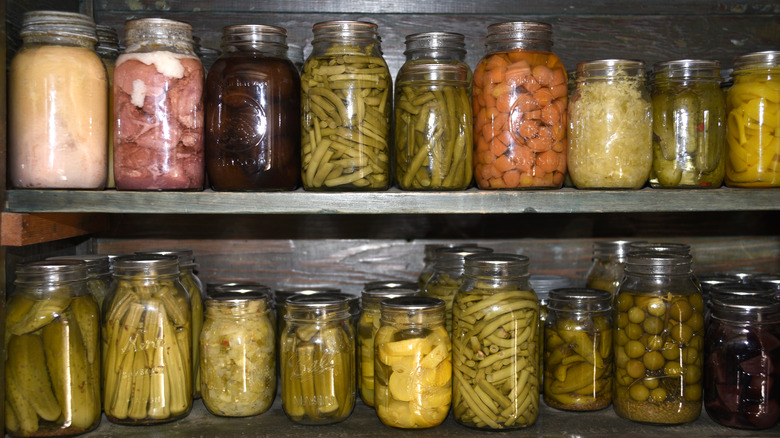
The process of canning food at home uses heat to destroy micro-organisms that could cause illness, and the vacuum seal that forms between the lid and the jar blocks other micro-organisms from sneaking into the food. But it's not a foolproof process that preserves anything you throw into a canner. Some foods just can't be safely canned at home, even if you find them canned at the supermarket. Commercial canning companies have access to more advanced equipment and pathogen control (think of all the "how is X made" videos that show workers in uniforms similar to clean room suits). You don't have that access or ability at home, which means home-canning carries extra risks.
Despite all that, you'll still find recipes for canning these foods that others swear are safe. You may even have old family recipes that have never made you sick. But unless those recipes happen to match scientifically tested canning recipes, you're really just getting lucky every time you use those recipes as they may no longer meet current standards. The recipes you do want to use are those that have been lab-tested by organizations like extension offices, the National Center for Home Food Preservation at the University of Georgia, the USDA, and reputable canning companies like Ball. Ensure these recipes are the latest versions as even those organizations can make lab-confirmed changes, but never make changes yourself; follow lab-tested recipes to the letter, and never make up your own canning recipes for these foods.
1. Oil-covered food or recipes containing oil
The food poisoning and spoilage associated with canning usually come from using improper or incorrect methods that don't kill off bacteria or that let bacteria invade the can or jar. Clostridium botulinum is a particular danger. It can't grow in very acidic environments. However, heat isn't very effective in killing off that bacteria, and it loves low-oxygen conditions. So, when you provide a low-acid environment that also lacks oxygen, you create a comfortable nursery for C. botulinum spores.
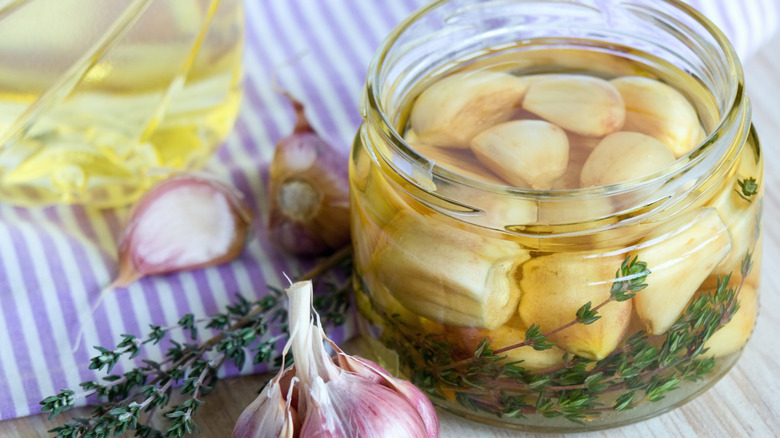
Oil is low-acid and seals off food from oxygen. The low acidity of the oil plus its ability to create a low-oxygen environment promote the growth of C. botulinum. Garlic in oil is usually held up as an example of what not to can. But you also need to avoid canning pesto, as well as any other oil-containing foods. Freeze those foods instead. Don't add oil to existing canning recipes, and don't assume word-of-mouth recipes are safe just because others haven't gotten sick.
Agricultural extension offices have tried to develop safe canning recipes for some of these foods. So far, different offices have been able to develop five recipes for canning specific foods with oil (herb oil, marinated peppers, marinated whole mushrooms, some types of fatty fish, and pickled three-bean salad), but all of them come with a warning: Don't change these recipes. Use them exactly as written. They've been lab-tested only in these specific forms, and any modifications could make the canned foods potentially unsafe.
2. Previously canned commercial food products and leftovers
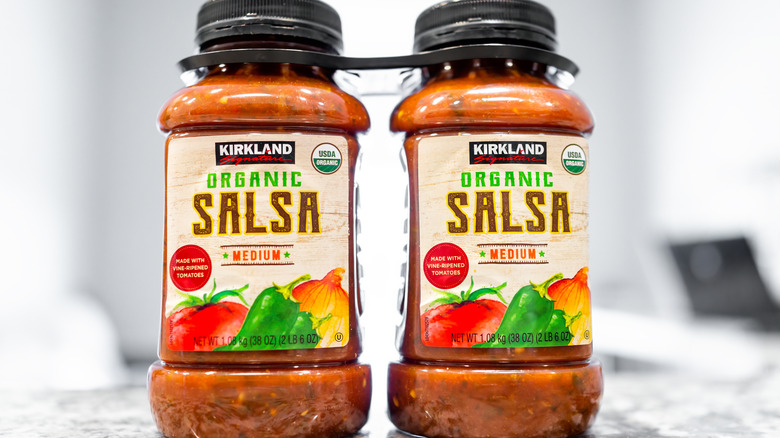
Some things sound great on paper but don't work that well in reality. One of these things involves buying large, bulk-size cans, dividing the contents, and then re-canning them in smaller containers. Some people think this will save money, while making the larger amount of food easier to store. The problems with this are many, mainly that there are no ways to re-can these foods that have been confirmed as safe for long-term storage. Cooked, canned food is also much softer, and this texture can interfere with heat distribution and promote under-processing. The food may not heat up enough in the center to kill off any bacteria that have invaded it while the original can was open, and the conditions may not be acidic enough to prevent the growth of bacteria. The same goes for leftovers from opened cans as well as leftovers in general.
There's also the very real concern that the quality and nutritional content of the food can deteriorate substantially during a second round of canning. Buy in bulk if you want, but if you divide the contents, freeze them instead of attempting to re-can them. The only time re-canning food is acceptable is when you're in the process of canning food for the first time, and you find within the first 24 hours that the seal didn't take. However, you still need to follow specific guidelines to make the food safe to reprocess.
3. Refried beans, mashed potatoes, and other thick purées
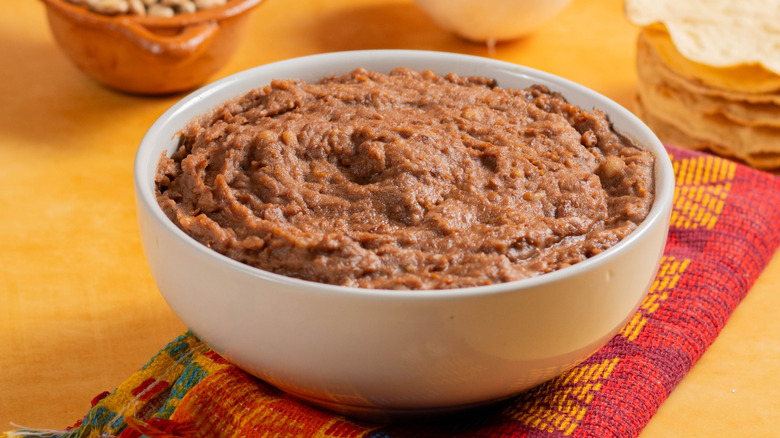
Making large quantities of refried beans and other puréed or mashed foods may save you time, but preserving them in the wrong way can ruin all that effort. These foods form very thick purées that insulate well and don't let the heat through. When you heat the purées during the canning process, the center might not heat up enough to kill off bacteria. The result is an under-processed lump of potentially unsafe food that you're unable to re-cook safely because you'll just encounter the same problems you did before.
Unfortunately, there just aren't any canning recipes for mashed or pureed beans or vegetables that have been researched and tested to ensure the safety of the food for long-term storage. Older recipes that were once acceptable are no longer considered safe to use. Instead, what extension offices recommend is canning the whole foods, such as cubed pumpkin or simmered whole potatoes, and then puréing them when you're actually ready to cook and eat them. Rehydrate dried beans and can them that way, and then make refried beans for a specific meal. Again, always follow lab-tested recipes, even for simple canning projects. And don't forget, you can refrigerate or freeze these purées; just ensure the amount you pack into a container doesn't exceed 2 inches in thickness. Use up refrigerated purées within a couple of days.
4. Pasta, rice, and recipes with added starch or thickeners
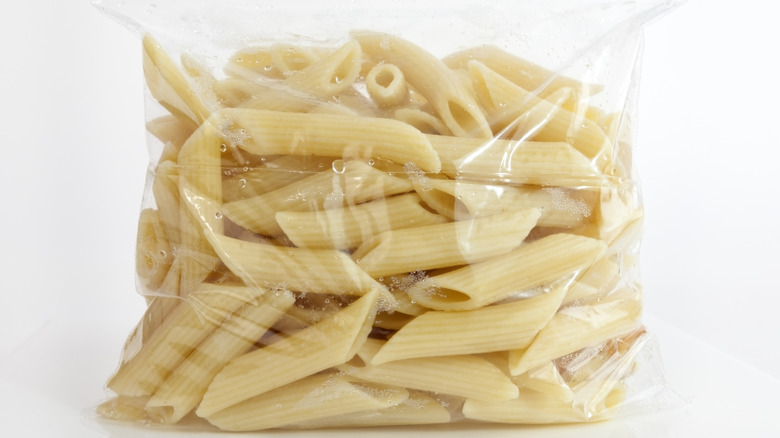
Starches and thickeners have a problem similar to that of purées: They can prevent heat from spreading evenly throughout the food when you're trying to can it. And it's not just isolated starch or thickening ingredients from the baking aisle that have this issue. Rice and pasta will do the same because of their starch content. The result is, again, like that of dense purées where the center of the food ends up under-processed and unsafe to store or eat.
Technically, it's not impossible to can a recipe that has starch in it, but you can't create your own recipe. Keep three things in mind. One, of course, is that any recipe you use that has a starchy ingredient has to be lab-tested, such as through an extension office. The second is that rice and pasta are no good for home canning. Keep those out of the canned recipe, and add them only when you're ready to serve the canned item. If you want to can soup with pasta, for example, forget the pasta and add it only when you're preparing to serve the soup.
The third is that you should never, ever, add additional starches to a canning recipe, even if it's a lab-tested one that uses a starchy ingredient. That includes cornstarch, flour, other grains, tapioca, and gelling ingredients. Adding more starch will throw off the recipe, and heat exposure from the canning process may be uneven.
5. Bread and similar baked goods
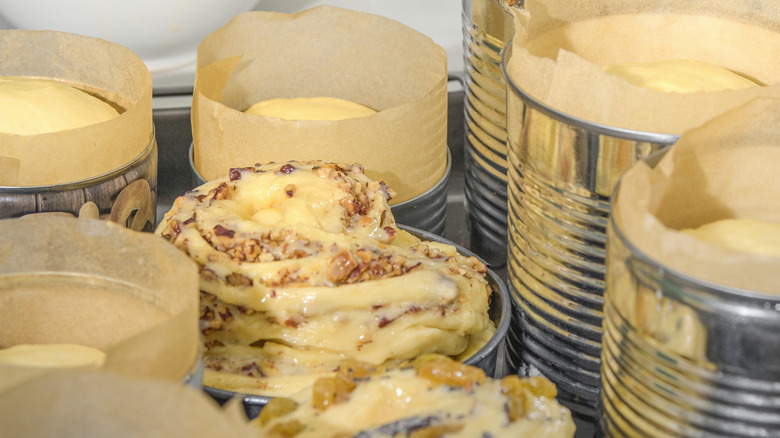
A number of random recipes call for baking bread or cake in canning jars and then sealing the jars with a lid. However, these recipes don't actually involve canning. You're really just baking things in jars for the aesthetic appeal. The recipes are also low-acid and high-moisture, which promote C. botulinum growth. Remember that commercially produced canned foods go through a more advanced canning process, and those foods often have a lot of additives and preservatives in them, as well. So, if you see canned bread at the supermarket, don't think that you can replicate that at home.
So far, no lab has been able to create a safe recipe for canning baked goods at home. Instead, either freeze the baked goods, or place dry mixes in jars and then use those to bake the items when you're ready to eat them. By the way, bacteria aren't the only safety risk you'd encounter while canning baked goods. Canning jars can shatter during the baking process.
6. Butter and other dairy products
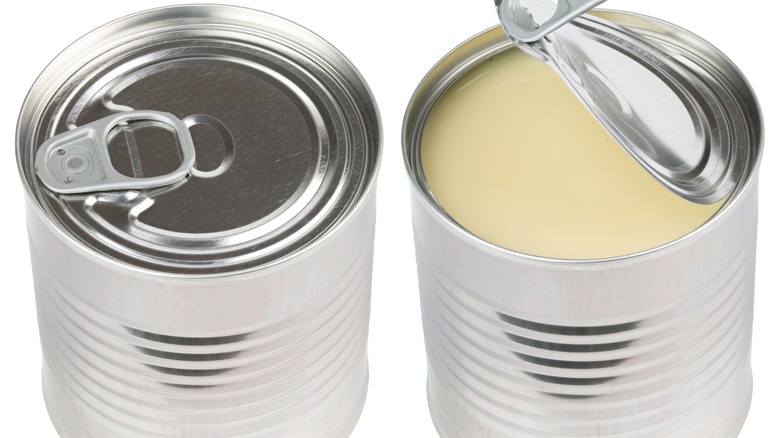
Home-canning recipes for butter, milk, and other dairy products are extremely problematic. Yes, you see plenty of canned milk and similar products at the supermarket, but again, commercial canning facilities and processes are very different from what you can do in your home kitchen. First of all, the recipes you see for canning butter are often just instructions to store melted butter in canning jars in the refrigerator, with no actual canning processes involved. Others use a dry oven to do the supposed canning, but there's just no scientific evidence that says this method is safe. You're much better off just freezing the butter in its original stick form if you want to store it long-term.
Canning cheese doesn't work, either. Cheese is low-acid, and canning it (especially softer cheeses) often introduces enough moisture to create an environment that's great for bacterial growth. Canning milk at home is generally considered impossible. There are no successful, scientifically tested recipes available, and the amount of heat needed to render any bacteria dead would also cause the milk to separate. Plus, it's low-acid and high-moisture, the two conditions that promote bacterial growth. Finally, canning milk and cream at home is so questionable that you don't even want to add them to other canning recipes, such as soups. As with other foods, don't rely on random canning recipes that haven't been tested in a lab, no matter how successful people say they are.
7. Bruised or overripe fruit
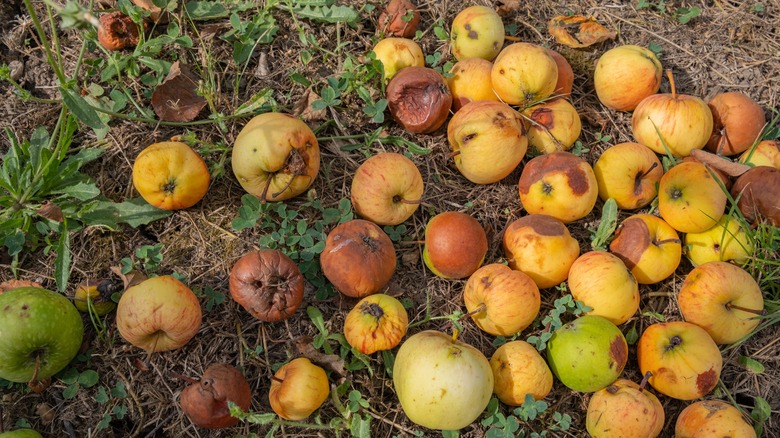
When you have a lot of fruit that's either bruised or starting to become overripe, you want to either use it as soon as possible or find a way to preserve it. Some people turn to canning, but that isn't a good idea if the fruit isn't at peak ripeness and isn't in good condition. First of all, when it's overripe, it's no longer at peak quality. That affects the quality of the canned product. The flavor may be off, and the fruit may no longer be acidic enough to make the canned product safe to store. Making jam or preserves with overripe fruit isn't recommended, either, as the final product might not gel correctly, in addition to not tasting as good. And with overripe fruit, there's the risk that it's on the verge of spoiling, which can lead to bacterial growth inside the jar.
Bruised (or worse, moldy) fruit can actually be a health hazard when canned. The mold should be self-explanatory; you'd end up with moldy food in a jar, which isn't safe to eat. Fruit mold is not like the edible molds used in certain cheeses. Bruised and blemished fruit may have bacteria hiding out in the blemishes, and the canning process might not kill off all of it.
8. Unacidified tomatoes
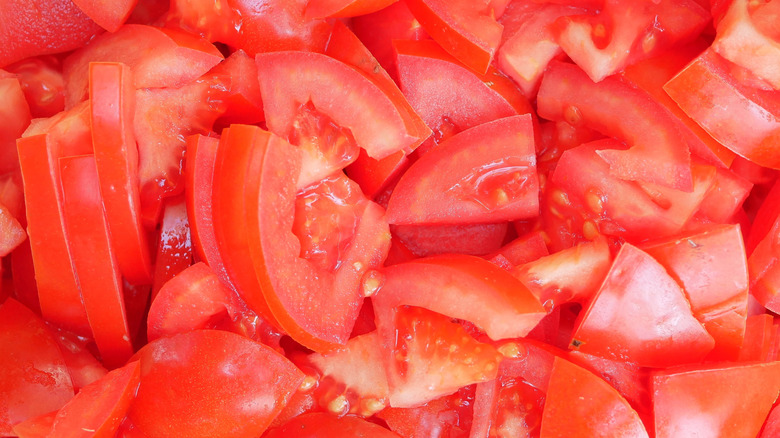
Tomatoes pose an interesting problem. They are acidic, and their pH range tends to hover near the point where they should technically be acidic enough to can safely. However, not every individual tomato is acidic enough. Some are just outside the range, several are even less acidic, and there's no way to really tell what the pH of an entire tomato is at home. That means you have to err on the side of caution and acidify the tomatoes when canning them, lest there be one non-acidic piece that leads to bacterial growth.
Acidifying just means adding an appropriately acidic ingredient to the recipe to ensure the pH throughout the jar is low enough to be acceptable. Some sources suggest pressure-canning low-acid tomatoes, but it's much safer to acidify them with an ingredient like lemon juice or citric acid. Recipes that contain a lot of vinegar may work, too, but you may want to add another acidifying ingredient anyway. As with other foods, any recipes you use should be from extension sites or other organizations that have tested the recipes in a lab to confirm that they're safe to use. You shouldn't make changes to these recipes. If you've been using a recipe for canning tomatoes from someone like a family member or neighbor, or one you found online, and the recipe doesn't include an acid, find a recipe from an extension site that's as close as possible to your recipe but with added acidic ingredients.
9. Broccoli, cauliflower, summer squash, cabbage, and wild mushrooms

Much of the time, a food can't be canned at home because there's simply no lab-tested recipe that shows it's safe. Other times, it's the quality of the food after going through the canning process that's the problem. That's what's happening with broccoli, cauliflower, summer squash, and even eggplant; they're all low-acid, and while pressure-canning might sound like an option (pressure-canning can work for many low-acid vegetables), these four vegetables wouldn't be able to withstand the heat that pressure-canning introduces. They'd end up very mushy and unappetizing, and they can become discolored, too.
Canning mushrooms at home is possible if they're commercially grown. However, wild mushrooms are not an option. Those that grew wild develop different textures, and those can throw off lab-tested recipes. There just aren't any recipes for canning wild mushrooms that are known to be safe and lab-tested.
Cabbage shouldn't be canned when raw for the same reasons as broccoli. It can discolor and develop off flavors. However, if you make sauerkraut or pickled cabbage, canning those at home is fine as long as you use (say it with us) a lab-tested recipe from an organization like an extension office.
10. Shelled nutmeats
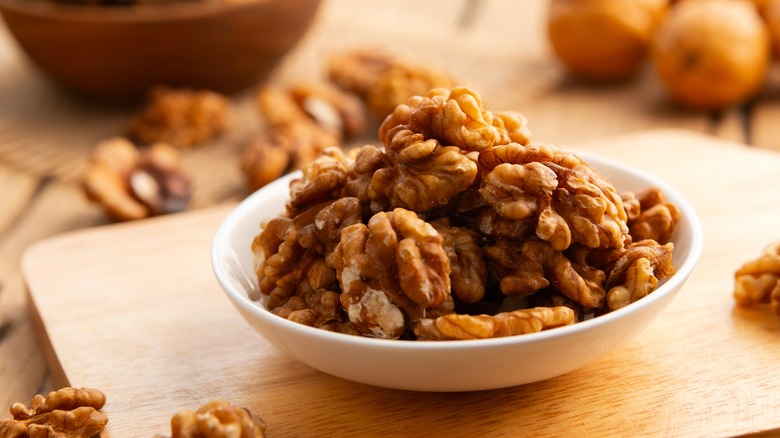
Shelled nuts are a fairly new addition to the list of foods you should avoid canning, and they're a good example of why you always want to check that you're using the latest version of a researched recipe. Shelled nuts used to be something you could put through a canning process at home. In fact, there was a recipe from a university that would have been considered appropriate to use. However, researchers have found two things in the past couple of decades that showed the canning process to be potentially unsafe. One is that the previous process for canning the nuts didn't have any research to show that the process was actually killing off micro-organisms in the jar. The other is that some bacteria remain alive even in drier conditions, such as those found in the previous recipe for canning nutmeats.
So, the advice now is to avoid canning them. Instead, look at freezing them, especially if you can vacuum-seal them. You can also dry the nuts and store them in jars in the refrigerator.