

Why It's A Mistake To Cut Your Bread's Rise Time Short
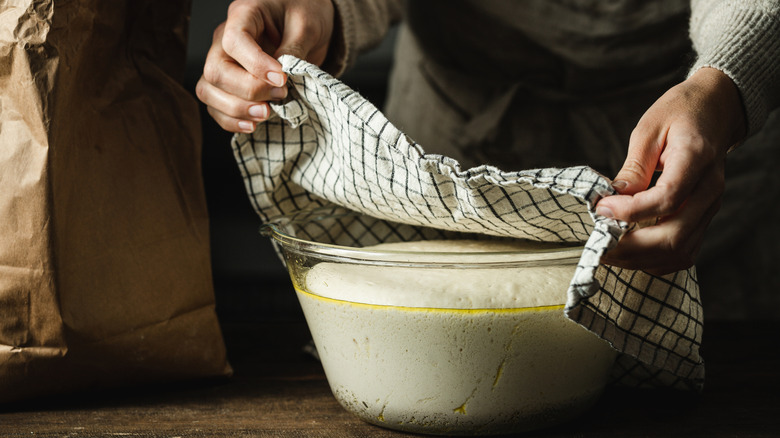
If you're baking bread and you're in a rush, you might try to look for a shortcut. The most obvious way to speed things up may involve cutting back on the bread's rising (or proofing) time, but you absolutely shouldn't succumb to the temptation to cut this essential process short. Samantha Merritt, the creator of the from-scratch baking website Sugar Spun Run, warns that shortening the rise time (or worse, skipping it altogether) can completely wreck your loaf.
"During this process, the dough develops flavor, structure, and helps you end up with a beautiful, airy crumb after baking," she told Chowhound in an exclusive chat. "As the dough rises, the yeast ferments, creates carbon dioxide, and puffs up the dough, causing bubbles inside."
If you cut rising short, Merrit warns, the result will likely be an overly dense crumb without much fluffiness, and the bread may lack flavor. The loaf also won't rise to meet its full potential height. "This is all because the yeast wasn't given enough time to do its job," Merrit explains.
Rising occurs as the yeast in bread ferments, and that fermentation has two key effects: It adds air into the bread, giving it a lighter texture, and it adds flavor. The rise time also allows gluten in your bread to relax — without this, it'll tear more easily, resulting in air bursting through weaker points on the crust. This failure in the dough's structure during baking leads to loaves with gummy, dense centers and uneven, bloated crusts.
How long to let bread rise (and how to try to speed it up)
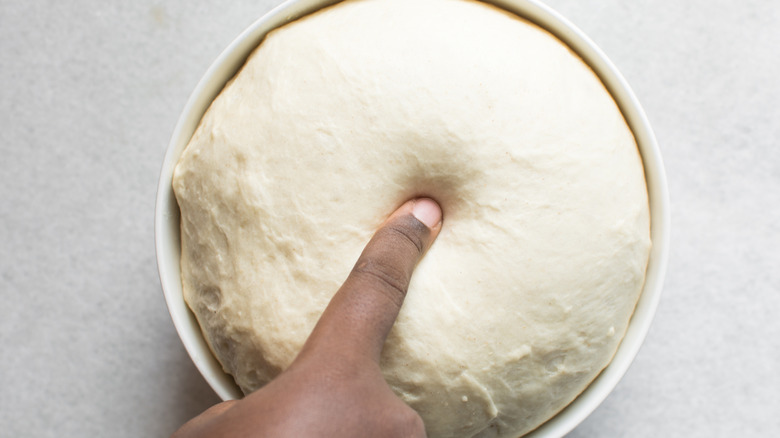
So, the detrimental effects of underproofing your bread are clear, but how long should you actually let it rise? Unfortunately, there's no simple answer here: Rise time is influenced by factors like the temperature of the space where the dough is rising, the humidity, and the age of your yeast. However, to make a rough generalization, you should plan for one to two hours of rising time for bread that's left to rise in a room around 75 to 80 degrees Fahrenheit. If you're making sourdough, you'll need longer (up to four hours). In general, your dough has risen enough when it's doubled in volume.
In short, the best place to proof bread is in a warmer part of your kitchen; you could also set the dough near a hot oven. But if you're really pressed for time and want to speed things up, the main strategy is to make sure you're placing the dough somewhere warm and humid to rise. This can involve preheating an oven to its lowest temperature for a minute or two, placing a bowl of hot water inside, switching it off, and then placing the dough inside. Don't leave the oven on, as the yeast can die in temperatures over 90 degrees Fahrenheit. Also, avoid the temptation to leave it in too long: overproofing bread is also a possibility, with excessive air in the dough making it collapse. So, just watch your clock, keep an eye on all the factors influencing rising time, and your loaves should come out perfect.