

Avoid Kneading Bread Dough On These Types Of Countertop Or You'll Regret It
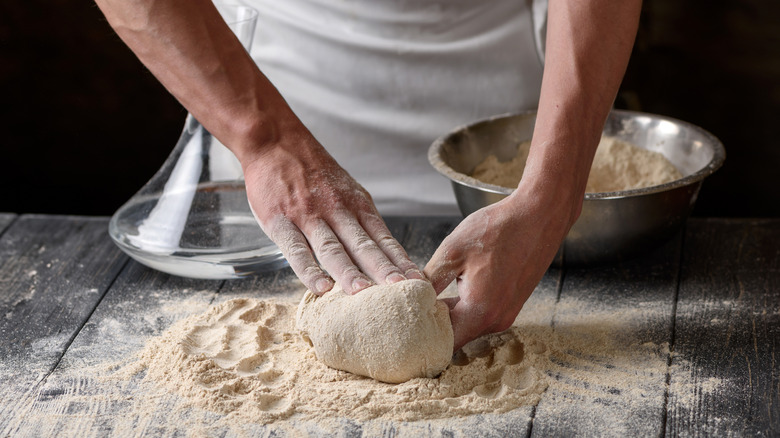
We may receive a commission on purchases made from links.
Whether you've been nursing a sourdough starter for years or only recently became acquainted with the pleasures of baking bread from scratch, there's no question that homemade bread is cheaper, tastier, and more rewarding to use than the store-bought stuff. However, baking your own loaves does require some skill, patience, and, above all, willingness to get a little messy. After all, the secret to perfectly baked bread is all in the kneading, which means pouring out a generous dosage of flour and putting your hands to work. Usually, home bakers knead dough directly on the kitchen countertop, but your countertop material has a serious impact on how easy it is to knead and clean up.
To learn more, Chowhound spoke to Samantha Merritt, creator of Sugar Spun Run, a baking website known for reliable, from-scratch recipes such as sourdough and artisan loaves. When it comes to the right surfaces for kneading dough, Merritt recommends "avoiding anything porous or textured." That includes "wood that's rough or unsealed, anything that's not food-safe, or anything grooved." She explains, "Surfaces that aren't smooth can hold onto bacteria, or the sticky dough, and make cleanup a nightmare." Wood, in particular, is known to collect particles and trap bacteria; even if you're working with a smoother wood surface, such as butcher block countertops, make sure to clean them extra-thoroughly.
The best surfaces for kneading dough
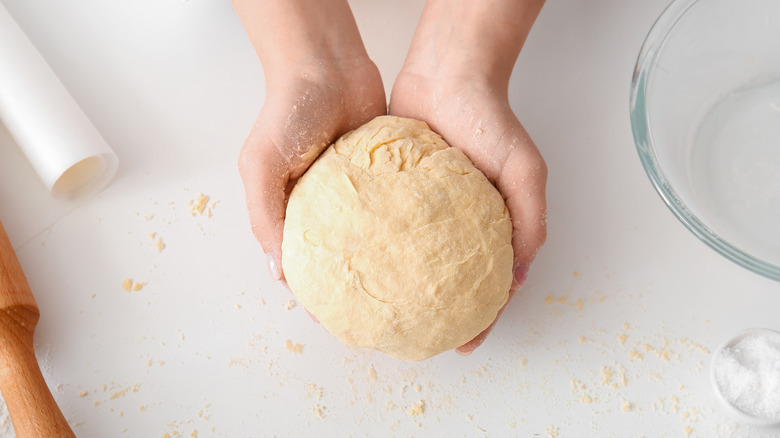
If you're lucky enough to have spacious and durable stone countertops in your kitchen, you should definitely consider taking up bread-baking. Samantha Merritt says that, when kneading dough, she "[prefers] a clean, lightly floured countertop. Something smooth, like quartz, granite, or marble." That's because they're flat, sealed, and not prone to trapping sticky particles like wood surfaces. Once your bread is in the oven, it's easy to clean these stone surfaces with disinfecting spray and a rag — no harsh chemicals or intensive scrubbing required.
Another option some bakers use is a barrier between the dough and the countertop, typically wax or parchment paper. This is a great way to minimize countertop cleanup, especially if you're rolling dough for pizza or flatbread. However, when you need to do some serious hands-on kneading, it can lead to cumbersome slipping and sliding. If you don't have stone countertops, or you simply prefer to transport any sticky messes into the kitchen sink, you could also invest in a marble cutting board, such as the KC Kullicraft marble cutting board. You could also go with the Folksy Super Kitchen silicone pastry mat. These provide helpfully mobile non-stick surfaces for kneading and rolling. Just be careful of washing too much flour down the sink since it can have expensive plumbing consequences.