

The Old School Canadian Bread That Doesn't Need Yeast (Or An Oven)
Think of traditional Canadian cuisine, and you might immediately think of a big bowl of poutine, arguably Canada's most famous dish — or perhaps you think of the bloody Caesar, the spin on the bloody mary that has become Canada's national cocktail. Yes, there's a lot of unique goodies to enjoy north of the border, but one that tends to fly under the radar is a much more humble yet culturally rich piece of food history.
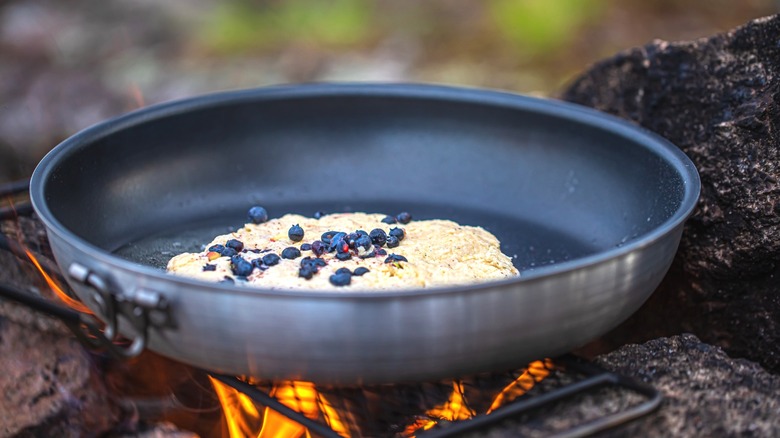
Bread is a staple of pretty well any culture that has access to flour of some kind, and in Canada that bread is a simple but hearty bread called bannock. Traditionally merely a mixture of flour and water, bannock is unleavened and usually fried. Historically, it would have been fried over a fire, doubtlessly lending a smoky flavor to the bread — though nowadays you can also fry it on the stove. It's not as bold or extravagant as some other must-try Canadian dishes, but if you want a window to the culinary past, bannock is one such example of a relic that's still around today.
The history of bannock
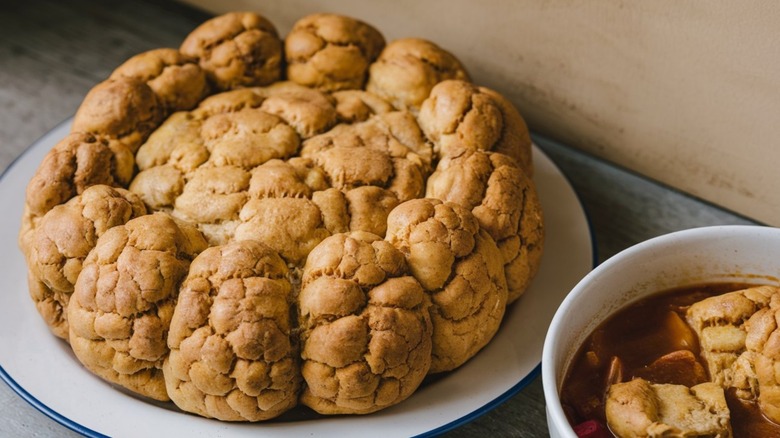
The recipe for bannock today is largely unchanged from what it used to be, although it can be supplemented with some baking powder and lard or oil. But perhaps the largest variation is in the type of flour used — and this distinction is just one way to see the cultural deviations in making bannock. Bannock was and is made by many indigenous peoples throughout the land that would become Canada, and naturally, for a region as expansive as this, different grains and meals are used as the flour base for bannock from one indigenous community to the next, based on what was traditionally available. But bannock itself was likely a cultural hand-me-down from Scottish settlers.
Though Scottish cuisine is more famous for the likes of haggis, which is still banned in the United States, it seems possible that Scottish settlers and expeditioners are responsible for bringing bannock as we know it to Canada. The Canadian fur trade was extremely lucrative a couple of centuries ago, and if you were spending time in the unforgiving Canadian wilderness, you needed a stable food to keep you going. Stuff like pemmican is the gold standard of exploration food, and bannock was a reliable way to get carb-laden food without much fuss.
As colonization advanced and indigenous peoples were displaced from their territories and onto reserves, they were given items like flour and lard. As such, bannock, with its nutrient-rich nature, became widespread and was eventually adopted by indigenous tribes in Canada, some of whom still use the unleavened bread in rituals and celebrations. The history is, naturally, complicated, but bannock remains one of the simple pleasures in The Great White North.