

This Specially Fermented Red Wine Should Be In Your Summer Rotation. Here's Why
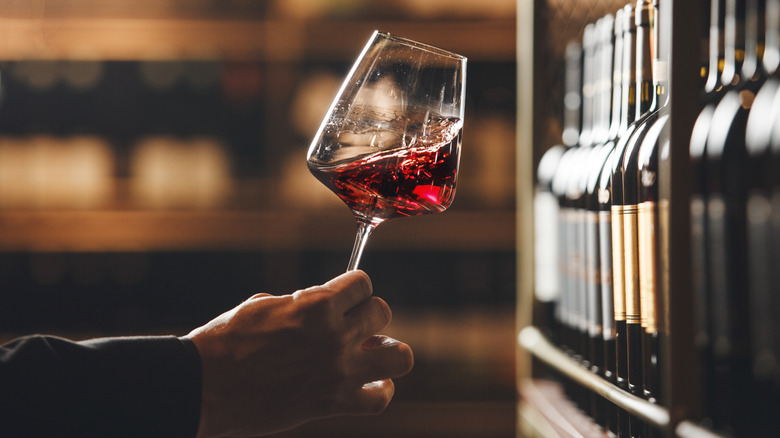
The category of "summer wine" is almost always reserved for juicy white whites and flowery rosés. If red wine factors into the equation at all, it's usually a light option to use as the wine of choice in sangria. Even though there are some quality red wines out there for an affordable price, they're often overlooked in favor of wines normally associated as refreshing and uncomplicated. Do this at your peril: Some red wines really shine when enjoyed under the summer sun, including those that undergo a process called "carbonic maceration."
Carbonic maceration wines aren't as well known as others. But, when we asked Erin Henderson, founder of The Wine Sisters (@the_wine_sisters on Instagram), Toronto's leading sommelier services and wine events company, if this less-familiar family of wines can be enjoyed in the summer, she gave an enthusiastic "Sure!" She continued, saying "these wines should be served with a bit of a chill and even 'piscine,' or on ice. Because they have low (or even no) tannin, these wines can withstand some chill." The thought of a friendly, light glass of red sounds like the perfect companion while you're soaking up the rays.
What is carbonic maceration?
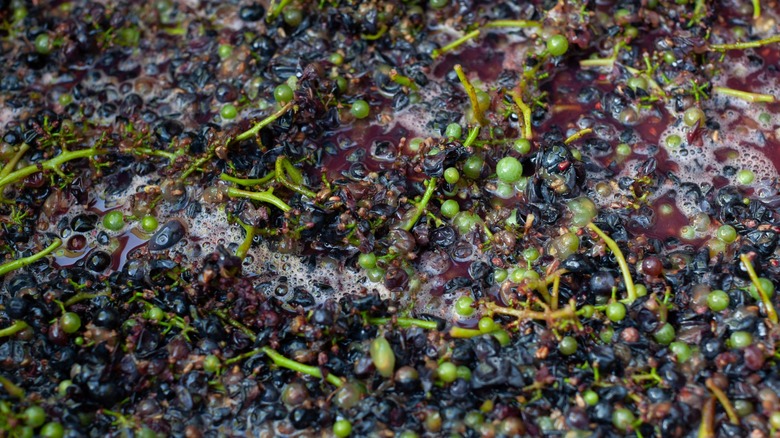
Carbonic maceration isn't a process of making wine so much as it's a technique used to begin the wine-making process. The standard, non-carbonic maceration process sees grapes crushed and left to soak in their own juices while fermenting and releasing the tannic flavors most closely associated with red wine. This is likely what you picture when you think of wine-making: Masses of crushed grapes stewing in huge containers.
With carbonic maceration, the grape is kept whole instead of crushed. As Erin Henderson told us, "Instead of crushing grapes to get the juice for wine, grapes are left in whole clusters and placed in tanks that are filled with carbon dioxide and sealed. What happens in this oxygen-free environment is the grapes start fermenting intercellularly (within the grape itself). After some fermentation happens and low levels of alcohol are achieved, the grapes burst open and a standard yeast fermentation will finish the rest of the process of turning juice into alcohol."
This process makes for wines that are "typically light in color with low tannin [and] simple fruit flavors that have a candied or bubble gum sort of flavor quality," according to Henderson. This low-tannin red makes for what you could call a very "sessionable" wine, to borrow a beer term. As for pairings, Henderson suggests easy staples such as charcuterie boards and roast beef sandwiches. Whether you're a red enthusiast or a white wine drinker looking to expand your profile, these wines should be great summertime companions.