

Avoid Garden Pests With This Genius Pistachio Shell Hack
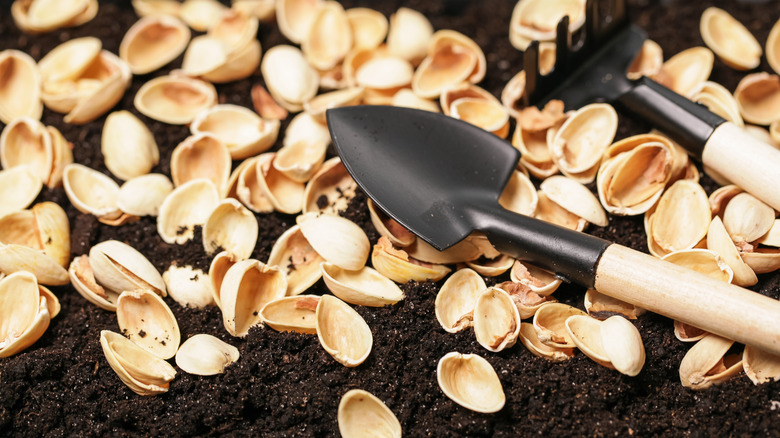
Pistachios make you work to eat them, so why not get those discarded shells to work for you? Most people don't think twice about throwing pistachio shells into the trash or organics bin, but for the gardeners among us, they could actually be more useful than you realize. Just as there are ways to use those old coffee grounds in your garden, there are ways to put your pistachio shells to work in your soil.
They have several properties that make them the perfect repellent for pests, including hard, sharp edges, and a very slow breakdown time. Crushed pistachios scattered around plants make it difficult for pests to enter, and too uncomfortable for them to stick around for any length of time. They can take up to three years to decompose, so better to have them on pest control while they are doing it rather than just sitting in a landfill.
This trick works especially well in tandem with using beer to keep slugs and snails out of your garden. You can also use whole shells as a top layer in your garden to deter larger animals like raccoons and squirrels from digging in your garden soil.
Because of the fibrous texture of pistachio shells, they also absorb odors easily, making them amazing little natural diffusers. Soak the shells in essential oils that act as natural repellents (like peppermint or tea tree oil), sprinkle them around the garden, and watch as pests turn the other way.
Other ways to use pistachio shells in the garden
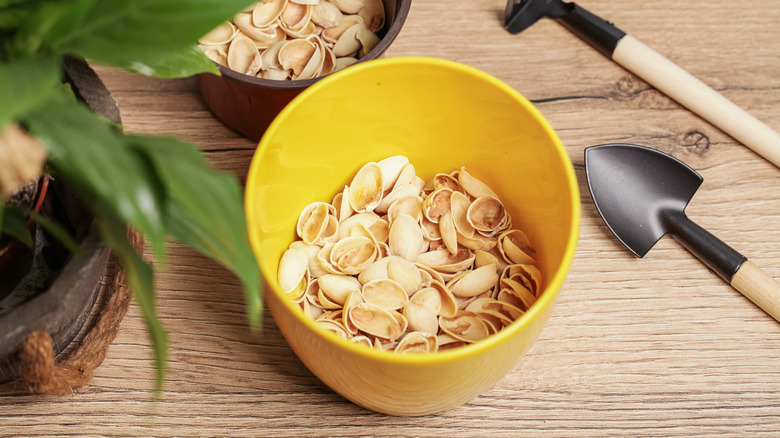
Pistachio shells, like other ingredients in your kitchen that will fertilize your garden, work well as mulch, suppressing weeds and balancing moisture in the soil. Use whole shells by layering them on top of your soil, or mixing them in with leaf mulch to create a protective layer that helps to regulate soil temperatures and insulate roots. As the shells slowly break down, they add nutrients to the soil. This also makes them an excellent addition to compost piles, where they help increase soil aeration, add carbon to soil, and increase microbial activity.
The shells can also be used in potted plants to increase drainage and prevent root rot. Simply add about an inch of shells to the bottom of your pot before adding your soil. The shells will collect any excess water that the plant doesn't need, keeping the roots from getting inundated and potentially rotting.
There's just one caveat to using pistachio shells in your garden and potted plants: Make sure to rinse them before using them if they were salted, as too much sodium in soil can be toxic to plants.