

You Don't Need Boiling Water To Brew Tea: Try This Old School Southern Method Instead
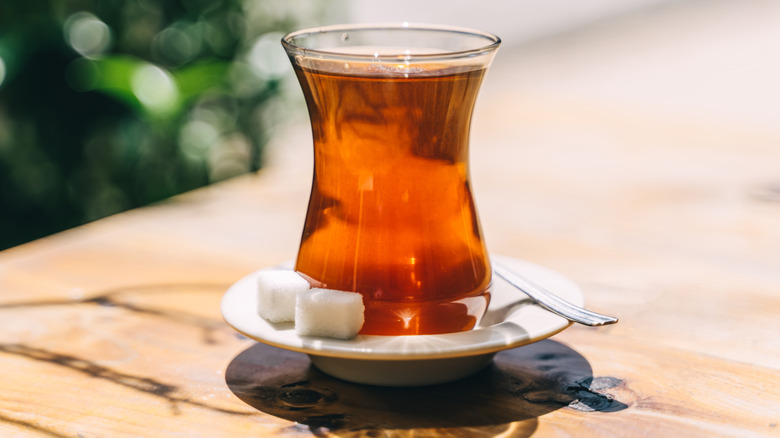
It's a real catch-22, the want for iced tea on a hot summer day. On the one hand, there is nothing so refreshing as a glass of freshly brewed iced tea, accented with tinkling ice cubes and a wedge of lemon for garnish. On the other hand, the process of making iced tea — boiling water on the stovetop for brewing — is cumbersome on a hot and sticky day, made worse by the added humidity of a steaming pot. Luckily, there is one perfectly refreshing solution to this problem: sun tea.
If you're not Southern, you might not have heard of sun tea. After all, tea, and particularly sweet tea is the unofficial drink of the South. However, the concept is pretty simple: it's tea heated by the sun, rather than the stove. To make sun tea, simply place some tea bags into a glass (never plastic) container and fill it with water. Then, place the container in front of a window, or out on a porch in the sunlight for up to 4 hours. This method works best in hot weather, so make sure it's plenty hot and plenty sunny. At the end of its steeping time, the tea should have a rich color.
Sun tea tends to be milder than stovetop tea, as it is brewed over a longer time period and at a lower temperature. This will result in a more delicate taste, especially if you're using black tea, which is relatively high in bitter tannins. So not only will it save you a hot kitchen, but it will result in a truly delicious cup of tea to boot.
Is sun tea safe to drink?

While sun tea is delicious, the brewing method for sun tea is something you'll want to think twice about, from a food safety perspective. Unlike the stovetop brewing method, in which water is brought to a boiling point, sun tea is warmed by the sun, and therefore cannot reach the threshold of 195 degrees Fahrenheit needed to kill potentially hazardous bacteria such as Alcaligenes viscolactis, a bacteria that thrives in warm water. This means that sun-brewed tea can be a risky drink, especially for those with compromised immune systems.
While there is no way to completely eliminate risk when sun-brewing tea, there are a few things you can do to reduce the chances of bacterial contamination. For one, you should not let your tea steep for more than 4 hours, this way, you're shortening the amount of time bacteria has to grow. Once steeped, place in the fridge and drink or dispose of the tea within 24 hours. Also, make sure to use distilled water, which you can make at home, as to prevent any potential contamination.
Black tea works best for this brewing method, as it does contain some antimicrobial properties. Herbal teas can be used, but they might be more likely to foster bacterial growth. Also, do not add any fruits or sugar while brewing, as they can contaminate your batch and/or foster bacterial growth. Additionally, before drinking, make sure to check your tea for a foul smell, thick consistency, or changes in color or taste that seem off. These can indicate that the tea is not safe to drink, and the batch should be disposed of.
Alternative brewing methods

So what if you want the mild taste of sun-brewed tea but you don't want to risk exposure to potentially harmful bacteria? There is an alternative: cold-brewing. Okay, so it doesn't have the sunlit charm of a glass jar glowing in the sunlight, but cold-brewed tea is still pretty tasty. Plus, cold-brewing will produce a mild flavor similar to sun tea, especially if you're brewing black tea.
In fact, cold-brewed tea might just have an even more mellow flavor than stovetop or sun tea, as it is brewed at a colder temperature. However, it might take longer for it to reach the optimal flavor, as colder temperatures aren't as conducive to steeping. This also means that you can brew your tea for as long as you care to, making the tea as concentrated or mild as you would like, unlike sun tea, which has a relatively shorter brewing time than cold-brewing.
Plus, since cold brewing is kept in the fridge below 40 degrees Fahrenheit, this brewing doesn't pose as much of a risk in terms of bacterial growth, so it is safer for people with compromised immune systems. You can store your cold brew tea is good for up to a week in the fridge, unless you also added fresh herbs or fruits, which can shorten its shelf life. If you do add fruits or herbs, keep only for up to three days, and make sure to check for signs of spoilage before consuming just in case.