

Beer Vs Wine: Which Is The Older Beverage?
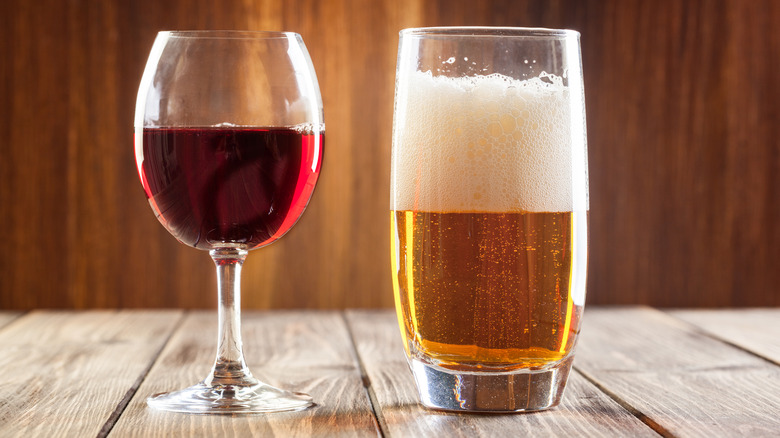
Whether you're one to unwind with a glass of your favorite wine or grab a pint at the pub with your pals, there's no denying that beer and wine are two of the most beloved boozy beverages. From social settings to casual nights in, holding on to a glass of wine or a bottle of beer fits seamlessly into the imagery. Beer and wine have been an integral part of the beverage landscape for centuries, with different countries boasting regional specialties and blends that offer a diverse range of tasting notes.
Given the rich history of these two iconic drinks, which one came first? Did our ancestors start with transforming grains into beer or fermenting a batch of grapes into wine? According to archeological evidence that was unearthed near the Mediterranean port city of Haifa, which dates back 13,000 years, it appears that beer may have been the first to grace the crowds with its malty goodness. Archaeologists discovered traces of cereal grains in mortars, indicative of beer making from back in the day.
These remnants were discovered in the Raqefet Cave, a burial site for a group of hunter-gatherers in the eastern Mediterranean called the Natufians. The Natufians were believed to be avid savants of beer and incorporated beer into their social and spiritual rituals, including paying respects to the departed. This fascinating evidence seems to suggest that beer brewing may have been the motivational impetus behind cultivating cereal grains in some regions. If this hypothesis holds, beer, which may have been an accidental invention, was more than just a communal drink, playing a pivotal role in shaping the future of agriculture and crop cultivation.
The evolution of beer and wine culture
From myths about the Brits drinking their beer warm to launching the first wine aged in space, both beer and wine have made their journeys from ancient rituals to modern-day lore. Despite the ever-changing cultural and technological shifts in society, partaking in the wine and beer culture has remained constant. Beer evolved from porridge-like brews drunk with straws by the ancient Babylonians to today's diverse range of easy sippers, from lagers, ales, and more.
Once central to communal gatherings in Sumerian and Egyptian societies, it transformed through innovations like adding hops to tame the bitterness and the establishment of commercial breweries. Ultimately, beer became a global staple, taking the title as the number one alcoholic beverage in the 19th century. Interestingly, there was a time in history when beer was consumed as a source of nutrients to supplement the vitamin-deficient diet of the poor.
Like beer, the origins of wine can be traced back to the historic Mesopotamia, where grape cultivation and vinification are believed to have stemmed. Wine was an elixir savored by society's elite while beer and ale were a treat relished by the common folk. Winemaking made its way to Europe, which is home to thriving hubs of viticulture, including France, Italy, Spain, and Greece. Thanks to global trade routes, grapes, vineyards, and winemaking started to take root across the world, with many underrated destinations waiting to be discovered, and wine tastings becoming a mandatory bucket list item for both expert and novice sommeliers. Today, both beer and wine remain mainstays of social life and gastronomy around the world. Poured from a keg or uncorked from a cellar, every sip of either beverage is a taste of history, community, and tradition that have been passed down for centuries.