

What Is Gin Really Made From?
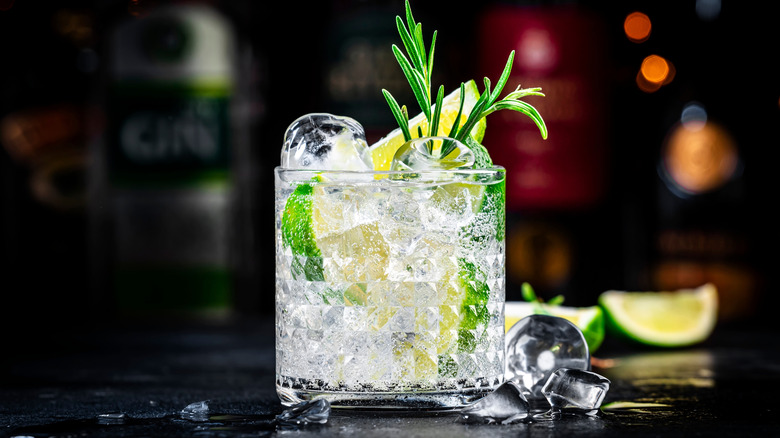
Often known as the aromatic counterpart to the stoutly neutral vodka, gin may finally be finding its way into the spotlight, and for good reason. The clear spirit has long been seen as a stodgy liquor, enjoyed by old-fashioned drinkers fond of a classic martini or the hoax of the Tom Collins cocktail. But a new generation has formed an affinity for the alcohol. This may be because of the recent resurgence of martinis in the world of cocktail craft, or perhaps today's drinkers have grown an appreciation for the complexities of gin. Regardless of the "why," we're more than happy to explore the world of this spirit.
Still, the question remains: What, exactly, is gin made from? Well, that depends. Gin can be made from many different bases, typically from staples such as barley and wheat. It can also be made from grapes, which will produce a gin with a fuller flavor profile. Still, the base of gin isn't as important as its aromatic elements, especially juniper. In fact, legally speaking, the drink must be made using juniper berries, and the fruit is often, but not always, the most pronounced flavoring in the liquor. This small berry is what gives gin its green, slightly citrus notes.
Now, gin isn't fermented with juniper berries. Rather, they are added before the drink is ever distilled. And while juniper berries are the most vital taste, they aren't the only flavoring added to gin. Depending on the recipe, some gins contain aromatics such as citrus peel, cinnamon, and other botanicals like cardamom, coriander, and licorice.
Telling one gin from another
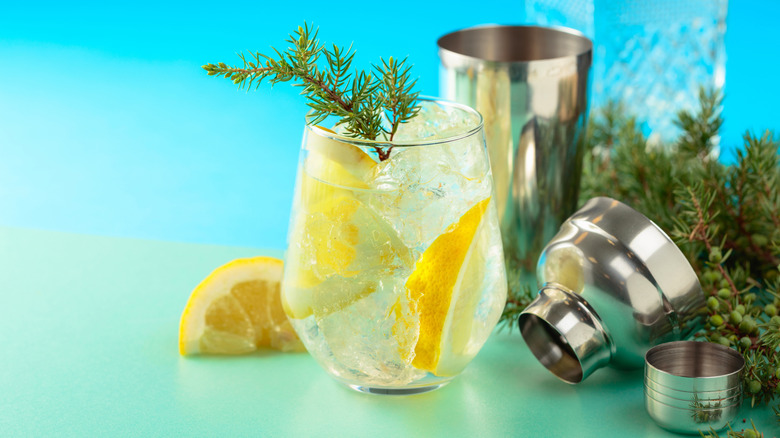
While all gin does often have a pronounced juniper berry taste, it's by no means a one-note liquor. There are many variations of the drink, including rose and aged gin, but some of the most common are Old Tom, London dry, and Plymouth. London dry gin is perhaps the most spare of all gins, but it's also the most well-known. It is, as described, dry and not overly sweet, flavored with a blend of botanicals. It's a great choice for a martini, as it is both herbaceous and straightforward, giving balance to the simple but beloved cocktail.
Old Tom gin, on the other hand, tends to play into sweeter ingredients such as licorice or cardamom. This drink pairs wonderfully in a gin fizz or even in a gin and tonic. Plymouth gin, on the other hand, tends toward the drier side and is related to (and is sometimes considered) a sub-sect of London dry gin, with a strong, aromatic citric taste that gives it a distinctive flair. Unlike the other varieties, Plymouth gin is only made by the brand of the same name. It works well in a gimlet (a cocktail served best sans ice) or with cranberry juice and a sprig of rosemary for a kick.
Making your own gin
Beyond these three primary types of gin, there are a myriad of specialty variations that you can choose from, and you're sure to find one that fits your needs. Then again, there is something fun in making something that is truly one of a kind, so why not create your own? Now, this may seem like a perilous task, but no need to fret: There will be no need for moonshine stills or bathtubs of ill repute. For a homemade gin, all you'll need is vodka, a jar (or large sealable container), and your juniper berries and botanicals of choice. Simply pour your vodka into a jar along with your chosen additives (juniper is a must if you're looking to make gin), then seal and let it sit for at least 24 hours, or until it's reached your preferred flavor profile. Once your homemade gin is up to snuff, drain it through a sieve into a container, or use it to make a large batch of cocktails (gimlets, anyone?).
Beyond juniper, you can add any number of ingredients, such as lavender, rose petals, citrus peels, or cucumbers, to create a unique take on the classic spirit. A homemade batch of gin makes a wonderful gift for the amateur mixologist in your life. Or, if placed in smaller containers, it can be given out as favors at your next party.