

Why Fruit Is Considered A Luxury In Japan
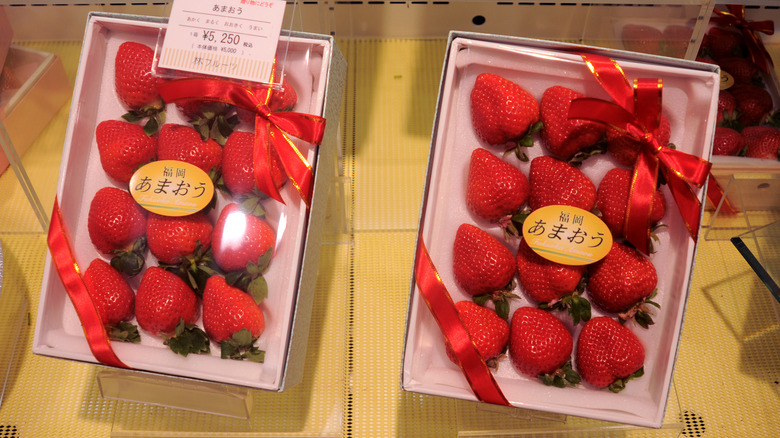
Japan is a nation comprised of four main islands (and over 14,000 smaller ones), which means space is at a premium. The extremely limited terrain immediately ups the prized nature of anything farmed — which is, in this case, fruit. Other factors in fruit's exalted status are its history, customer demand, and relatively short growing seasons. Can you imagine bringing a single piece of fruit as a gift to someone in the United States? But walk into the lower level of any Japanese department store and you'll be blown away by the coveted nature of fruit. Each individual grape begging to be plucked from its cushioned nest, each cherry polished and gleaming, apples wrapped lavishly in gold foil, and don't even get us started on the strawberries. White strawberries like the White Jewel fetch prices of $10 per berry or more.
Top that with Japan's overall approach to food, which is that specialty farmers and purveyors bring generations of know-how and expertise to their particular ingredient or craft, and you can see where this is going. The care increases, the quality increases, but so does the cost, and voilà — an apple becomes rather treasured. Japan's approach to farming fruit is so extensive and the approach layered in such tradition with an eye on hand-craftsmanship that you may know the exact farm where your tasty sumo citrus was grown.
An extensive gift-giving culture and fruit symbolism
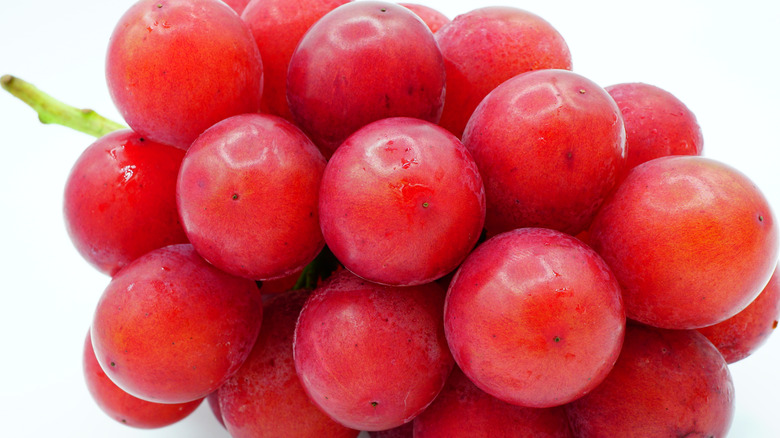
Bestowing gifts on everyone from business associates to friends and family is part and parcel of daily life in Japan. Whether you are returning from a trip, going to someone's home, or celebrating at the holidays, practically every occasion calls for bringing a gift. Interesting to foreigners is the fact that fruit ranks high on the list of choice items, perhaps because it is so rooted in Japanese history. There are extensive examples of samurai warriors gifting fruit to their feudal lords dating back many centuries, and it is still common today to see fruit left as offerings at Buddhist temples. The significance of fruit as an offering is meant to convey gratitude, respect, and growth, which translate fittingly to gift intentions as well.
Fruit is cultivated to exacting standards. It is expected to be as flawless as possible, and the price tags will make your eyes pop out of your head like a cartoon character. Case in point: The cluster of Ruby Roman grapes that was sold at auction for over $10,000 in 2020. Suffice it to say that fruit is precious in Japan, and no one is going to let a single piece languish on the counter or in the refrigerator.