

4 Best Boozes To Add To Cake
We may receive a commission on purchases made from links.
Booze and desserts have a long history together, whether it's a classic bourbon- or brandy-drenched fruit cake or a traditional rum cake. There are tons of ways to incorporate liquor into baked goods, including cakes, but you need to know what kind works best (and a few rules to follow to make sure your dessert is the best it can be). We tapped Kat Buckley, the United Kingdom-based blogger of The Baking Explorer (@thebakingexplorer on Instagram) and author of "Bakes that Break the Internet," to help us navigate the ins and outs of boozy baking.
To start, Buckley gave us a rundown on the best kinds of booze to add to cakes. It's a good range, including stout beer, cream liqueurs, amaretto, and brandy. They can be swapped out for another liquid in the recipe, can be added to buttercream frosting, or can be made into a syrup to brush on the cake after baking. "This way, you can make your favorite cake recipes as usual, but add that extra flavor without affecting the bake," Buckley exclusively told Chowhound.
Stouts add richness to chocolate cake
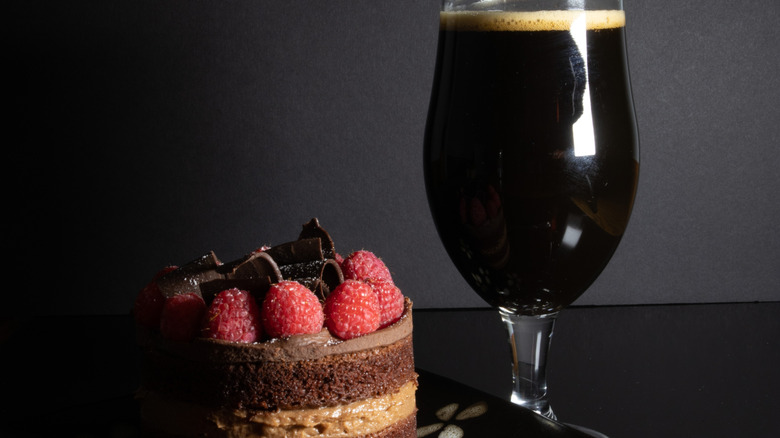
You might not immediately think about beer when it comes to a cake ingredient. However, dark beers, such as stouts, typically have a flavor profile that works well in desserts — especially in chocolate cake. Kat Buckley calls the combination "a match made in heaven" since the beer tends to have hints of chocolate, coffee, and molasses that complement the cake's other ingredients.
"Dark stouts, like Guinness, are wonderful to add to chocolate cake," she said. "They add lots of moisture and rich flavor." Guinness can replace the milk in a chocolate cake recipe and can also be added to the buttercream frosting for even more of the stout's flavor. You can also take inspiration from Buckley, who makes a buttercream frosting with Baileys Irish Cream for an even more decadent dessert. She finishes hers off by creating a design in cocoa powder using a stencil of a Celtic harp, Guinness' famed logo.
Cream-based liqueurs provide moisture and flavor
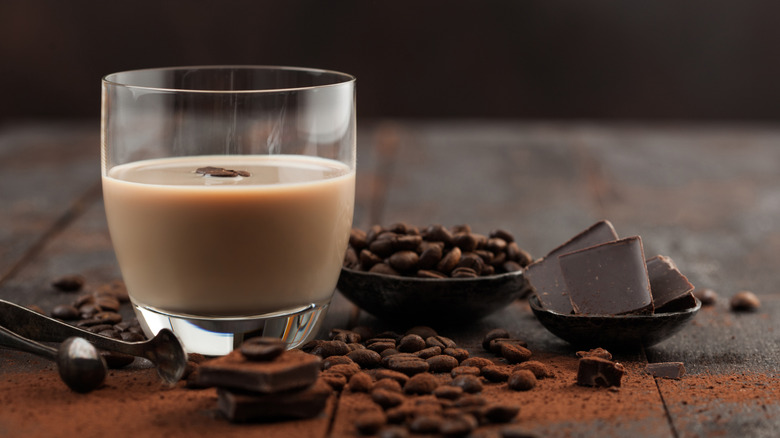
Since we've already mentioned Kat Buckley's Baileys Irish Cream frosting, let's dive a little deeper into cream-based liqueurs as a cake addition. Like stout, it can replace milk in a cake recipe. "Swapping milk for cream liquors [sic] is also a delicious way to add boozy flavor to your cake recipes, without losing any moisture," Buckley said.
A cream liqueur starts with a spirit base, whether it's whiskey as with Baileys or another type of alcohol, that's then combined with cream and various natural flavorings or spices. Irish cream can be used in many ways to amp up desserts, but bourbon cream and rum cream are two other well-known styles worth trying. Buckley has used another, more unusual cream liqueur in her cakes called Amarula. It's from South Africa and is flavored with a fruit from the local marula tree, which gives the liqueur a slight citrus flavor that's been described as reminiscent of a Creamsicle. Buckley uses it in her Amarula, chocolate, and caramel cake.
Amaretto liqueur works well in confetti cake
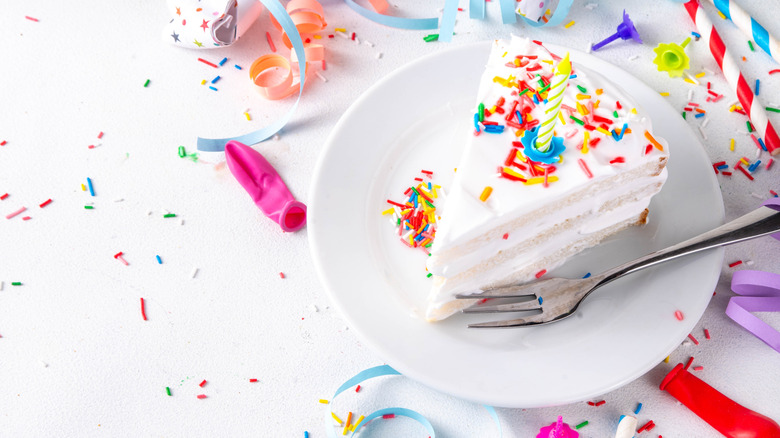
Amaretto is a sweetened distilled liqueur with a distinctive almond flavor originating from Italy, with a history dating back at least to the 1500s. Around the same time as the birth of amaretto liqueur, Italians began incorporating almonds into their desserts, including cake (though almonds used in baking have an even longer history). Jump ahead several centuries to 1989 and Pillsbury introduces its Funfetti cake mix, a white cake with colorful sprinkles that has become super-popular. Kat Buckley suggests amaretto would be the perfect spirit to add to this celebratory cake.
"Almond extract is often added to Funfetti cake, so an amaretto liqueur would be a great pairing," Buckley said. There are a few ways to incorporate amaretto into your Funfetti cake. Buckley suggests either adding the alcohol to the buttercream frosting or making a syrup that you can brush on the cake after it comes out of the oven (and before frosting it). It gives the already fun-loving cake style a boozy kick.
Brandy is a classic go-to for fruit cake
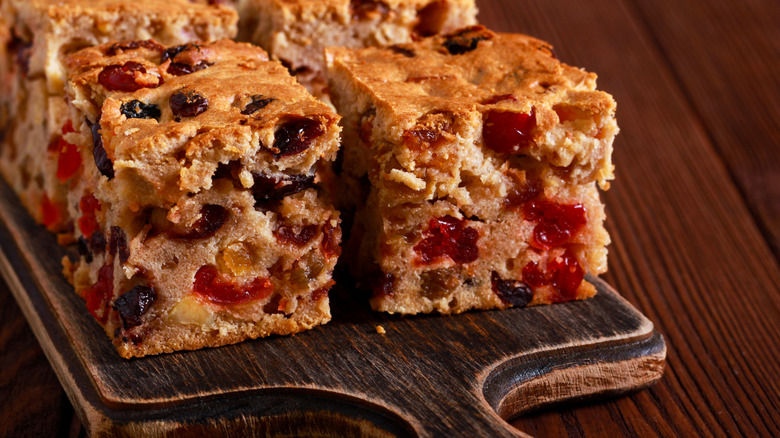
Fruit cake is a classic holiday treat that's pretty synonymous with spirits. The traditional method of making this dense cake packed with nuts and dried or candied fruit includes both soaking the fruit in booze and "feeding" the cake after it's baked. This is done by drizzling a spirit over the top of the cake on a regular schedule (once or twice a week) for up to several months before it's ready to be eaten. While there are several types of popular spirits used in making fruit cake, including amaretto, bourbon, sherry, or dark rum (among others), Kat Buckley has a favorite: "For a fruit cake, brandy adds delicious flavor."
In Buckley's fruit cake recipe, she soaks the fruit in brandy and uses it to feed the cake. She also uses Cointreau, an orange-flavored liqueur, and kirsch, a cherry brandy, for an even deeper flavor when soaking the fruit. While fruit cake, Funfetti cake, and Guinness chocolate cake are all baked, Buckley has some advice for adding booze to cakes that don't go in the oven.
Buckley's tips for adding booze to no-bake cakes
If you're looking to add a spirit to a no-bake dessert, such as an ice box cake (a layered dessert often made with cookies and whipped cream that sets in the fridge) or cheesecake, Kat Buckley has some great advice: Add much less booze than in baked cakes. "As you are not baking the cake, you don't need to add as much because no flavor will be lost during the baking process," she said.
Additionally, too much alcohol can hinder cheesecake from setting. For example, Buckley's Baileys cheesecake includes just 8 tablespoons of the cream liqueur for the filling (plus more in the whipped topping for an extra punch). Now that you know the four best kinds of booze to combine with your cakes — and how to avoid potential pitfalls with no-bake desserts — it's time to get baking. Just be sure to save a little of the spirit for the chef. You deserve it.