

Does Mint Prefer A Sunny Or Shady Spot In Your Garden?
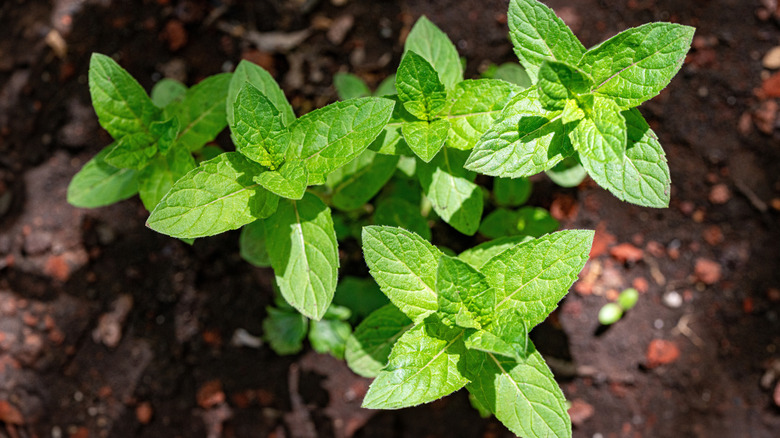
Mint is one of the most iconic herbs, and for good reason. Its refreshingly cool taste is useful in so many recipes, particularly drinks: Mint is a great herb for elevating lemonade, for example, and plays a key part in making mojitos. As such, it's easy to see why so many people have opted to grow mint at home to take advantage of its many uses.
Like many herbs, mint has its own unique set of wants and needs that help encourage its growth. The amount of sunlight provided is a crucial aspect for growing just about anything, and mint is no exception to that rule. Ideal conditions for growing mint call for full sun to partial shade, so there's some flexibility there at least; just make sure the herb has some access to sun since a fully shady spot doesn't work when growing mint. Thankfully, mint is one of the easiest herbs to grow in your garden this summer, so it can be rather forgiving and good for beginners to work with. Beyond sunlight, there are a few other conditions worth noting that can help you grow mint at home. Understanding how to care for mint can also help you avoid common rookie mistakes when growing herbs.
Tips for growing mint
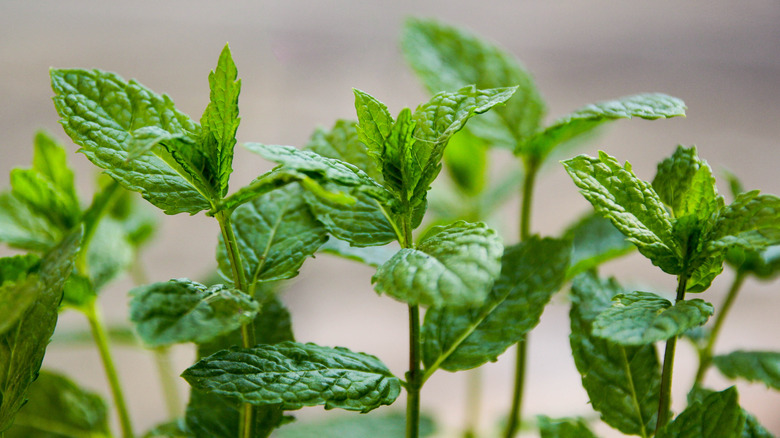
To determine the amount of sunlight your mint plant should get, take note of the temperature of your area. If you live in a warmer area, partial shade works better since mint tends to prefer cooler weather. This matters more if you choose to grow mint outside, although it's worth noting that you can just as easily grow mint indoors, in which case temperature doesn't matter quite as much.
The next important aspect to consider is soil. Mint grows best in soil that is rich and slightly acidic. Soil should also be light and have good drainage since soil that retains too much moisture for too long can result in root or leaf disease. While providing additional nutrients isn't necessary, giving your mint a balanced fertilizer of nitrogen, phosphorus, and potassium can be helpful. However, you can also choose a soil with organic matter, such as compost, already included to accomplish the same effect.
Last but not least, be sure to water your mint plant thoroughly whenever the top inch of soil becomes dry. 1 to 2 inches of water per week is a good measurement to follow, but it's also recommended to check the moistness of the soil regularly. Overwatering encourages root and leaf diseases, so maintaining a well-balanced watering schedule is crucial.