

The Best Way To Plant Sweet Corn For A Gardenful Of Plump Ears And Juicy Kernels
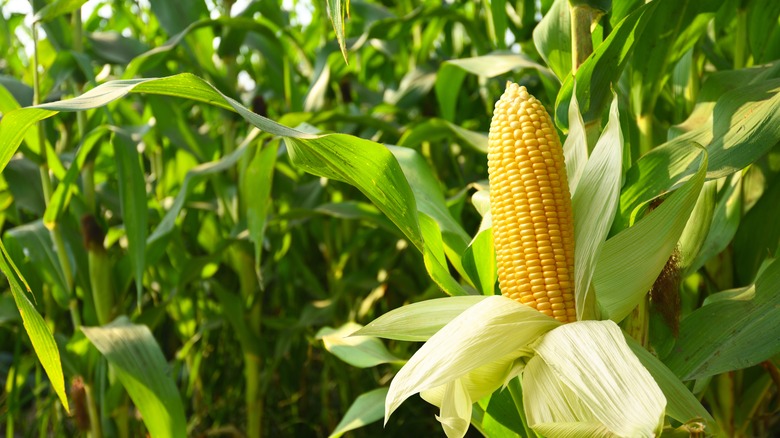
Who doesn't want some ears of vibrant green, fresh corn at their next cookout? Some homegrown corn would be the capstone on a delicious grilled romaine and corn salad, or even a great baseline for some delectable corn "ribs" — but for any of that to happen, you first need to plant those little kernels. That's why we're here to tell you what you need to know to get the most out of your future corn harvest.
At its core, what you need to know about growing corn is that you should plant it in relatively warm, fairly neutral soil, and that you should only commit to only one variety of corn in your garden to avoid some very counterproductive cross-pollination. It's also important not to flood your kernels when they're young, or else you risk making the kernels rot instead of germinating. Of course, with these essentials in mind, the road to bundles of fresh corn is laid out before you.
When should you start planting corn?

Corn has a pretty broad growing season — the only caveat is that the soil needs to be warm enough to facilitate your corn's growth. Technically, you can start planting corn as early as mid-spring, but depending on where you are geographically, you might want to hold off for a little while. Corn is sensitive to any cold snap, so you'll have to make sure the last frost of the season is well behind you. From there, your soil should be warm enough on a regular basis to actually sustain the corn's growth.
Corn likes its soil pretty warm. The soil temperature range should be between 68 and 86 degrees Fahrenheit, with the side-note that you want the soil's temperature to be at least 60 to 65 degrees Fahrenheit to even consider starting your gardening. Corn also likes its share of direct sunlight with six to eight hours of light being the minimum desired amount for your crops. Corn is most at-home in warm summery weather, and if you tend to have decently warm nights as well (in the range of 62 to 74 degrees Fahrenheit), then your corn should really be in its element.
Where should you plant corn?
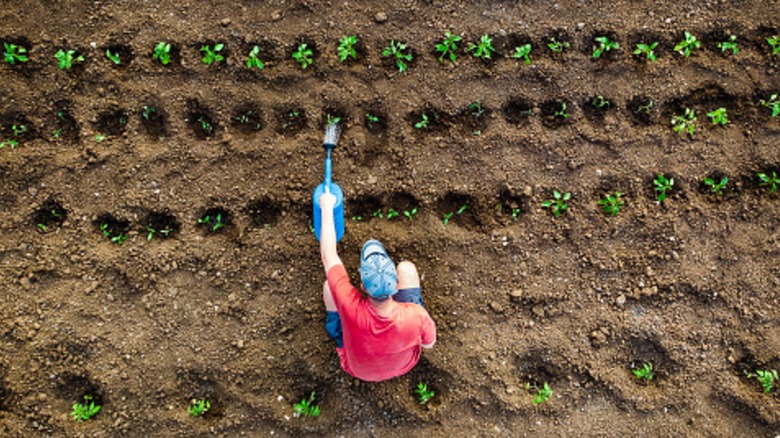
Since you'll need to give your corn plenty of warmth and sunlight, you should take that into account when you're planning your garden. From there, it's also important to consider the type of soil you have, how nutrient-rich it is, and how well it drains. All three of these aspects play a role in determining how successful your corn haul will be by the time everything has grown.
A pH between 5.8 and 7.0 is the reported sweet spot for your corn. If you find that your soil isn't up to snuff, you can enrich it with compost, manure (make sure it isn't fresh), and anything else you need for some nutrient-dense, nitrogen-rich soil. And while it may seem finicky, corn likes to be consistently watered, but hates to be over-watered. While this might seem like corn is being a diva, really it just means that you need soil that drains well. As long as that cycle is kept up, consistent watering shouldn't be an issue.
It's also worth mentioning some companion plants if you're planning your summer garden. Dill is good at driving away certain pests, and beans, peas, and cucumbers are all great friends with corn stalks. Even lettuce can work here, as grown corn stalks help to shelter lettuce from the brunt of the summer heat. And don't worry if you've got ample corn come harvest time — it's super easy to store if need be.