

Here's How To Tell When Your Bagel Dough's Bulk Fermentation Is Finished
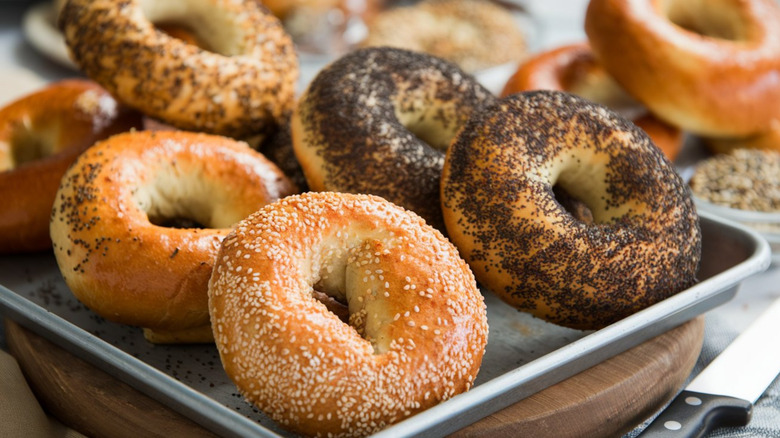
Learning how to make bagels at home is a wonderful addition to any culinary aficionado's skillset. Bagels have become an American breakfast staple, so knowing how to make them will ensure you have a constant supply. There are a few steps to take into consideration that will enable you to become a great bagel maker. To help you master your bagel baking skills, Josh Small, CEO and managing director of DoughCo Bagels, spoke exclusively with us to share some tips on fermenting and proofing bagels for impressive flavor.
There are a few steps to follow and some mistakes to avoid when you make homemade bagels. One step is bulk fermentation. Once you mix the dough using a good recipe, the bulk fermentation stage will allow the dough to rise because of the activated yeast. At a temperature of about 75 degrees Fahrenheit, the bulk ferment will take about one and a half hours. Keep in mind that it's possible to over or underproof your dough, but there is a way to check to make sure it is finished. Josh Small says, "When you poke the dough bulk, it should slowly bounce back into place. If the dough does not bounce back, it could mean it's under or overproofed."
It's best to err on the side of underproofing your dough, as the next phase in fermentation will provide a remedy. If dough is overproofed, it might become unusable.
Completing the proofing process when making bagels
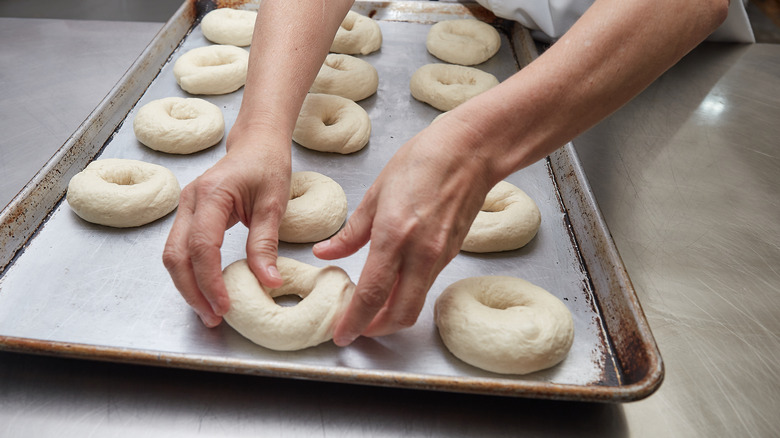
You might wonder if buying a proofing box, which is a container that keeps your dough warm, will help you during the bulk fermentation phase. According to Josh Small, it's not really that important to have a proofing box. "It is much more important to have a cold ferment in the fridge after the bagels are rolled," he says. If you're utilizing underproofed dough, cold fermentation in the fridge will help complete the process. In fact, he says, " ... the bulk ferment is the least important fermentation step."
Proofing bagels in the refrigerator for 24 hours will allow them to develop rich flavors. You might wonder how the bagels will develop flavor if bulk fermentation isn't completed, and if that's even possible. "In a pinch, you can also skip the bulk fermentation phase if you are planning for an overnight cold ferment, as this will still give the bagels plenty of time to develop flavor," Josh Small says.
There are other tried-and-true techniques to make bagels worthy of being craved, and one of them is the boiling trick to give bagels their signature shine. Boiling bagels before baking ensures a chewy crust. And if you'd like an easier option for making bagels when you're low on time and need to skip some steps, try some simple two-ingredient homemade bagels.