

The Candy That Was Originally Invented To Help Smokers Quit

Pez is a world-renowned confectionery brand known for its crisp candy and unique dispensing gadget. Millennials and early Gen Z consumers likely recall its prominence in pop culture, from featuring "Star Wars" and Disney designs to being referenced in the "Bleach" anime. Pez may be a nostalgic item now, but it once held a more mature reputation as a breath mint for adults who were quitting smoking.
Pez, derived from the German word for peppermint, "pfefferminze," was developed by an Austrian businessman named Eduard Haas III in the early 20th century. As the heir of a baking powder company, he created a pocket-portable peppermint candy marketed toward adult consumers. He was an anti-smoking advocate who saw that many people weren't keen on giving up cigarettes after the events of World War II. It was his hope that Pez tablets would help curb cravings for overeating or smoking while freshening the breath.
Unfortunately for Pez, the tobacco industry was booming from successful advertisements and having provided soldiers with cigarettes during the war — breath mints weren't going to cut it. As a result, Pez had to pivot its strategy to a different group of consumers, where the brand found its ultimate success. By swapping the former lighter-shaped dispensers for new designs featuring beloved cartoon characters, Pez began appealing to children.
Why Pez switched from minty to fruity
Eduard Haas III wasn't completely off the mark with his original idea. Breath mints and mint gum have long been used to keep the mouth busy and provide a comforting sensation to those quitting smoking. While mint candies alone can't dispel nicotine cravings, menthol, a chemical found in peppermint, has an oral "cooling" effect. This is why flavors with menthol, such as peppermint and wintergreen, are often featured in cough drops and mouthwash.
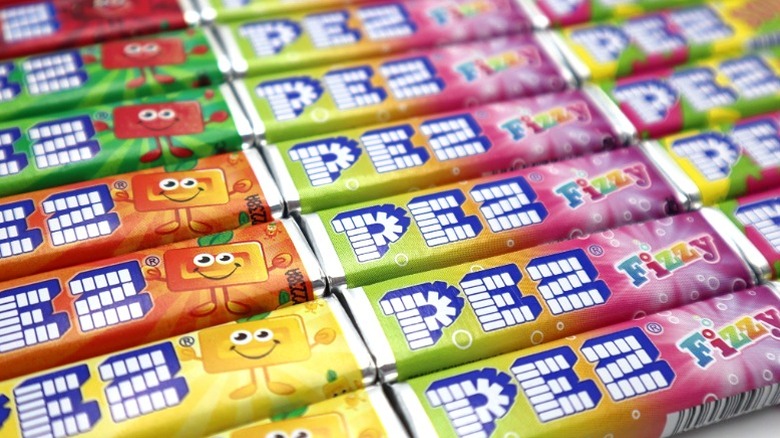
As Pez worked to develop a more kid-friendly image, the flavor of the candy needed to adapt as well. Instead of being a candy to compete with Dynamints and Tic-Tacs in the '70s, Pez was among the sweet and chalky crowd with Smarties and SweeTarts. Switching the flavor from minty to fruity was a wise decision on the brand's behalf, and it was an early example of how certain flavors can be perceived as "mature" or "juvenile" in marketing.
For example, adult toothpaste is minty while children's toothpaste often tastes like strawberries or grapes. Children have sensitive palates, and they often dislike mint because it tastes too bitter or spicy. However, fruity flavors are sweet and appealing to this demographic, which is why the U.S. Food and Drug Administration banned flavored cigarettes (with the exception of menthol) in 2009. Once Pez switched from breath mint to sweet candy, it found a way to put a smile on customers' faces — even if it didn't quite achieve its founder's initial goal.