

You Might Not Be Able To Enjoy Your Bed-And-Breakfast Food In Bed
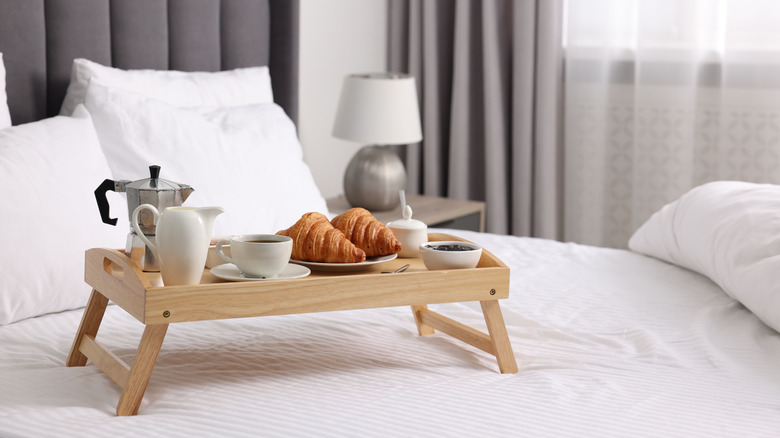
So you're headed to a positively gorgeous bed and breakfast in the countryside: You'll go for walks, hang out by a fireplace, and wake up to a hearty, homestyle breakfast in bed. Right?
Not necessarily: While "bed" and "breakfast" are right there in the name, it doesn't mean the two necessarily go together. A B&B isn't the same as a hotel — it's arguably closer to a home stay, and while you might get a more intimate and cozy experience as a result, it also means there's a variety of bed-and-breakfast etiquette rules that come with staying in one. One such rule is that B&B innkeepers might bar you from taking food into your room. This certainly isn't a universal rule, but it's not uncommon, so if you're hoping to chow down on eggs and bacon from the comfort of your comforter, you should ask first.
The reasons for this can vary: Most practically, if the rooms have vintage furniture or unique (and perhaps high-end) bedding, your hosts may be understandably worried about them getting stained with bacon grease. (If this rule applies, it means you probably shouldn't have any food in the room, not just breakfast.) Bear in mind that a B&B is often a small, family-run business, so they may not have the sort of cash to just replace things, or an industrial laundry to fix it. Another possible reason is that B&Bs are often more social environments where you'll dine with other guests. To create that kind of vibe, innkeepers may encourage you to take breakfast seated around a communal table.
Some other breakfast-related etiquette to know

Even if you can take your breakfast back to your room, you may want to avoid doing it every day of your stay. Again, this may depend on how social the vibe of the B&B is, but in any case, it can be a nice gesture to eat in the presence of your hosts since they'll usually be cooking it all themselves.
There's some other breakfast etiquette to consider at most B&Bs, and a lot of it centers around being respectful of your innkeepers' time and energy, since they're often taking on many roles in the house. For example, if you plan on skipping breakfast altogether, let them know the night before so food or energy doesn't go to waste. In some cases, a to-go breakfast might be possible as well — but again, ask in advance.
On another note, if you have special dietary requirements, you'll also want to highlight these in advance. Bed and breakfast hosts are (usually) very accommodating, but they won't necessarily have a hugely stocked commercial kitchen that allows them to make last-minute substitutions at 8 a.m. on a Sunday morning. Finally, whether you're eating in your room or not, stick to any breakfast service times. Some establishments may ask you to sign up for a particular time so the hosts aren't plating 16 breakfasts at once, so it's only polite to try to be on time.