

Frangipane, Almond Cream, And Almond Paste: How To Know What Your Recipe Needs

Move out of the way, vanilla. Almonds are the real powerhouse of baking. From almond extract, which "Ace of Cakes" star Duff Goldman considers to be an underrated baking ingredient, to almond paste, which is the key to any Italian rainbow cookie worth a plastic container, there is no end to almond's ability to bring out the best in any baked good. There are many ways in which to add a little almond to your next baking project, from frangipane to almond cream and, yes, almond paste.
However, it can be difficult to know the difference between these three creamy, almond-tasting ingredients. After all, if you're not a professional baker, these almond-flour based foods can appear similar in consistency and in application. Each gives pastries and cookies a sweet, floral, slightly fruity flavor so signature to almonds, but there are some key differences that set each apart from the rest. So, what are frangipane, almond paste, and almond cream?
Let's start with the simplest of the three: almond paste. Similar to marzipan, almond paste is a confection made from almond flour (or finely ground almonds), powdered sugar, a binding ingredient such as almond extract, and egg whites. Almond cream is also a baking staple, but it involves a bit more prep work and ingredients. Almond cream is made from butter, sugar, almond flour, eggs, and sometimes rum. Frangipane, on the other hand, is a mixture of almond cream and crème pâtissière, a custard used in such pastries as eclairs.
How to use each almond product
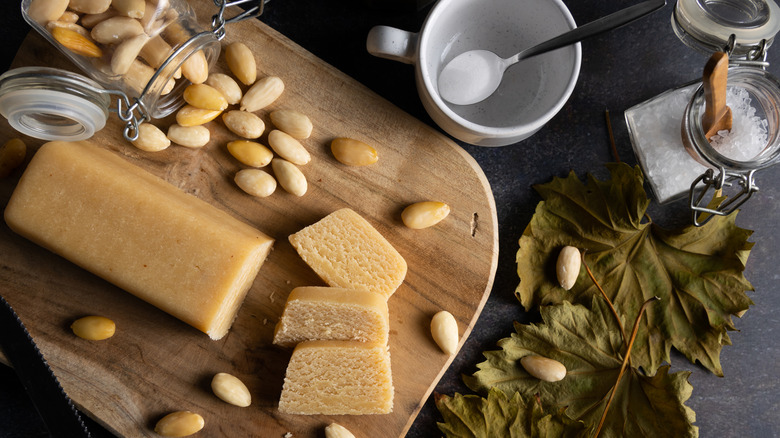
Now that we know the difference between these three almond-based baking ingredients, let's explore their various uses. When it comes to applications for each ingredient, there is some amount of overlap. For example, both almond paste and almond cream can be used to fill almond croissants, the addictive pastry you can now find in Costco's bakery, by the way. Still, almond cream is the more traditional filling for almond croissants. Almond paste tends to work best in cookie recipes, where almond paste is used to bring out flavor and can also contribute to the cookie's texture.
However, unlike almond cream, almond paste does not expand as it cooks, so it wouldn't work well in a fruit tart if you're hoping for the almond base to envelop the fruit filling. But what of frangipane? Frangipane's applications are similar to almond cream, and they are often used interchangeably. That being said, there are some key differences between the two. Since frangipane is a combination of almond cream and crème pâtissière, it has a creamier texture, so keep this in mind when picking one over the other for a baking project. For this reason, if you want to add almond flavor to, say, brownies, adding almond cream might be the way to go, as it will bake up to a solid texture that melds well with its texture. It is important to note that frangipane, almond cream, and almond paste all include raw eggs, which can carry salmonella, so make sure to bake before you enjoy.
It's also important to remember that often, outside of the French patisserie scene, the terms frangipane and almond cream are often used interchangeably. And many guides mistakenly refer to almond cream as frangipane. So, make sure to double check your recipe before adding one over the other.