

15 Delicious Dishes With Incredibly Misleading Names
We know not to judge a book by its cover, but were you aware that you shouldn't judge a dish by its name either? If you are the type of person who peruses a menu reading only the titles and not the descriptions, then eventually you are going to get a shock, one way or another.
Whether you order sweetbreads expecting a sticky cake or Rocky Mountain oysters because of your love of shellfish, relying on names alone could leave your taste buds very disappointed. On the other hand, you may be missing out on fantastic regional specialties, all because the name "toad in the hole" or "slugburger" put you off at first glance.
We've compiled a list of dishes whose names don't accurately represent what you'll be served, and set the record straight on what they really contain and why they inherited such misleading titles. Join us as we explore 15 delicious dishes with incredibly misleading names.
1. Bombay duck
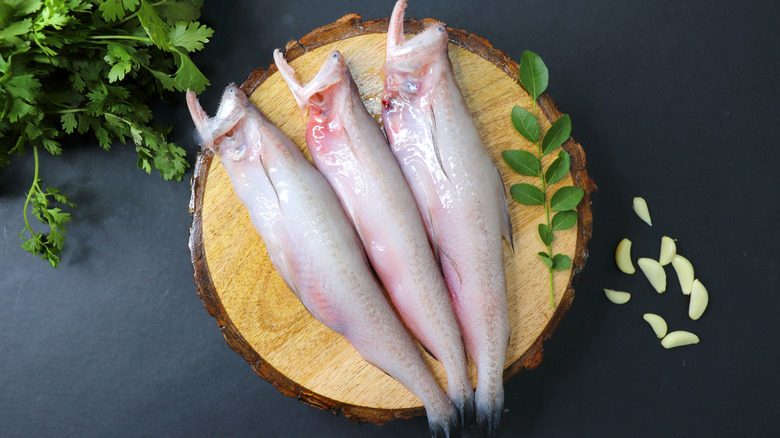
If you're in the mood for a delicious, rich duck dish, then you should steer clear of Bombay duck. Despite its name, you won't find any succulent gamey meat or crispy skin in this dish, which actually refers to a small fish (Latin name: Harpadon nehereus). It is considered a delicacy in many parts of India, and the most common ways to eat it are to deep fry it until crispy or add it to curries.
The unusual and misleading name likely comes from the way the fish used to be transported when railways were first introduced in India. Huge crates of the fish would be sent by train and were casually given the name Bombay daak, which translates to Bombay mail. This name was misunderstood and became Bombay duck, and the moniker is still used today
If you're in the mood for salty dried fish with intense flavor, you should absolutely order a Bombay duck. However, if you're in the mood for some succulent game, maybe try a dish with a different name.
2. Jerusalem artichokes
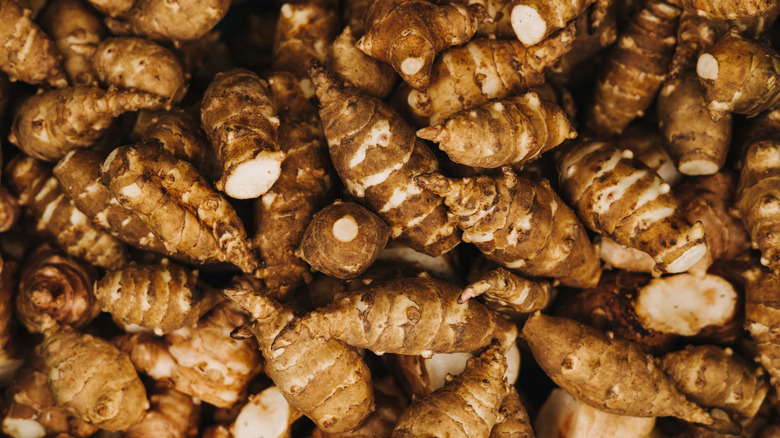
It would be a fair assumption to think that this next vegetable on our list is an artichoke that originates in Jerusalem. But, of course, that's not the case. It is, in fact, a root vegetable from North America that is related to the sunflower. Rather than an artichoke, it is more like a cross between celeriac and parsnip.
One theory on where the name comes from surrounds the root's close resemblance to the sunflower plant. In Italian, the word for sunflower is girasole, and it's possible that, over time, this was mistranslated to Jerusalem. The artichoke misnomer is slightly less interesting and appears to come from the fact that European settlers in America thought it tasted like an artichoke, although it clearly doesn't look anything like one. An alternative name for it is a sunchoke, which at least ties in more closely to its genetic roots.
Putting aside the confusion of the name, Jerusalem artichokes are absolutely a vegetable that you should start adding to your meals. They have a beautiful, sweet yet earthy flavor, and their versatility means they can be used in savory dishes or even in desserts. They work brilliantly mashed alongside meat or fish, and they have a much lower starch content than potatoes, making them an ideal option for those who are glucose sensitive.
3. Monkey bread

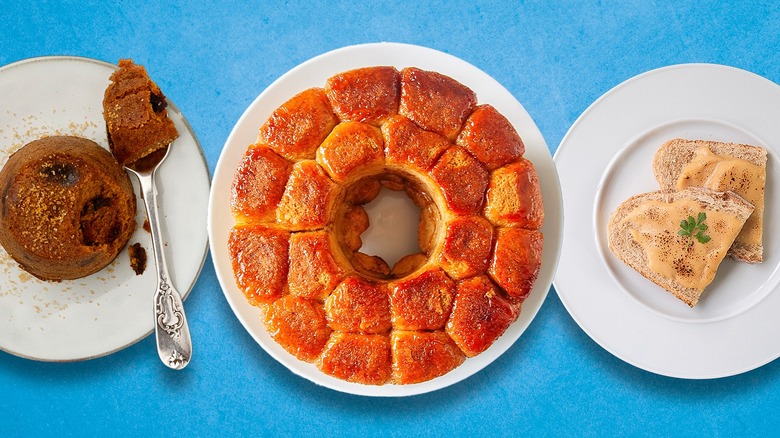
If the name of this sticky, delicious treat puts you off trying it, then you are definitely missing out. Monkey bread is not the kind of cake that you eat elegantly, since you will likely pull it apart with your hands and end up covered in tacky glaze and sugary syrup. Monkey bread is a classic indulgent brunch dish made by layering sweet dough in a bundt pan and drizzling it with melted butter, cinnamon, and sugar. So, where exactly do monkeys come into the equation?
The history behind the name of this dish is debatable. The two most likely theories are that the finished cake looks a little like a monkey puzzle tree, or simply that the best way to eat it is to pull it apart with your hands the same way a monkey might. Either way, the name doesn't do justice to this fantastic treat that is loved by kids and adults alike.
4. Rocky Mountain oysters
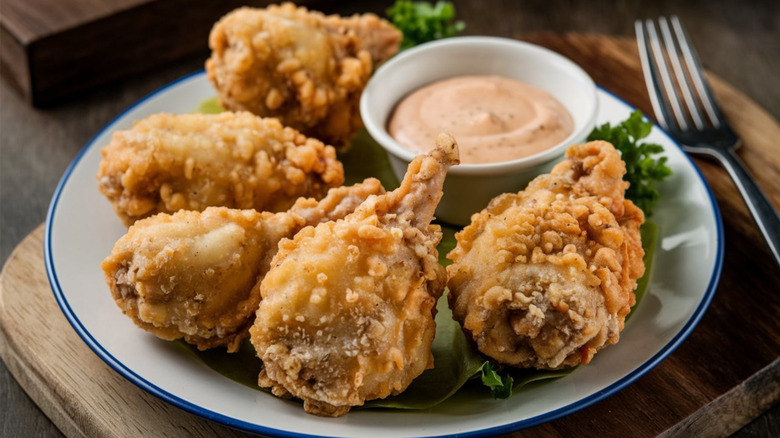
If you see Rocky Mountain oysters on a menu and your mouth begins to water at the thought of some delicious raw shellfish, you could be sorely disappointed. Rocky Mountain oysters have no relation to seafood whatsoever and are, in fact, bull testes. To be fair, they are breaded and deep-fried to make them crunchy on the outside and soft on the inside, but they are still the testicles of a male cow. Rocky Mountain oysters are a popular delicacy in the West, particularly in Colorado, and, if you have the stomach to try them, you may be pleasantly surprised.
The testes are also known as cowboy caviar or prairie oysters and are removed from young bulls to encourage them to fatten up. Rather than throwing the testes away, residents of the Rocky Mountains chose to turn them into a delicious snack (assuming you're not squeamish) that is still often served at festivals. As long as you know what to expect and you're not disappointed by the lack of shellfish, give Rocky Mountain oysters a go. At the very least, you can be proud of yourself for trying something a little bit different.
5. Frogmore stew
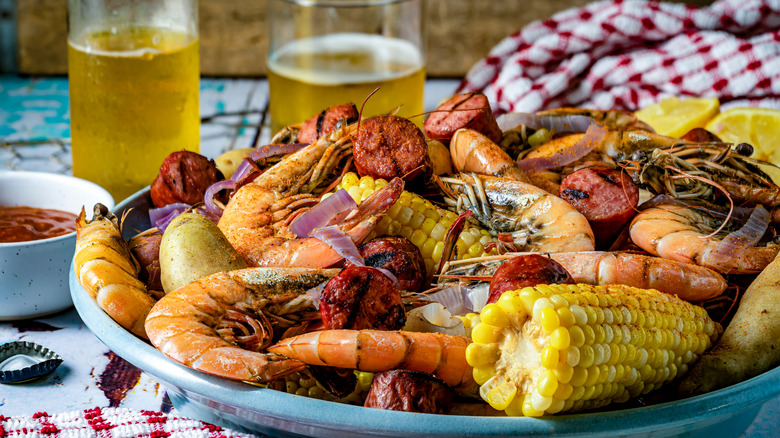
If the thought of eating amphibians doesn't exactly fill you with excitement, you don't need to give Frogmore stew a wide berth. The unusually named dish actually refers to the town where it was created, rather than its ingredients. Instead of frogs, it is made from shrimp, sausage, and corn, and is a popular dish in South Carolina, where the town of Frogmore is located.
Also referred to as Lowcountry Boil or Beaufort Boil, the froggie element is not the only misleading part of the name. It's not really a stew either, since it has a much fresher flavor and is not eaten in a rich sauce but drained before serving. Neither of the misnomers really matters, since Frogmore stew is a delicious way to cook shrimp, and should definitely be added to the "must try" list for seafood fans. It is perfect for feeding a crowd at garden parties or big events, so your guests may not even know the slightly off-putting name — unless you deliberately tell them, of course.
6. Welsh rabbit
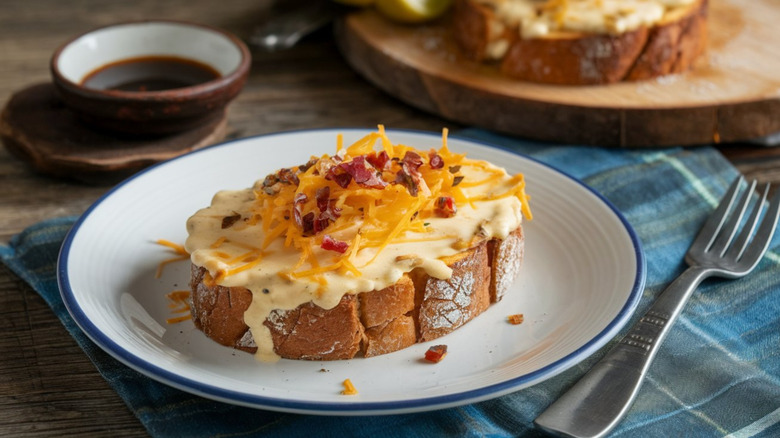
Welsh rabbit is a delicious, indulgent lunch dish that's often enjoyed in Britain. However, its name is more than a little misleading. It doesn't now, nor has it ever included any rabbit. In fact, there's no meat in the dish at all: It's actually made from melted cheese with a little butter, mustard, and Worcestershire sauce thrown in to make it tangy, then poured over a piece of crispy toast. A comforting and mouthwatering dish it certainly is, but where do the rabbits come in?
One theory about the name of this dish is that it was a cruel joke aimed at the people of Wales, suggesting that they couldn't afford to have real rabbit and that their melted cheese version was all they could manage. This may be why the dish tends to be called Welsh rarebit nowadays rather than the original Welsh rabbit. In spite of its potentially controversial beginnings, Welsh rabbit is a lunch dish you should absolutely try if you haven't already. It's gooey and indulgent with umami flavors — oh-so-delicious.
7. Sweetbreads
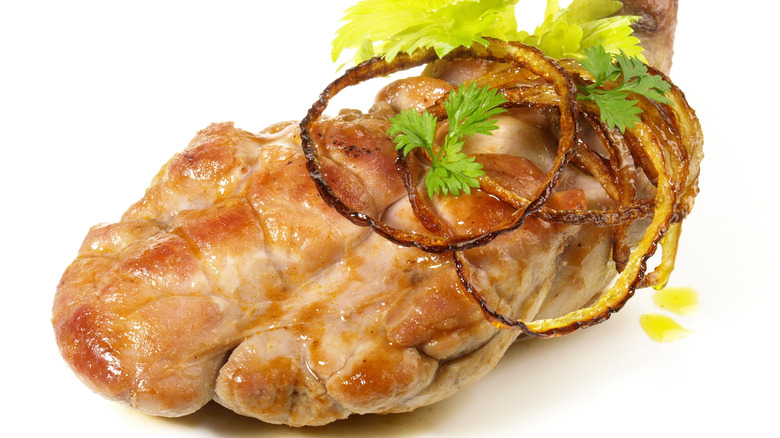
Being offered a dish of sweetbreads may conjure up images of sticky buns or brioche loaf — very enticing indeed. However, excitement will turn to extreme confusion and disappointment when, instead, you are served offal, in the form of a lamb or calf's thymus gland or pancreas.
If you can get over your initial shock, however, you will find that there is a reason this meat dish contains the "sweet" adjective. Sweetbreads have a creamy, delicate flavor that is prized by chefs and food lovers who appreciate the delicacy and are not afraid of where it comes from. The misleading "bread" in the name may come from the old English word "bræd" which means the flesh of an animal, or may just refer to a small morsel of food.
Sweetbreads are definitely a unique dish that you should sample if you're feeling adventurous. As long as you understand that they may be served with a mustard sauce, rather than some jam and a cup of tea.
8. Lion's Head
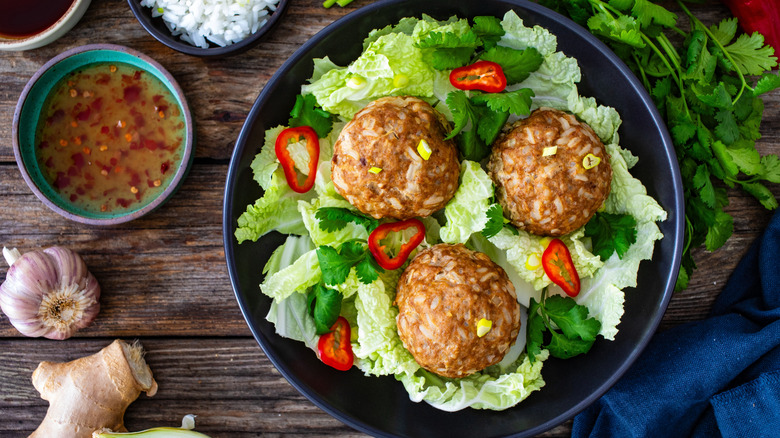
If you're looking for a meatball dish that's King of the Jungle, Lion's Head is likely to meet your criteria. However, the name is a tad misleading, since funnily enough, it doesn't contain any lion whatsoever. What it does consist of are enormous meatballs made from pork. The name comes from the resemblance of the giant meatballs to a legendary Chinese lion with a curly mane. We're just happy to have the chance to order such a majestic-sounding dish, rather than simply asking for "big meatballs."
The dish is popular in Eastern China, and often involves deep frying the meatballs before braising them in broth and serving with cabbage manes, bok choy, or glass noodles. The result is a succulent meat dish with a beautiful savory broth, and greens that cut through the richness perfectly. It is a celebratory dish signifying strength, and is often enjoyed at Chinese New Year.
9. Spotted dick
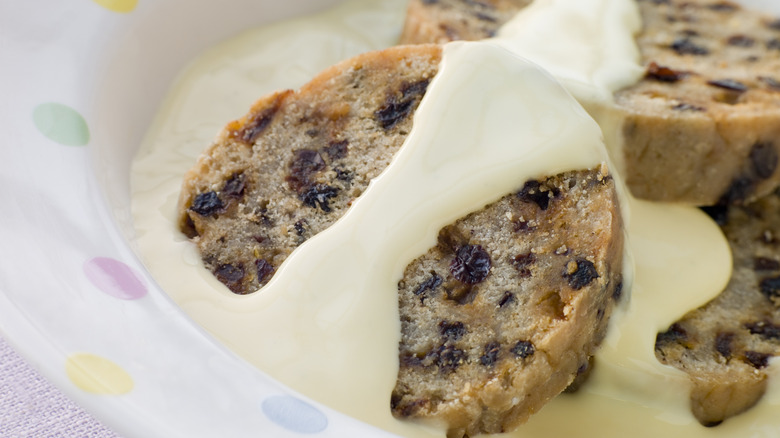
You'll need to get your mind out of the gutter before trying this next dish — the British classic pudding that goes by the eyebrow-raising name of spotted dick. Outsiders may giggle at such a rude-sounding name, but in the U.K., it is considered a delicious way to end a roast dinner.
So, the name — where on earth did it come from? Well, the spotted part is fairly obvious, as it refers to the raisins dotted throughout the pudding and visible on the surface. The dick part is slightly more obscure, but likely comes from an old word for pudding, or "puddick." Spotted dick is made with suet, which is the hard fat from around the kidneys of a cow or sheep, and despite not sounding very appealing, suet is often used in traditional British puddings. Flour, sugar, milk, and raisins help to turn the suet into a comforting, sweet dish that tastes fabulous when smothered in custard.
10. Cold dog
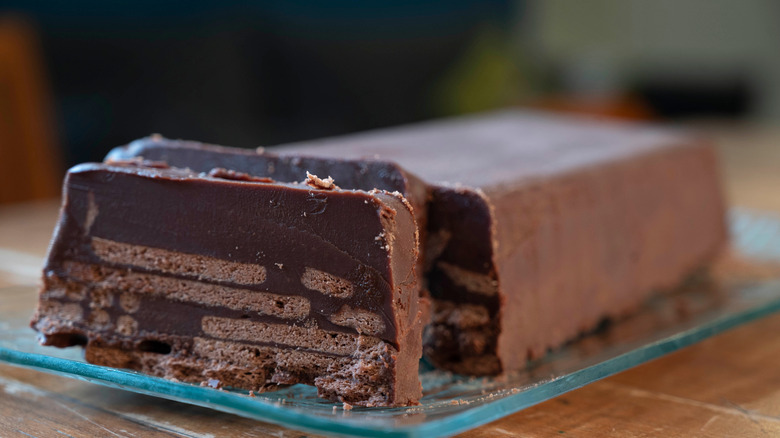
Hot dogs we are all familiar with, but cold dog? You may never have heard of it, but it is a classic German chocolate cake (known in Germany as Kalter Hund), and is a little like a chocolate fridge cake.
The unusual canine name comes from the storage method for the dessert. After it was constructed, the cake would often be stored in the cold basement and, when it was returned to room temperature, drops of condensation would form on the surface, reminding people of a dog's wet nose.
The cake itself doesn't require baking, and is made by layering biscuits — such as Graham Crackers or Leibniz — with melted chocolate mixed with coconut oil, then chilling it until it sets. It is a firm favorite birthday option in Germany, both with the adults who prepare it as well as with the kids. It is easy to make, doesn't require any baking, and tastes indulgently delicious — what's not to love?
11. Moreton Bay bugs
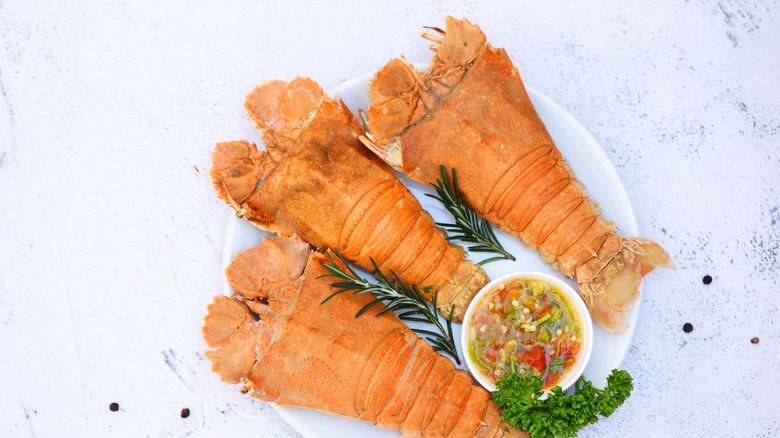
In America, the mention of bugs when it comes to dinner does not go down well. In Australia, however, the term is widely used to describe shellfish, and Moreton Bay bugs are some of the most famous. The United Nations Food and Agriculture Organization chooses to call this particular crustacean a flathead lobster, but down under, it is firmly known as a Moreton Bay bug.
The name likely comes from the fact that they don't look like regular lobsters, but their flattened shape resembles a creepy crawly more than an item on a gourmet fish platter. Don't let the name fool you, however, as Moreton Bay bugs are a delicacy to be savored. Under their insect-like body, they contain delicate, sweet lobster meat, and they taste fantastic done on the barbecue. So, if you are ever in the Moreton Bay area and manage to get your hands on a few of these beauties, ignore the critter element of the name and tuck in.
12. Toad in the hole
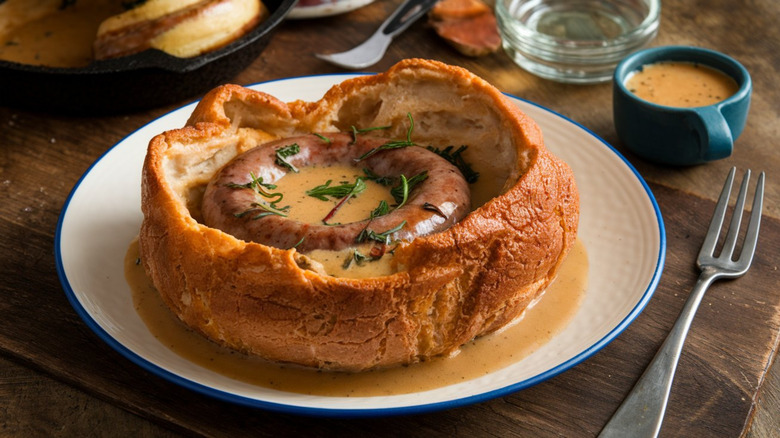
If the thought of Frogmore Stew made you feel a bit queasy, chances are you aren't in a hurry to try toad in the hole either. Thankfully, this British classic is also amphibian-free and is, in fact, a dish made of sausages and pastry.
The rather tenuous connection to the name seems to be the idea that the sausages peeking from the batter mimic toads hiding in their holes, though this does seem a bit of a stretch. Still, who are we to argue, since the name has stuck over the years, and the dish is still as popular as ever?
Regardless of the origin, toad in the hole is a dish that everyone should try if they have a chance, as it is quintessentially comforting and delicious. It consists of link sausages that are cooked in batter, which essentially creates a huge Yorkshire Pudding or popover. It soaks up the gravy beautifully and makes for an excellent filling Sunday lunch. If you were expecting toads, it definitely won't live up to expectations. Otherwise, it's a rich, savory meal that will keep your taste buds more than happy.
13. Bunny Chow
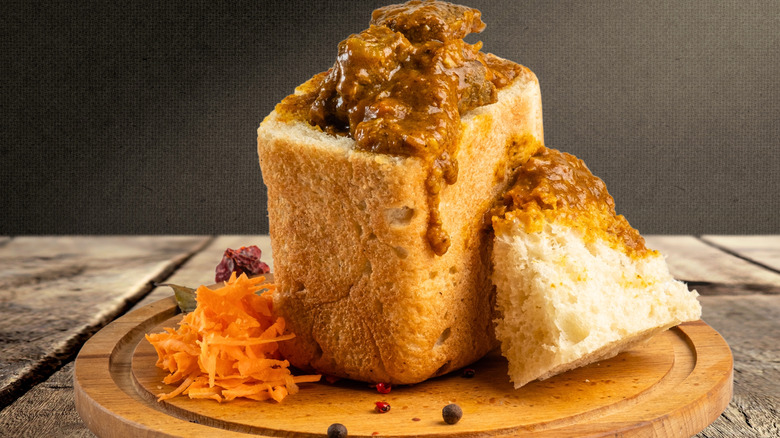
If you order Bunny Chow expecting a rabbit stew, you will be surprised when it arrives. Bunny Chow is a traditional South African dish that has no connection at all to floppy-eared mammals. Instead, it's a hollow loaf of white bread filled with a delicious, hot, and spicy curry.
The name likely originates from a reference to Indian businessmen who sold the curry in South Africa and who were called "bania" (transforming over time to "bunny"), with "chow" meaning food. The dish was originally supposed to be an economical meal that would fill workers up for the day, but it's now extremely popular across South Africa in general.
The bread bowl is a wonderfully unique feature of this dish, acting as a crockery replacement. It made Bunny Chow the ideal take-along food, as the "lid" constructed from the end of the loaf could be used as an edible spoon. The whole thing could be eaten. The filling in Bunny Chow can be made from meat, poultry, or vegetarian curry, and is often loaded with beans to make it even more substantial. There may not be a rabbit in sight, but Bunny Chow is an incredibly satisfying dish that you should add to your adventurous must-try list.
14. Headcheese
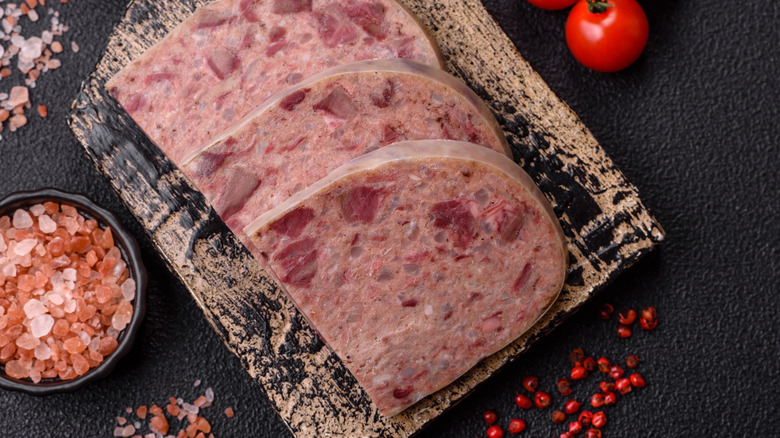
With the modern emphasis on head-to-tail cooking and reducing animal waste, headcheese is a dish that is becoming increasingly popular. The name is correct in one sense — the head of the animal is very much the focus — but completely misleading with the "cheese" part. The origin of "cheese" in the name is unclear, with some suggesting that the texture of the dish is similar to cheese, although there is a chance that early versions may have been made in a cheese press.
Headcheese is essentially a type of meat terrine, made from the head parts of a pig that are usually thrown away. Cheeks and tongue will often be used, along with any other meat from the skull. Organ meats and fat from the animal are usually added too. The result is a surprisingly appetizing jelly-based terrine that tastes like a rich pâté.
This is definitely not a dish that most of us are going to be making from scratch — unless you happen to have a spare pig's head in your fridge. But if you come across one on a menu somewhere, give it a go. You may be pleasantly surprised, and can be proud that you're supporting the more sustainable head-to-tail cooking movement.
15. Slugburger
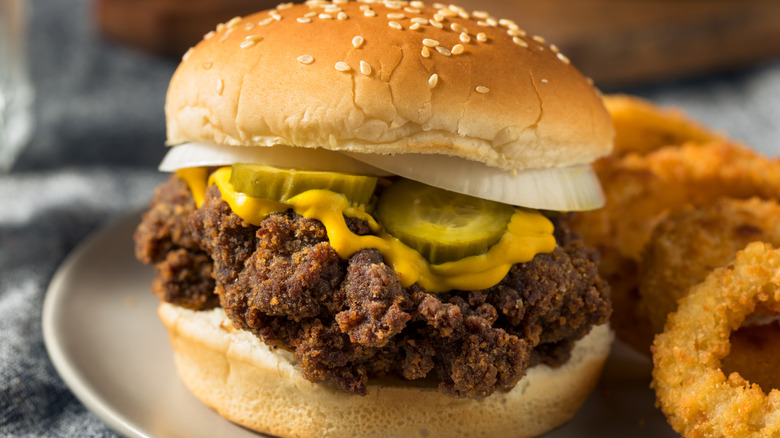
We all know that snails are a delicacy enjoyed in many countries, including France, but slugs? That's certainly a new one for us. Fortunately, the Slugburger is made from meat, usually beef or pork, with no sign of slimy slug trails anywhere.
The burger originated in the South during the Depression, when meat was unaffordable for most, and burgers were made with added potato flour to make them go further. The term "slug" referred to a five-cent coin at the time, which was the price of this economical meal. Although those days are long gone, the Slugburger has remained — with a modern update that involves cooking the patties in soybean meal to make them extra crispy. The name might be off-putting, but the Slugburger served an important financial purpose during hard times, and it is now a satisfying, nostalgic take on a regular beef burger.