

9 Effective Ways To Keep Your Kitchen Cool In The Summer
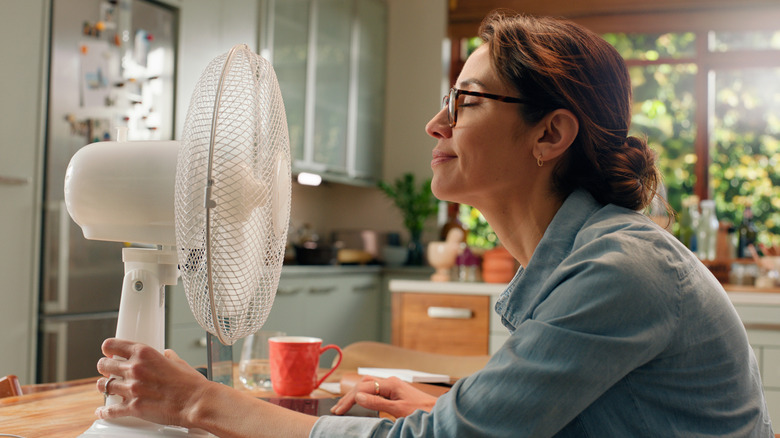
The dog days of summer are fast approaching, and you know what that means: pit stains, having to come up with excuses on why you have to leave work just so that you can go to the beach, and when you have to come home after a long day and cook in a sweltering kitchen because you were too cheap to leave the air on while you were out. Your house might be hot, but your kitchen, where you're running clunky appliances, running a hot stove, and expending your own energy chopping, mixing, and otherwise moving, is likely even hotter.
Sure, takeout might be an option for the first night or two, but there comes a point where you have to rethink your cooking routine to accommodate the weather. Luckily, the solution isn't abstaining from cooking altogether; it's modifying your cooking routine, timing, and space to keep it cooler and keep you happier. Here is a list of the simplest and most effective ways to keep the temperature of your kitchen down on hot days.
1. Avoid turning on the oven
It's a shame that some of our best culinary ideas come on days that are a little too hot to turn on the oven. The last thing that you're going to want to do on a day that's super hot is crank up the oven and add to the heat of your kitchen. Combine that with milling around, chopping, blending, and more, and you're not going to just heat your kitchen up, but also yourself.
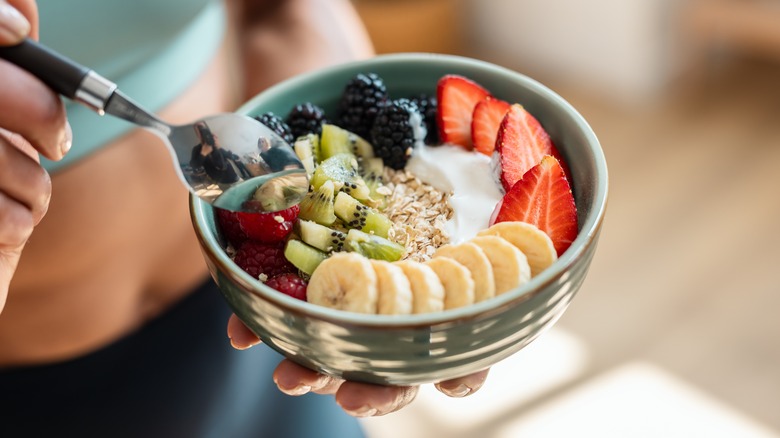
The best dishes to prepare during a heat wave in your kitchen are things that don't require you to cook at all. For breakfast, you may want to turn to a cold yogurt bowl, topped with frozen or fresh fruit and granola instead of an elaborate spread of waffles, eggs, and banana bread. Deli salads, like those made with canned chicken, tuna, or chickpeas are easy lunch and snack options that are not only protein-dense but require very little cooking. Just bring together your canned protein, a binder like mayo, Greek yogurt, or mashed avocado, seasonings, and add-ins. Gazpacho, cold salads, and ceviche can all stand in for tasty dinners — and no one will complain about having ice cream for dessert.
2. Cook outside instead of inside
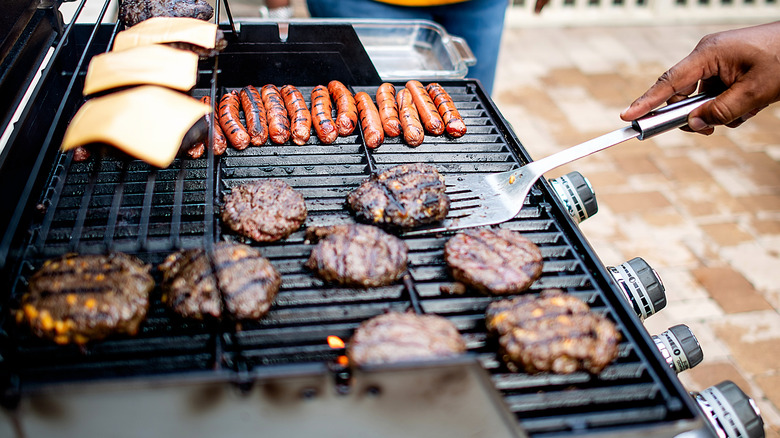
If you have to cook on hot days, it's best to do so outside so you won't have to worry about trapping any of that heat inside and heating up your kitchen. For many, that means breaking out the hot dogs and firing up the grill. While barbecue favorites like dogs, burgers, and brats are all tasty, your grill can cook more than just these classic proteins. You can grill fruits for extra flavorful salads, desserts, and snacks, including watermelon, peaches, and pineapple. If you have a flat-top grill, like a Blackstone, you may want to try cooking a juicy steak on it or taking your pancake breakfast outside. As such, we'd recommend performing all regular grill upkeep, most notably cleaning your grill, before the heat wave hits. After all, no one wants to be painstakingly chiseling stuck-on food off in 100-degree weather.
Grills aren't the only outdoor cooking appliances worth bringing out when the mercury starts to climb. You can pull out your outdoor pizza oven — which can be used for more than just pies. Try cooking bread, roasting vegetables, or preparing succulent wings in it. If you don't want to stand over your appliance as it's cooking — especially if it's quite warm out — you may want to invest in a smoker. Smoked meats can be stored in the fridge and used throughout the week, and once the smoker is up and running, there's very little babysitting you need to do — which means you can lounge by the pool or in the air conditioning.
3. Opt for a small appliance over a large one
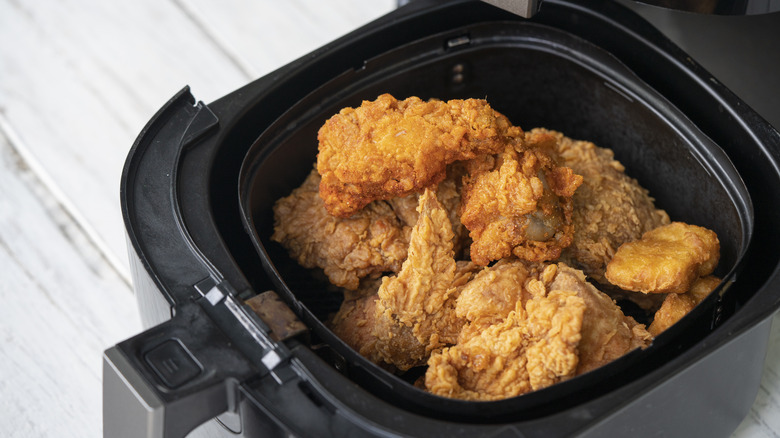
It shouldn't be a surprise that the larger the appliance, the more heat it lets off. As such, when the hot days hit, you should turn to your right-hand small appliances. Toaster ovens, air fryers, microwaves, and more let off less heat than a clunky stove and can help you make delicious dishes in no time flat. Besides reducing the amount of heat in your kitchen, turning to small appliances on hotter days may be even better for your wallet. Small appliances may be more energy efficient than larger ones, meaning that they don't cost as much to operate per kilowatt-hour as a non-energy-efficient appliance.
The type of smart appliance you should use depends on what you're cooking. Folks who have air fryers seem to be obsessed with them — and for good reason. They can be used for many different dishes, ranging from reheated apps and freezer favorites to baked goods. If you like to slow-cook, you may want to purchase an Instant Pot, which can cook everything from frozen chicken breasts and dried beans to even burgers. When you're shopping for small appliances, it's important to look beyond just energy efficiency and find a versatile appliance that fits your budget, the amount of counter space you have to spare, and the types of foods you like to make — because you're probably going to be using it on more than just the hottest days of the year.
4. Look at the forecast and meal prep ahead of time
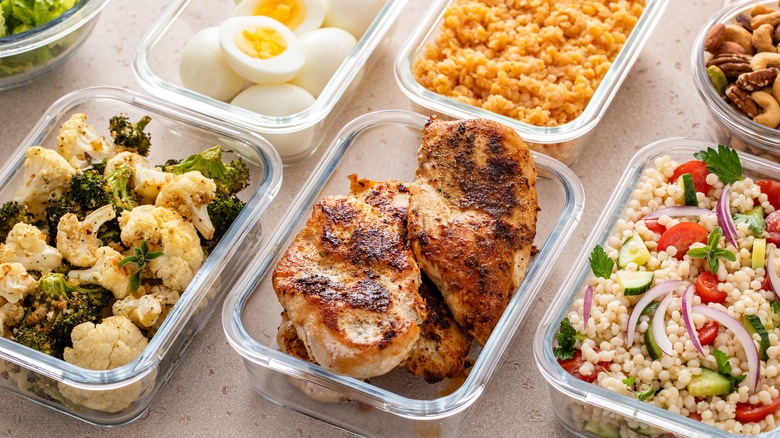
Folks who tend to fly by the seat of their pants when it comes to cooking won't like hearing this one — but we're going to say it anyway: Planning ahead and meal prepping dishes ahead of time can really come in handy during the summer. Not only is it great to have a container of food waiting for you in the fridge after a long day at the beach, but cooking before the hottest days of the week will ensure that your fridge is stocked, minimizing the cooking you have to do on hot days.
Not all foods keep well, so you'll want to select foods that will have the same tasty flavor on day three as they have on day one. When prepping ahead, you should also consider how you can prepare your food several different ways to avoid getting bored with it. Take shredded chicken, for example. You can cook up chicken, shred it in your KitchenAid, and store it until you want to use it. Squirt a little Buffalo sauce on it and tuck it into a wrap with some lettuce and ranch for a tasty lunch, or season it with your favorite Tex-Mex spices for a tasty and easy taco night. You can also buy and cook pasta in bulk to use for hot dishes and pasta salads, or roast some veggies on a cool day and sprinkle them throughout your meals.
5. Save the cooking for when it's cooler outside
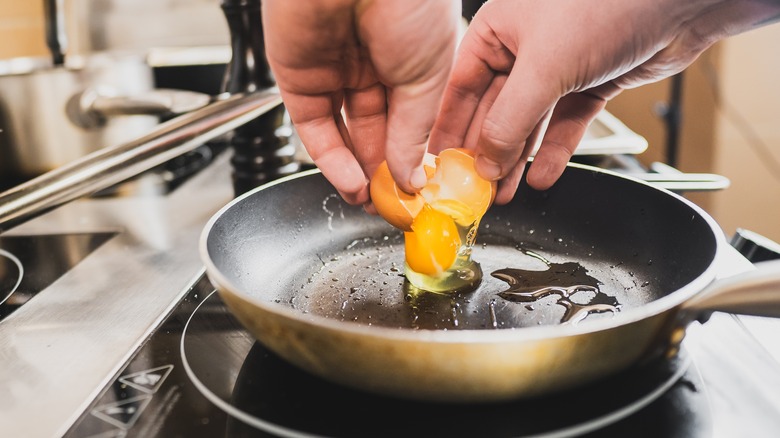
If you have to fire up your oven or your stovetop, it's best to do so when it's cool outside. For most places, this is in the early morning or the late evening, when the sun isn't at its peak. Thinking ahead comes in handy here, too, as you can always cook foods that take a long time, like bread or ones that you'll use later in the day, like pasta or meat, in the morning. That way, when dinner time rolls around, you can just pop your food in the microwave to reheat it rather than having to turn your stove on.
Another important thing to consider during the hot summer months is how the ambient conditions in your kitchen will affect what you're cooking. If the weather is very humid and moist, for example, you may not want to try your hand at making macarons. Checking the forecast and planning ahead will ensure that your fridge is well-stocked and your kitchen is kept cool and comfortable.
6. Keep the kitchen lights off
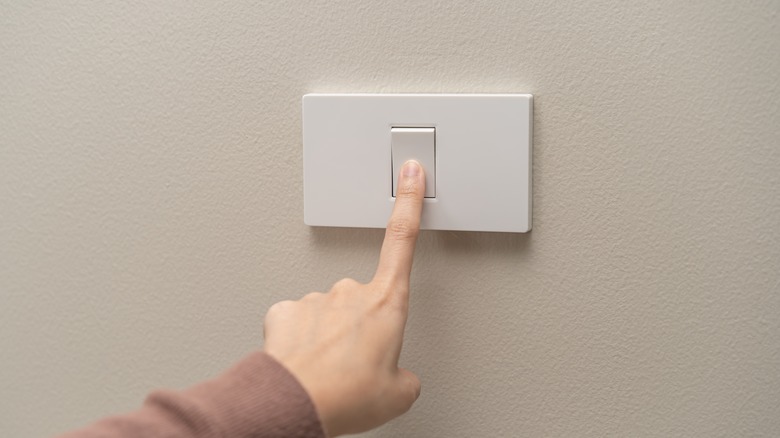
The weather outside plays a big role in the temperature of your kitchen. But another thing that may play an unexpected part in heating up your space is your lighting. Incandescent bulbs are the one of the worst culprits of this. According to Warehouse Lighting, about 90% of the energy that an incandescent bulb uses is released as heat. Fluorescent bulbs, on the other hand, will only release about 15% of that energy as heat, meaning they're much more more energy-efficient. Switching your older incandescent bulbs out for fluorescent and LED bulbs can diminish the amount of money you're spending on your energy bill, since the bulbs can create more light with less electricity and will also release less heat, keeping your kitchen cooler.
Even if you use super efficient LED bulbs, they're still going to release some amount of heat. To cut back on the amount of it released, you should be sure to shut off the lights in your space when not in use. You can also use lower- watt lights, too.
7. Leave the blinds closed
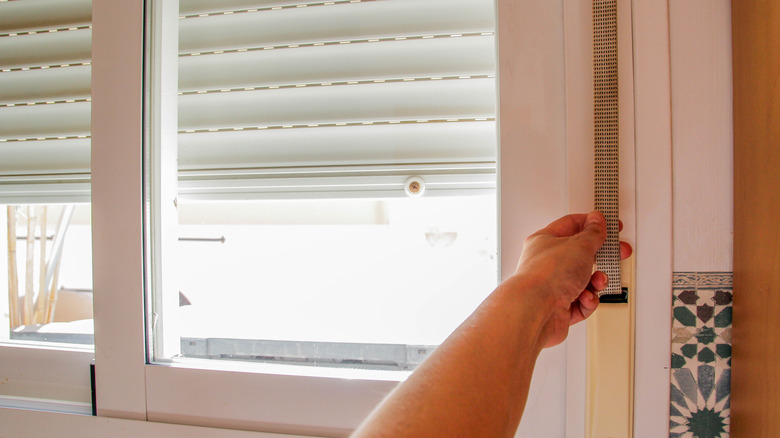
One of the most common culprits of extra heat in your kitchen is your windows. It's something you know well if you've ever stood near a window on a hot day or watched a pet saunter over to a sunlit spot on the floor. Therefore, one of the best ways to cool down your kitchen during the summer is to keep the blinds as low as possible. The U.S. Department of Energy (DOE) estimates that 30% of the average home's heating energy is lost to windows (either heat leaving during the winter or entering during the summer), and nearly 76% of the sunlight that hits a double-paned window is turned into heat. Despite these startling statistics, the DOE claims that about three-quarters of people don't change the position of their blinds every day — which translates to warmer kitchens during the summer and increased energy bills for consumers. Installing blinds, shades, exterior window covers, and more can alter the heat entering your kitchen — and save you a few bucks along the way. Keep them shuttered (or at least partially drawn) when they are not in use.
The design and placement of windows in your home can also change how much sunlight is let in. Homes in colder climates may benefit from south-facing windows, though they (along with west-facing ones) are more likely to overheat in the summer. Talking to a window expert can help you decide the best placement of windows to keep your kitchen (and space) at a comfortable temperature and limit your heating and cooling expenses.
8. Turn on your range hood to circulate air
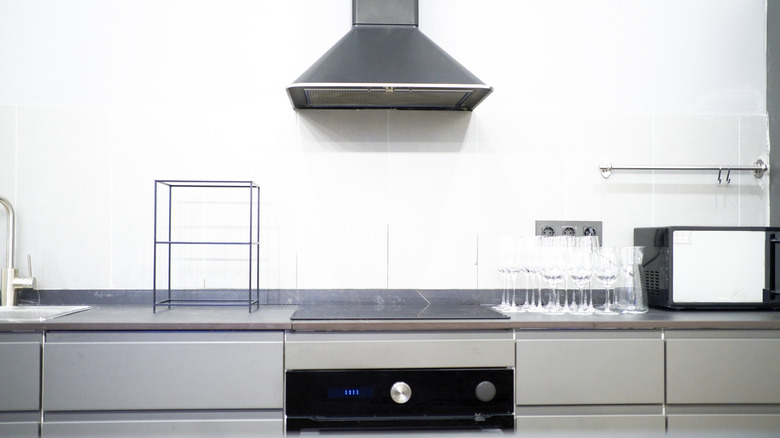
Your range hood is a great way to circulate air around the kitchen. These vents are set above stoves and ranges and are most often used to filter out unsavory smells and odors from your kitchen. On hot days, the vent will suck up the hot air from your kitchen and push it out through ductwork. There are several different styles of vent hood to choose from. The right one can elevate and refine your space — oh, and also keep it cool.
That said, not everyone has a vent hood, or can justify having one just for the purpose of venting out hot air. In that case, you may want to install small fans in your kitchen to keep the air circulating. You can place these on the floor (just beware of tripping hazards), countertops, and elsewhere.
9. Unplug some of your appliances when they're not in use
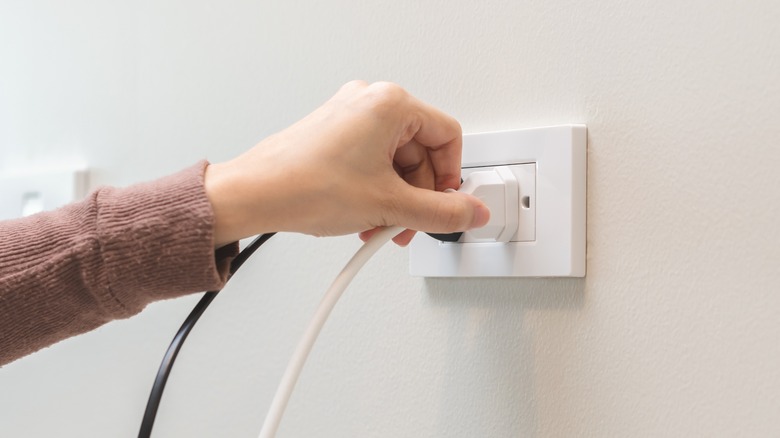
Have you ever heard of the expression "energy vampire?" Surprisingly, it's not in reference to the people in your life who suck the joy out of everything — it's about those pesky appliances that pull energy and heat even when they're not in use. Duke Energy estimates that 20% of the average home's electricity bill can be traced to these pesky, sucking appliances — and many of them may be lurking in your kitchen.
There is not enough evidence to suggest that energy vampires have a sizable impact on how hot your kitchen gets. However, it's reasonable to assume that appliances that are always drawing electric power, like for the electric display on your coffee machine or microwave or phone charger, give off some amount of heat. Slaying these vampires can look like many different things. For one, you may want to download an app or use a meter that allows you to track how much energy certain devices in your home are pulling. This might persuade you to invest in energy-efficient appliances, including those with the Energy Star label. You can also unplug appliances that aren't in use throughout your home, including video game consoles, computers, and more, to reduce heat and cut back on your electricity bill.