

Why You Should Avoid Buying Frozen Breaded Fish Sticks At The Grocery Store (And What To Get Instead)
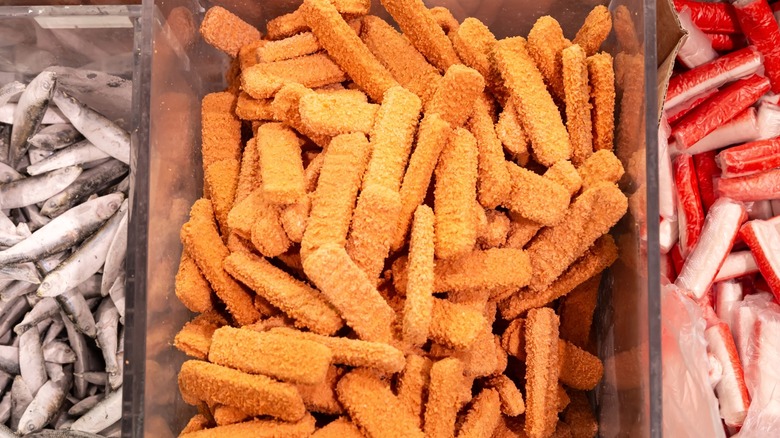
Fish sticks are one of those seafoods that just don't taste the same when purchased frozen at the grocery store. Fish can be a great source of protein and healthy fats, but fish sticks tend to be high in sodium and unnecessary fats due to the extra preservative ingredients used to maintain quality. To help shoppers make more informed fish stick selections, Chowhound found an expert who could provide some tips.
Chowhound previously spoke with Maricel Gentile, executive chef and owner at Maricel's Kitchen in New Jersey and chef-ambassador for K-Seafood USA, about the six types of seafood to avoid buying at the grocery store and six to get instead. Gentile's advice is to opt for high-quality, flash-frozen fish instead of store-bought fish sticks, which she says "are processed, usually have additives, and not the best quality fish to start with."
Fish sticks are usually eaten as a main course, where most people get their protein for the day. Protein is one of the best macronutrients for helping the body feel satiated after eating. If a brand seems to be skimping on ingredients by having more fluff than fish in its recipe, it's possible people will need to eat more fish sticks to feel satisfied. So, while store-bought fish sticks are inexpensive, they're not always the greatest value.
These fish sticks are a superior catch
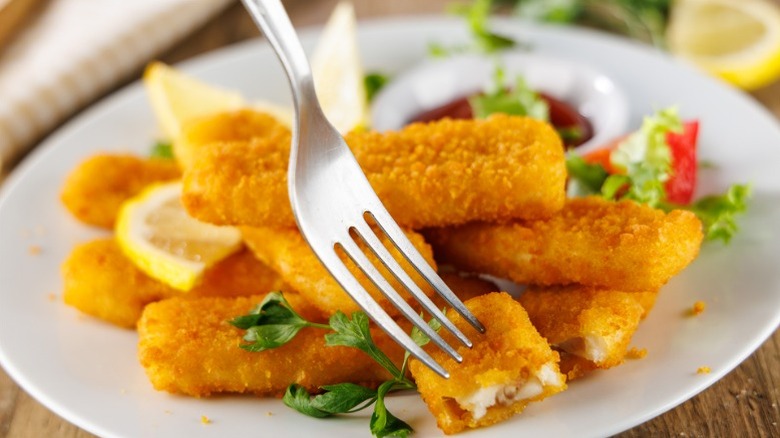
As expert Maricel Gentile suggested, shoppers who want higher-quality fish sticks should keep an eye out for "flash frozen" and "frozen at sea" labels to make this dish at home. Some supermarket offerings, especially those far away from a coastline, might not always have the best "fresh" seafood selection. Because meat is an organic material, the expiration timer starts as soon as the fish leaves the water. Freezing slows this process down, which helps to preserve quality and prevent excess food waste.
The preferred catch for fish sticks tends to be wild-caught Alaskan pollock (haddock and cod are similar alternatives) because it's suited for breading and frying without falling apart. The Trident brand, which scored first place in Chowhound's ranking of store-bought fish sticks, uses this fish in its recipe. Alaskan pollock is also the base for McDonald's Filet-O-Fish sandwich.
With your fish selected, making fish sticks is similar to making fried chicken at home. All you need is oil, eggs, flour, breadcrumbs, and seasonings. Simply cut your defrosted fillet to size, toss it in flour, coat with egg, and roll in breadcrumbs before heating. Frying in oil produces the crispiest texture, but air-frying and oven-baking can achieve a similar effect without using as much oil. Homemade fish sticks that come from clearly labeled meat can be richer in flavor and nutritional value than some boxes on store shelves, so try them whenever you want to level up your fish sticks.