

12 Breakfast Dishes That Were Invented In America
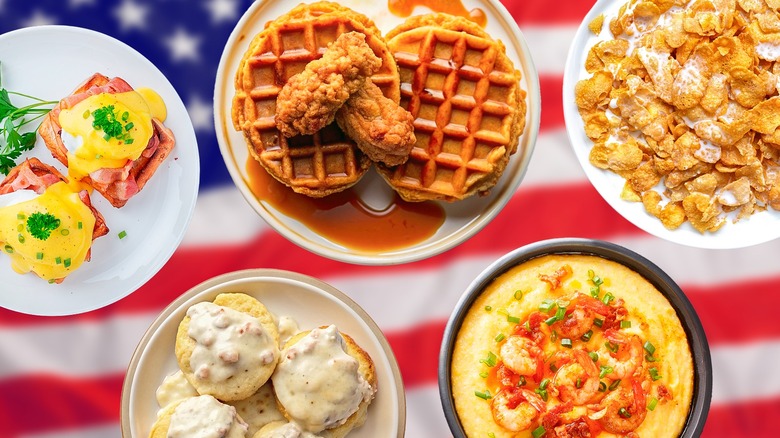
With its nickname the "melting pot," the United States is known for adopting different parts of other cultures. And though the nation boasts both authentic recipes from abroad as well as fusion cuisine like bringing together pizza and empanadas, the Land of Opportunity has developed some breakfast dishes that are uniquely American.
Read on to learn about 12 of them that came from all corners of the country. While some of these breakfast dishes date back centuries and were inspired by the indigenous tribes who inhabited the land long before colonists arrived, others are just a few decades old. You'll likely recognize many of these dishes, and some of these regional specialties might be something you consume regularly. So, let's dig into the history of these morning meals. Who knows? You might be inspired to head down south or out west to give them a try. Or you might just find a new item to add to your own breakfast rotation.
1. Eggs Benedict was invented in New York City
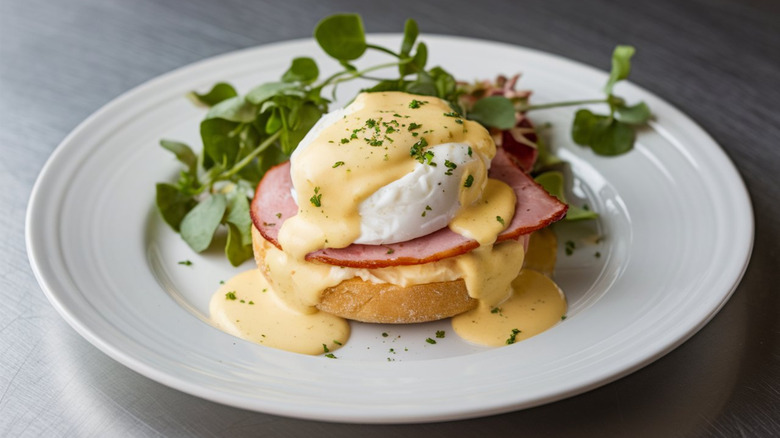
If you don't have a little eggs Benedict on the menu, can you really claim to be a breakfast spot? That rich hollandaise sauce atop of perfectly poached egg, which is then settled on a meaty slice of Canadian bacon or ham, all propped up with a toasted English muffin — just thinking about it is enough to make your mouth water. And it all began right in New York City.
There are a couple of warring theories about how eggs Benedict was invented, but it can definitely be said that the creation came from the Big Apple during the late 19th century. Two NYC institutions have staked their claim: Delmonico's Steakhouse and the Waldorf-Astoria Hotel.
Delmonico insists that two of its regulars, Mr. and Mrs. LeGrand Benedict, grew bored with the menu, and Chef Charles Ranhofer invented the dish to appease them. The Waldorf-Astoria Hotel claims that one of its own dining room regulars, Wall Street stockbroker Lemuel Benedict, who had a penchant for drinking, ordered all the components of the dish and assembled it himself, claiming it was a hangover cure. Regardless of which theory you believe, one thing's for certain — eggs Benedict is an all-American classic.
2. Biscuits and gravy came from Southern Appalachia
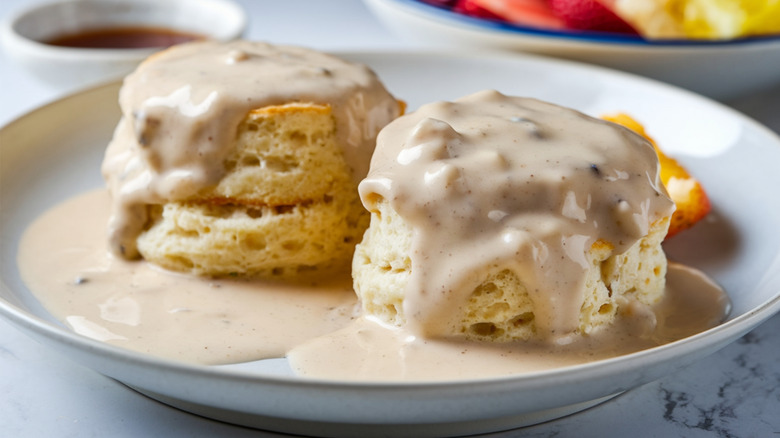
There's something so comforting about starting your day with a buttery, warm biscuit and hearty gravy, and the classic breakfast dish has historic roots in Appalachia.
While there are claims that biscuits and gravy can be traced back to the Revolutionary War, it's widely accepted that the dish's origins stem from Southern Appalachia lumber mills during the 19th century, hence the name "sawmill gravy." It was a low-cost, calorie-dense breakfast, and the ingredients were readily available. But biscuits, originally made from just flour and water, weren't buttery and flaky like they are today. Instead, with those simple ingredients the dough was shelf stable for many days, but beating the dough together was a tedious process often carried out by enslaved cooks. Post-Civil War, when baking powder and soda became more accessible, biscuits had more rise to them, giving them a fluffier texture closer to the kind enjoyed today.
As for the gravy, pork was generally considered to be the meat of the working class. So, ground pork would be cooked up in a pan, and the meat added a salty, savoriness while the drippings formed the base of a roux for the gravy. Slather it on top of some biscuits and you've got the perfect buttermilk biscuits and sausage cream gravy.
3. Fried chicken and waffles have Harlem roots
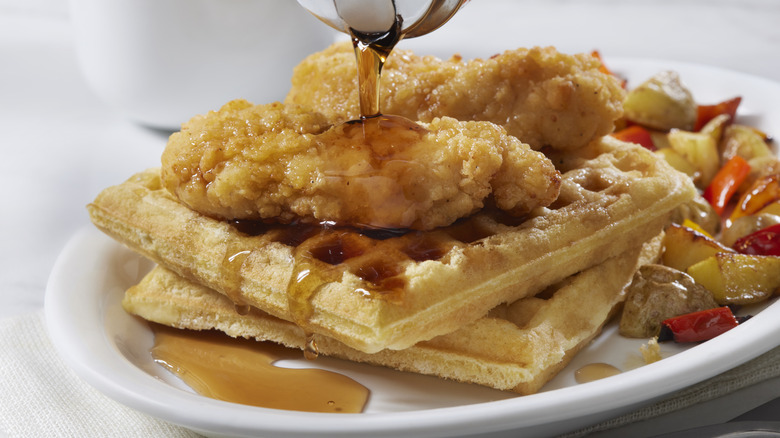
A soul food staple, fried chicken and waffles have undeniable roots in the African American culinary tradition. Though the exact origins of the dish remain hazy, that combination of savory and sweet has been gracing plates for generations.
Wells Restaurant in Harlem, New York City is credited with popularizing the dish. Opened in 1938, the restaurant became a popular spot for jazz musicians to grab a bite late at night. And if you're between dinner and breakfast, nothing will hit the spot quite like a hot plate of fried chicken and waffles. With the dish's popularity on the rise, Wells Restaurant inspired Harlem native Herb Hudson to open the famed Los Angeles establishment Roscoe's House of Chicken and Waffles in 1975.
Though some claim chicken and waffles stemmed from Pennsylvania Dutch cuisine, that version isn't what most folks think of today — it includes a waffle, but the chicken is creamed and the dish is gravy-covered. That's in stark contrast to the soul food's symphony of textures and flavors. The fried chicken's crunchy exterior melts into a meaty interior, the savoriness of which juxtaposes perfectly with the sweet and fluffy — yet structurally sound — waffle, which supports both the fried chicken and a glug of maple syrup.
4. Breakfast burritos were popularized in New Mexico
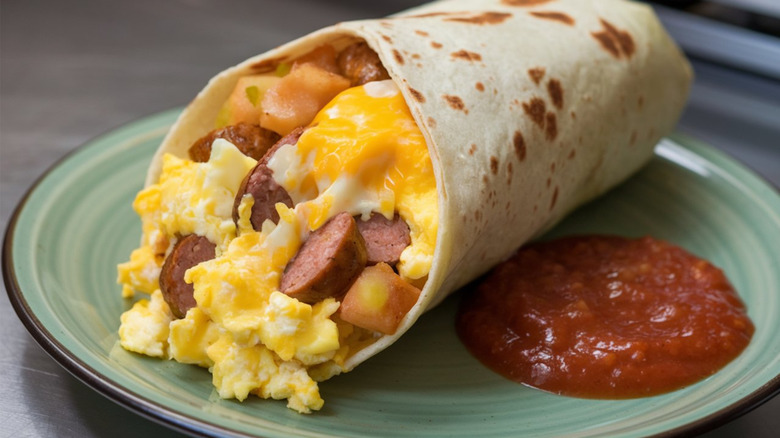
Though the concept of wrapping hearty ingredients in a soft tortilla is certainly not new, dubbing it the "breakfast burrito" and slapping it on a restaurant menu actually happened rather recently. But there are two institutions that lay claim to offering the first breakfast burrito, and both came from Santa Fe, New Mexico in the 1970s.
In 1976, Dee's Restaurant began serving up breakfast burritos one day after realizing that the ingredients of its breakfast sandwich — eggs, ham, and cheese — would be just as delicious and more easily consumed in a tortilla. One of Dee's Restaurant's customers asked to add in some potatoes, so with the addition of hash browns, the hand-held breakfast made its debut. But a year earlier and just a little further down the road, eatery Tia Sophia's started serving up something similar, but instead of dishing out burritos as finger food, the restaurant offered a smothered version. Though fifty years later, the debate still rages on, one thing is for certain — you can thank the Land of Enchantment for that delicious breakfast staple.
5. Shrimp and grits came from South Carolina
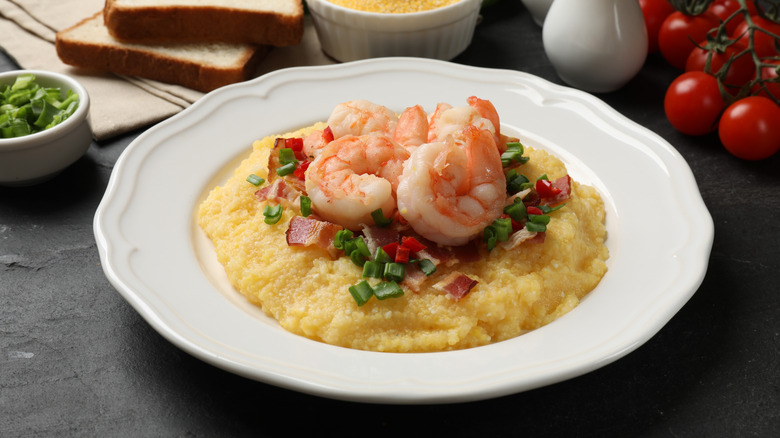
Head down south and you're sure to find shrimp and grits on restaurant menus. The iconic combination comes from two key South Carolina foodstuffs: grits and local shrimp.
South Carolina settlers learned about grits from the area's indigenous people, with one report about their preparation of the creamy porridge dating back to the 1680s. Shrimp were a key part of the economy, with local species including the more common brown shrimp and white shrimp, as well as the rarer pink shrimp.
Though for centuries both shrimp and grits played an important role in South Carolina's culinary history, the two weren't widely thought of as a duo until relatively recently. The popularization of the dish is thought to have begun in 1950 when a recipe for shrimp and grits was published in a cookbook of Charleston, South Carolina recipes. Since then, demand for the dish has only grown. But if you're looking to take your shrimp and grits to the next level, be sure to try these 12 tips you need when making Southern-style grits.
6. Dutch baby pancakes were developed in Seattle
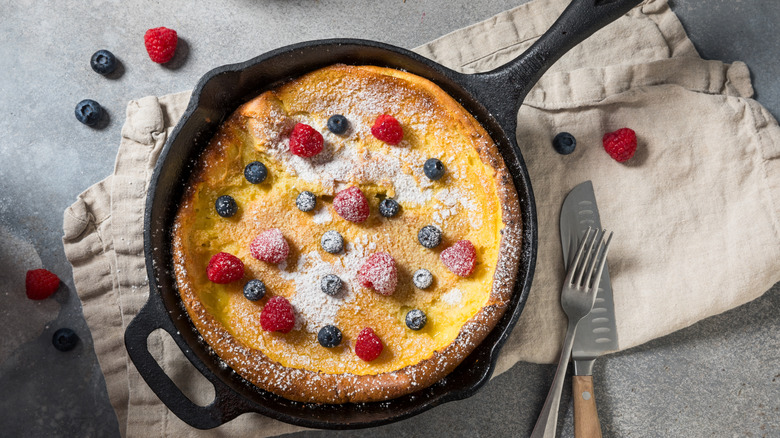
There's nothing Dutch about a Dutch baby pancake. In fact, it came straight from Seattle at an establishment called Manca's Cafe.
As the tale goes, in the early 1900s Manca's Cafe made pancakes with a recipe derived from the German dish pfannkuchen, kind of like an eggy, thick crepe. These pancakes were cooked in the oven, which caused them to puff up like a souffle or popover. But the daughter of Victor Manca, the diner's owner, mispronounced "Deutsch" as "Dutch" and, thus, the Dutch baby was born. Manca would go on to trademark the Dutch baby in 1956.
Though it's traditionally dressed with butter, powdered sugar, and a squeeze of lemon juice, as the Dutch baby spread to all corners of the United States, breakfast joints have started riffing on that original recipe. Nowadays, you can find Dutch babies in both sweet (fruits, jams, even Nutella-flavored) and savory (bacon, sausage, cheese, veggie) varieties.
7. Goetta is a Cincinnati and northern Kentucky staple
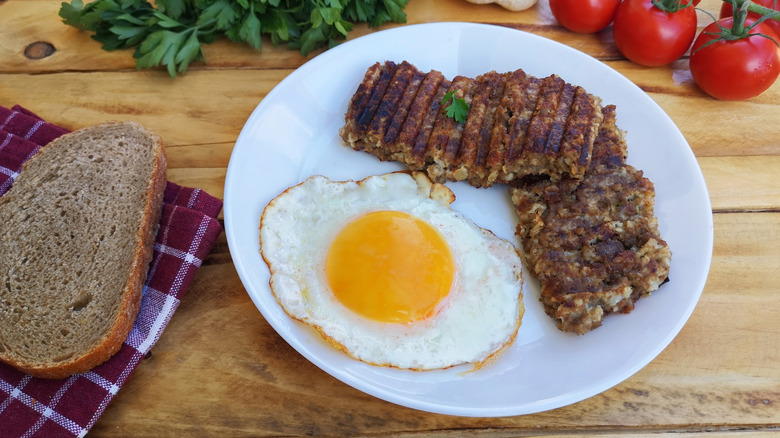
If you're not from the Greater Cincinnati area, there's a good chance you've never heard of goetta. Pronounced "get-uh," it's a regional breakfast staple that's similar in function to sausage, but with a curious twist. You've got your typical beef and pork mixture, some onion, a bit of bay leaf, and other spices, and pinhead oats. Yes, you read that right. It's a meat patty with beef, pork, and oats. All of that is molded into a loaf that you then slice up and fry.
Goetta was adapted from old German recipes of folks who immigrated to the southwestern Ohio region during the 19th century, but those versions contained other grains like buckwheat or barley. Now, goetta is found throughout the area and in parts of northern Kentucky that are right on the other side of the Ohio River.
Though at first glance, it might not seem all that appealing, goetta is a rather versatile component of morning mealtime. You can simply swap it in wherever you'd normally go for breakfast sausage, or you can try it in a breakfast sandwich from a local grocer or butcher, like a goetta, egg, and cheese.
8. Scrapple is a mainstay in Pennsylvania Dutch cuisine
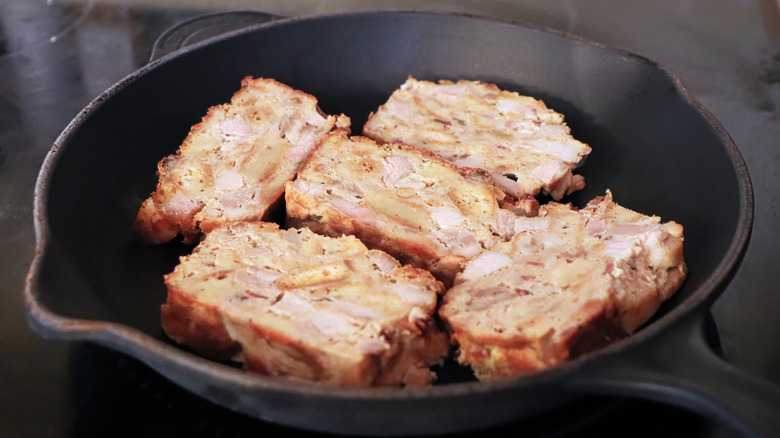
Travel east of Cincinnati and you'll find another curious breakfast meat: scrapple. This is said to have originated with the Pennsylvania Dutch somewhere in the 17th or 18th centuries. Settling in a rural area outside of Philadelphia, the German colonists were looking to make the most of their food. Scrapple of yore was made from scraps of pork from body parts like the head, skin, liver, heart, and even the brains. All of that was simmered together with cornmeal, wheat or buckwheat flour, onions, and spices. After forming the mixture into a loaf, it's sliced and pan-fried.
Nowadays, scrapple consists of pork parts that are a little less shocking, but the concept remains. You can find it in rural parts of the mid-Atlantic region, and some variations use turkey or beef instead of pork. If you find yourself at an establishment with scrapple on the menu, be sure to order it with some toast and sunny-side-up eggs — that's considered traditional.
9. Johnnycakes were invented by the indigenous people of Rhode Island
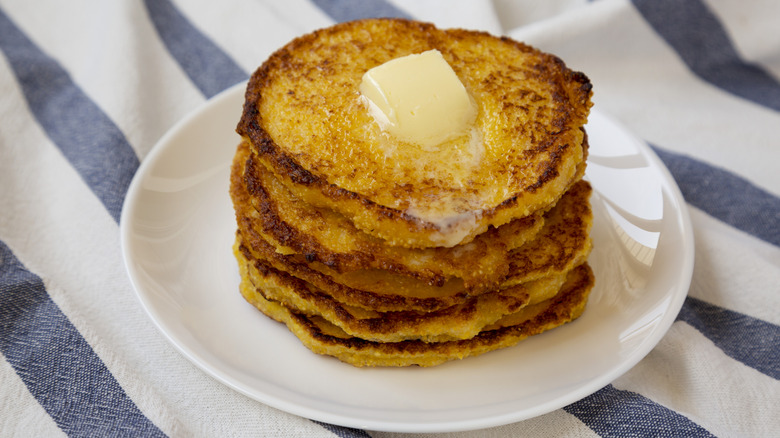
For such a small breakfast item, the johnnycake sure is controversial. It's generally agreed upon that the johnnycake (essentially a cornmeal patty roughly the size of a silver dollar pancake) originated with the indigenous people of present-day Rhode Island. The cornmeal traditionally used in making johnnycakes, white cap flint corn is native to the Narragansett Tribe.
Nowadays, other types of cornmeal are used, and while opinions may differ on the variety and preparation (some folks mix it with boiling water to form the batter, others with milk), that's far from the most contentious issue surrounding the dish. It's the name that really inspires debate.
New Englanders typically call them "johnnycakes," and some believe that name is a derivative of "Shawnee cakes" — a reference to another indigenous tribe associated with the dish. Others insist that the name was originally "journeycakes," since the small patties held up well when traveling and could be a good source of energy during long journeys. If you head to the American South, you'll probably hear the name "hoecake" thrown around. Regardless of what you call them, johnnycakes are certainly worth munching on in the morning time.
10. Breakfast cereal was created in New York and perfected in Michigan
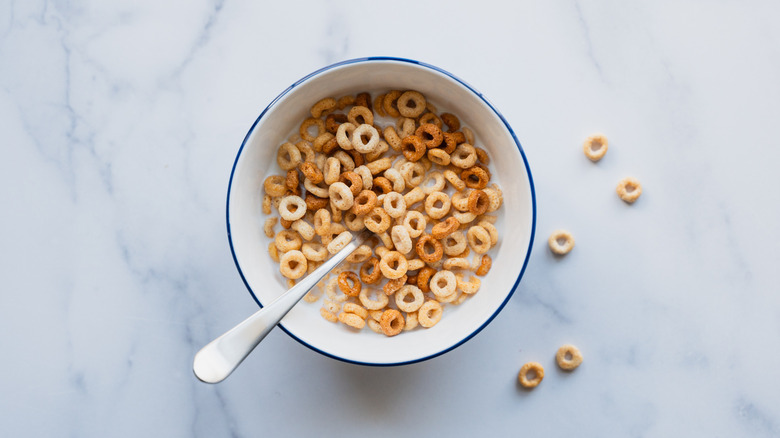
Take a stroll through any United States supermarket chain and you'll be sure to stumble across a familiar scene: rows upon rows of colorful cardboard boxes boasting ingredients like rice, corn, and wheat in flavors like cinnamon, peanut butter, and chocolate. Breakfast cereal is a wholly American invention, and it's over 150 years old.
The first iteration of breakfast cereal emerged in 1863 and it was a curious dish made from graham flour and water. The dried pieces were so hard, they needed to be soaked in milk to soften and be edible. Called "Granula," it was the brainchild of James Caleb Jackson, who ran an upstate New York sanatorium and believed the key to understanding America's health ailments was in the human digestive tract.
Surgeon John Harvey Kellogg visited Jackson's sanatorium and learned about Granula. Kellogg, who ran his own health spa in Michigan, created his own version of Granula, but following a lawsuit from Jackson, renamed it "granola." From there, Kellogg and his younger brother Will invented cornflakes. John and Will Kellogg butted heads over their creations, so Will Kellogg bought the cornflakes recipe and zhuzhed it up with some sugar. Clearly Will was on to something because Kellogg cereals are now a household name.
11. Hash browns are connected to Minnesota, New York City, and a Massachusetts-born cookbook author
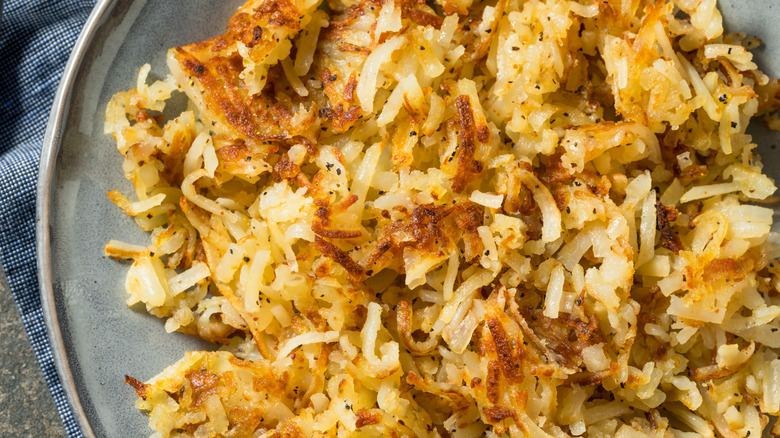
A savory breakfast needs a crispy, starchy side, and for roughly a century and a half, hash browns have fit the bill. Nonetheless, the origins of this famed morning dish aren't entirely clear, and there have been early mentions of it in different parts of the country.
One of the earliest mentions comes from the 1835 edition of the "Minnesota Farmers' Institute Annual", which includes recipes for hash browns, but there are versions that are fried, baked, and creamed. Nevertheless, famed Massachusetts-born cookbook author of yore Maria Parloa is credited with defining hash browns as everyone knows and loves them today (cooled, boiled potatoes that are shredded and fried) in her 1888 book "Kitchen Companion: A Guide for All Who Would Be Good Housekeepers."
After the appearance in Parloa's cookbook, the modern hash brown began popping up on restaurant menus throughout New York City in the 1890s, where they began gaining more widespread popularity. Nowadays, you can find hash browns at eateries ranging from fine dining establishments to fast food restaurants.
12. Morning buns originated in Wisconsin
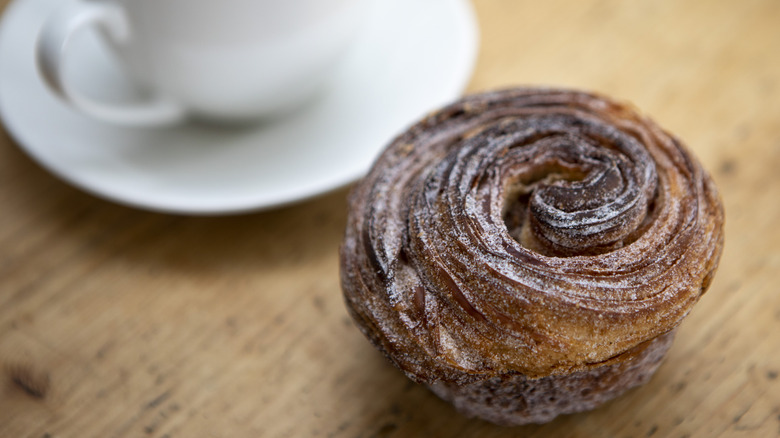
Found on bakery racks nationwide, the sugar and fluffy morning bun has some Midwestern roots. The pastry dates back to the early 1970s, when a group of counterculturalists relocated from Chicago to Madison, Wisconsin. In a new city with limited means, the group opened a French-inspired natural foods restaurant called Ovens of Brittany.
Once the restaurant expanded and began serving breakfast, it became known for its croissants. But the group was inventive with their ingredients, and rolled out croissant dough, brushed it with egg, and dusted it with cinnamon and brown sugar. Then, they shaped it like a roll cake and popped it in muffin tins, with the dough sticking out above the top of the baking dish. This caused them to puff up, giving morning buns their signature fluffy look and texture. Fresh out of the oven, the buns are rolled in more cinnamon sugar for an extra kick of sweetness.
Ovens of Brittany became a hit with both Madisonians and those beyond, with the restaurant selling thousands per day during its height and even striking up wholesale deals with airlines. The last Ovens of Brittany location closed at the turn of the 21st century, but it's safe to say that its legacy lives on.