

Can You Find Store-Bought Pickles Without Sodium Benzoate?
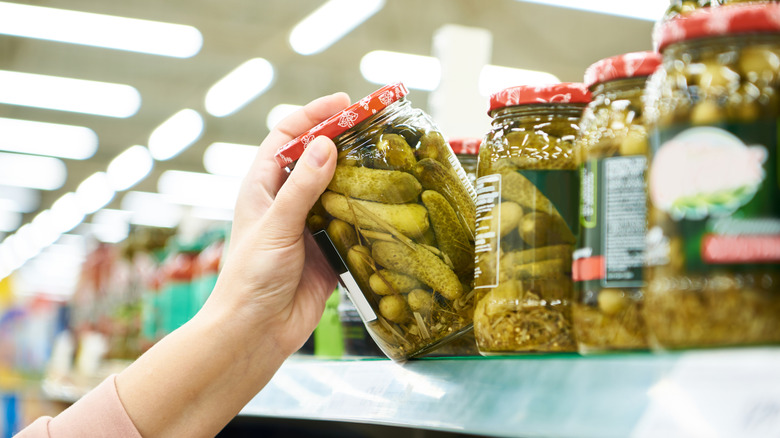
Pickles. Either you love them, or you're taking them out of your sandwich and dropping them on your pickle-loving neighbor's plate. If you are a member of the former group, it's likely there's always a bottle hanging around your fridge. It's also likely you haven't given too much thought to the ingredients in store-bought pickles. They are just pickled cucumbers, right? But actually many of the pickles you find in the grocery store contain the preservative sodium benzoate. It's considered safe by the U.S. Food and Drug Administration in limited quantities, yet some people cite health concerns, claiming it causes inflammation and allergic reactions. Others are put off by the fact that when sodium benzoate is combined with ascorbic acid (vitamin C) at high temperatures, it turns into benzene, a chemical that causes cancer.
There's never been any evidence of benzene in store-bought pickles, but in the past it has been found in certain kinds of sodas, making some consumers wary overall. Wherever you stand on the subject of sodium benzoate, the fact remains that it effectively stops the growth of dangerous bacteria, mold and microbes,and works particularly well in acidic foods such as salad dressings, lemon juice and yes, pickles. If you love pickles and decide to steer clear of chemical preservatives the good news is that it is possible to find store-bought pickles that are free from sodium benzoate. You just need to do a little digging, and pay attention to the ingredients.
Tips for finding sodium benzoate-free pickles in the grocery store
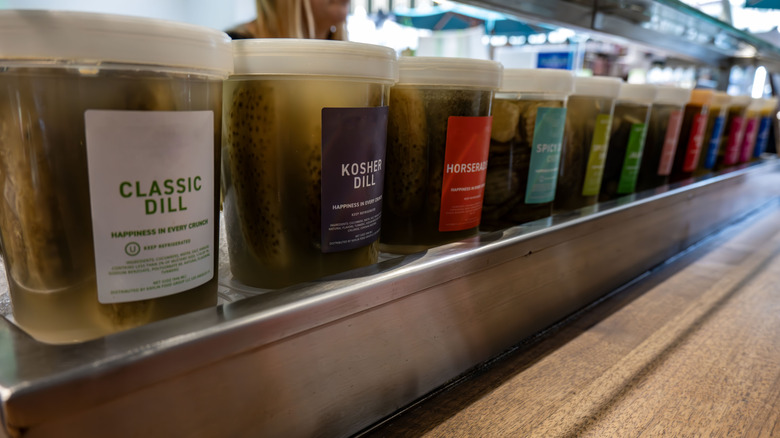
One of the first things to understand about pickles is the difference between fermented and pickled. Fermented pickles are cucumbers that have been submerged in a salt water solution and left out at room temperature for some time, allowing naturally occurring bacteria to convert sugar into lactic acid, which acts as a preservative. Since fermented pickles are not pasteurized and will keep on fermenting if left out, they need to be kept cool. These kinds of pickles can be found in the refrigerated section of the grocery store (check the cheese section) and you can be confident that they will be chemical free.
Most store bought pickles, however, are not fermented, but pickled. This means they are fresh packed in vinegar along with chemical preservatives to make them shelf-stable for long periods of time. However, if you look carefully it's possible to find some brands of pickles on grocery store shelves that forego the synthetic preservatives and are made with just vinegar, salt and a little sugar. This is because vinegar on its own acts as a natural preservative. Check pickles for labels that say no preservatives, make sure to read the ingredients carefully, and be aware that when you see "natural flavors" listed this is a common grocery store food label that is a red flag. Natural flavors is an ambiguous umbrella term and can include chemicals such as sodium benzoate.