

We Tried Every Dumpling At Din Tai Fung And Ranked Them From Worst To Best
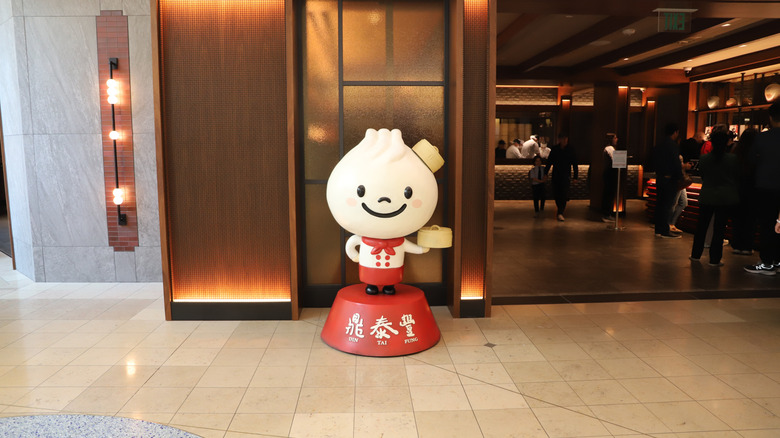
Since its founding in 1958 as a cooking oil company, the Din Tai Fung brand has grown far beyond its humble beginnings. After opening its first restaurant location in 1972 in Taipei's Xinyi district, the dumpling house has expanded to over 165 locations worldwide and even won a Michelin star five times over for its Hong Kong outpost.
Famous for its dumpling offerings, particularly the xiao long bao, or soup dumplings, Din Tai Fung has become a destination restaurant in malls and shopping centers. But, like many chains lucky enough to meet widespread success, the Din Tai Fung menu now contains an array of dishes that can prove dizzying to choose from. 10 dumpling varieties populate its Taiwanese-leaning menu (excluding specialty dumplings, which can vary by location), more than enough to cause an uninformed order to fold under pressure. Since there's only so much room on the table (and in one's stomach), every choice counts when considering your order while dining at a Din Tai Fung.
I sought to further grasp the entirety of Din Tai Fung's menu by ranking its dumplings from worst to best. I only took into consideration its iconic xiao long bao, folded dumplings, and shao mai, saving the wontons and stuffed buns for another list. During one extremely filling visit to the Din Tai Fung location nearest my home, I whittled down all 10 dumplings in search of which should be left behind and which I'll never visit without ordering.
10. Crab & Kurobuta Pork Xiao Long Bao
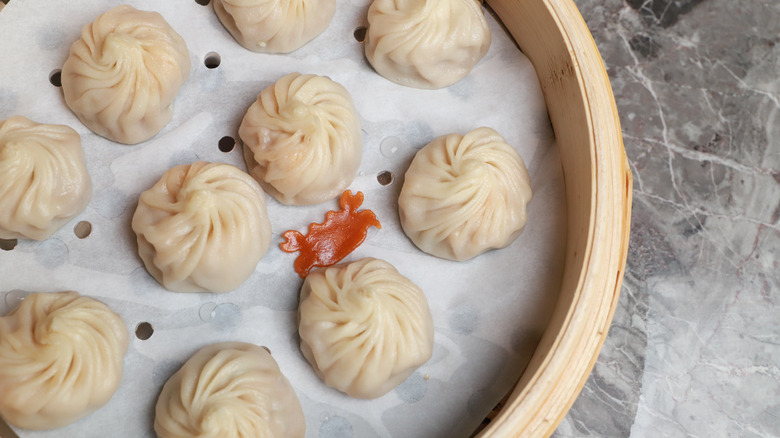
Despite being one of the most enticing dishes awaiting me on Din Tai Fung's illustrious menu, the Crab & Kurobuta Pork Xiao Long Bao sank like the Titanic to the floor of my dumpling taste test. An uncharacteristic misfire for the restaurant chain that built much of its reputation on consistency, I found the surf and turf rendition of xiao long bao worth less than the real estate each bite took up in my stomach.
Texturally, the crab and pork meat seemingly dueled for attention in my mouth, and each animal's flavors similarly never congealed into a coherent bite. Extremely fishy to the point of off-putting, any sweetness from the shellfish was lost in the muddy texture and muddled flavor of the dish. With every bite, I kept pondering if the odd soup dumplings would have improved had the restaurant decided to seal solely crab into the dumplings as opposed to marrying the oceanic ingredient with pork, or if the platter of disappointing xiao long bao was doomed from the onset.
Curiously, while Din Tai Fung proudly and repeatedly mentions its usage of luxury pork, nowhere on the menu could I find mention of what type of crab the restaurant uses in these dumplings. But whatever lurks inside the folds of these dumplings, the result sadly registered as incongruent, confused, and underthought.
9. Sticky Rice Shao Mai with Kurobuta Pork & Mushroom
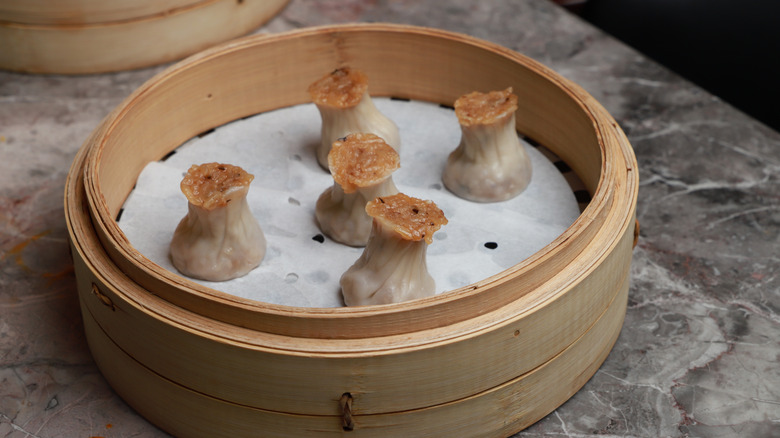
A mouthful to both say and chew on, the Sticky Rice Shao Mai with Kurobuta Pork & Mushroom essentially wastes Din Tai Fung's chance at a mushroom-centric dumpling on a highfalutin concept that doesn't pay off. Sticky rice, admittedly well seasoned, overflows from dense dumpling casings, resulting in a hard-to-chew, cumbersome bite.
Though the sticky rice tastes good, coupled with another carbohydrate, the dumpling bite baffled me as a menu item. In what felt more akin to a creative sous chef's family meal (a pre- or post-shift staff snack using kitchen scraps) creation, the sticky rice dumplings only made me crave a plate of the restaurant's exceptional fried rice, opposed to the strange amalgam its team threw together to complete its dumpling menu.
And while the bits of mushroom I located were seasoned and cooked expertly, their rarity in an otherwise hefty mouthful frustrated me more than it pleased. So peculiar, I wondered the entire time I struggled to swallow the doughy texture of sticky rice and dumpling casing, if any Din Tai Fung enthusiast even enjoys one of the menu's unforgivable flops.
8. Cod Dumplings
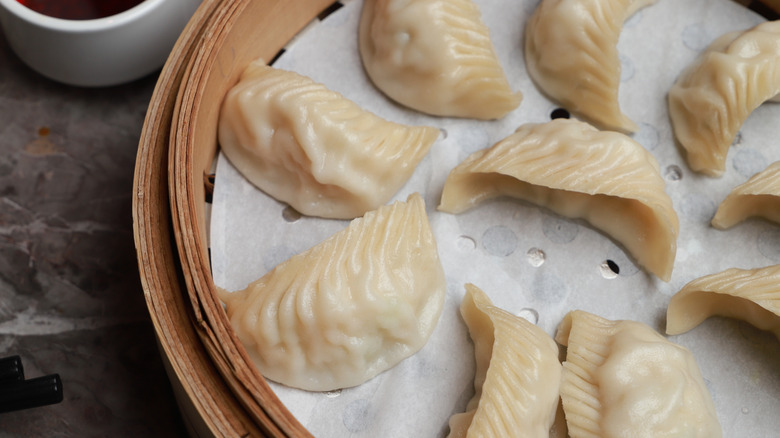
Far less fishy than the previously mentioned Crab & Kurobuta Pork Xiao Long Bao, Din Tai Fung's other seafood dumpling manages to outclass the former by miles, but still lacks the punch of the restaurant's meaty xiao long baos. Made from a mixture of Alaskan and Atlantic cod, the dumplings satisfy the nearly requisite pescatarian dumpling option, but fail to reach much more outside of their niche value.
While the texture of the fish mixture succeeds in sustaining the delicate nature of cod, the other ingredients somehow resist melding to the fish's particular flavor. Once bitten into, the Cod Dumplings carry a distinct watery texture, almost as if the fish itself should've been bonded together with a thickening agent. Cabbage, water chestnuts, and celery fill out the remaining contents of the Cod Dumplings, and though the dumplings carry an airy, elegant flavor profile, the texture, on the other hand, wilts due to the inclusion of too many high-water content ingredients.
Despite not being as aggressively fishy-tasting as the Crab & Kurobuta Pork Xiao Long Bao, Din Tai Fung's Cod Dumplings made me crave for the chain to take one more pass at the execution of this entirely pescatarian dumpling option.
7. Vegan Dumplings
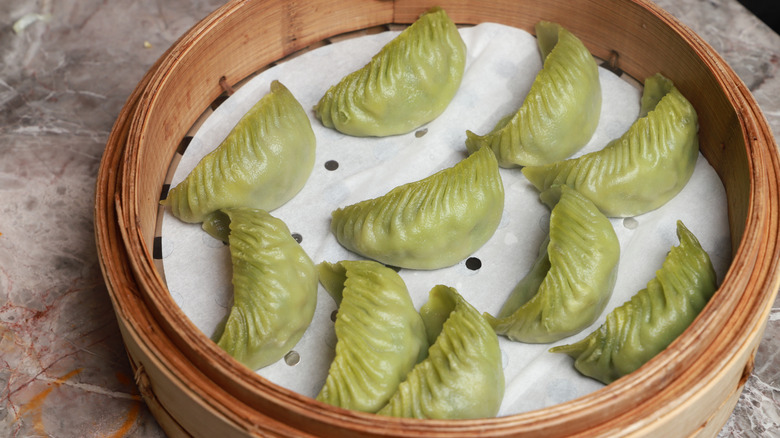
In a sea of beige-colored dumplings, I found it impossible to resist getting my hopes up for the bright, green, Vegan Dumplings after my server dispatched a fresh basket to my table. But similar to the Cod Dumplings, Din Tai Fung, with its vegan option, neglected to bind the medley of otherwise well-cooked produce together before encasing it in the verdant casings that caught my eye.
Therefore, the mixture of baby bok choy, bean curd, shiitake mushrooms, wood ear mushrooms, rice noodles, and jicama all jostle for attention during every bite as opposed to working together in harmony. Moreover, the vegan dumpling farce contained a chop size that was nearly double the desired dimensions, causing the initial bite of each dumpling to replicate the spillage of a piñata or burst bean bag directly into my mouth.
Also underseasoned, the Vegan Dumplings (like the Cod Dumpling for pescatarians) resonated as a dish mostly on the menu to appease vegan diners rather than a plate intended to court patrons with a less limiting diet. A misfire but not a blunder, Din Tai Fung's spinach-dyed Vegan Dumplings fell flat for my palate, but I'd guess they'd appease a card-carrying vegan any day.
6. Shrimp & Kurobuta Pork Shao Mai
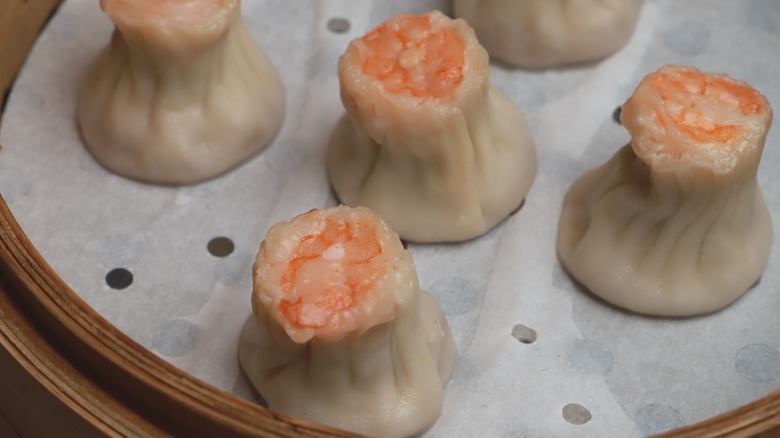
Shao Mai (aka shumai), a staple of dim sum restaurant menus, feels a little superfluous on a list filled with so many stuffed items. But, unlike the other style of crescent fold dumplings at Din Tai Fung, the restaurant's Shrimp & Kurobuta Pork Shao Mai thankfully uses a thicker shell. Curiously, unlike the Shrimp & Kurobuta Pork Dumplings, the restaurant's shao mai refuses to intertwine the seafood and land animal into one united dumpling farce.
Alternately, the Shrimp & Kurobuta Pork Shao Mai keep the pork and shrimp oddly segregated, resulting in a pleasing to the eye but unexamined final plating. The pork sits at the dumpling base, and the tidbit is pinched together around a single, baby shrimp. Easily eaten in one bite, the odd choice to almost garnish the dumpling with a sole crustacean works as well as expected, but I still suspect a mixed meat filling would result in a more pleasant mouth feel.
That said, if a fellow diner insisted on a serving of Shrimp & Kurobuta Pork Shao Mai, I would not refuse them the chance to try Din Tai Fung's pretty, eye-catching dumpling despite my small misgivings over its presentation.
5. Chicken Dumplings
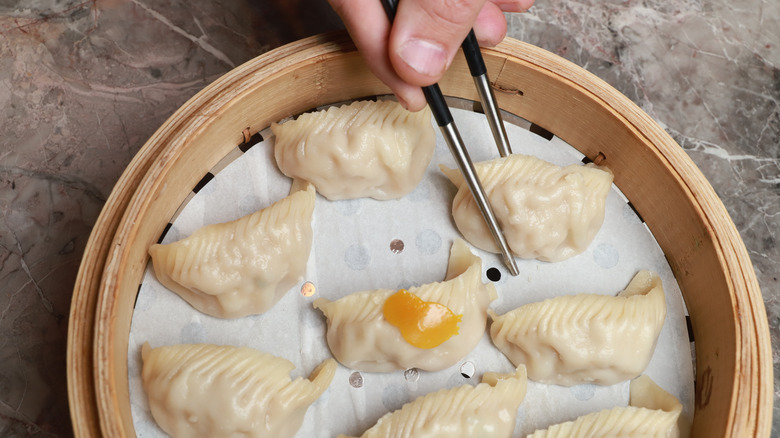
Ordinary in every way, Din Tai Fung's Chicken Dumplings neither wows nor disappoints. Like a Netflix movie starring likeable actors, the restaurant's poultry dumplings were pleasant enough when they were in front of me, but failed to remain memorable after I set my chopsticks aside and exited the restaurant.
Most notable were the hand-folded dumplings' dissatisfying skins. While the extra-thin, fragile casings for the soup dumplings served at Din Tai Fung prove formidable when juxtaposed with broth, the soup-less dumplings also sported a slim exterior but to less pleasing results. A more toothsome, thicker style of dumpling casing would better match the admittedly very tender ground chicken that the dumpling skins envelop.
Completely passable but nondescript, I found myself more frequently dunking the Chicken Dumplings into the sauce set provided by the restaurant as I searched for a missing element from the overall dish. Ultimately, the Chicken Dumplings function like an elevated kid's plate, or an unchallenging item included to avoid alienating unadventurous or novice diners to Din Tai Fung's more exciting cuisine.
4. Kimchi & Kurobuta Pork Dumplings
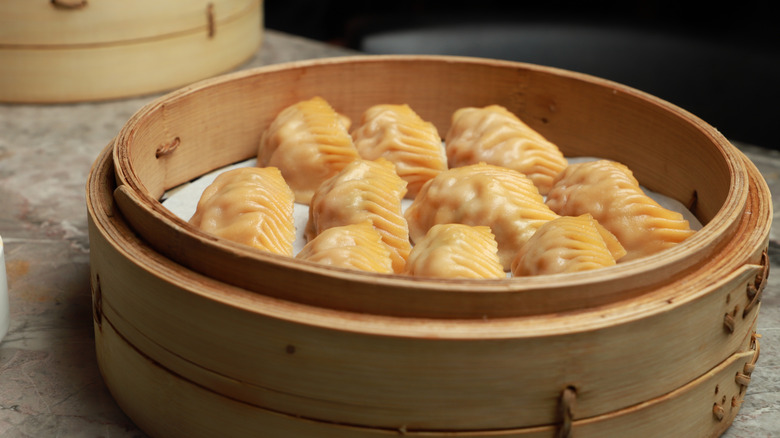
Borrowing from a more traditionally Korean flavor profile, Din Tai Fung's Kimchi & Kurobuta Pork Dumplings features chopped kimchi (Korea's classic Napa cabbage staple), glass noodles, and more Kurobuta pork folded into an unexpected mouthfeel of tangy, savory flavor.
For some reason, the kitchen packs the Korean-inspired dumplings significantly fuller than its other cohort of filled treats, and the dumplings themselves appeared bloated, nearly bursting out of their skins. More than a single bite, I found the kimchi-filled dumplings surprisingly spicy when compared to a menu of otherwise mild dishes. And though throughout my meal I relied on my ramekin of chili oil to bolster the heat to my preference level, the spicy filling required no further fussing with my trusted chili dish.
Incredibly, the kimchi combined with pork tasted reminiscent of Spanish or Mexican chorizo, or other spicy sausages. In no way traditional, I appreciated Din Tai Fung's creativity in dreaming up these bites of piquant pork and kimchi, which led me to recall yummy Korean tacos of my past, more so than any dumpling dish I'd tried at Din Tai Fung's tables.
3. Shrimp & Kurobuta Pork Dumplings
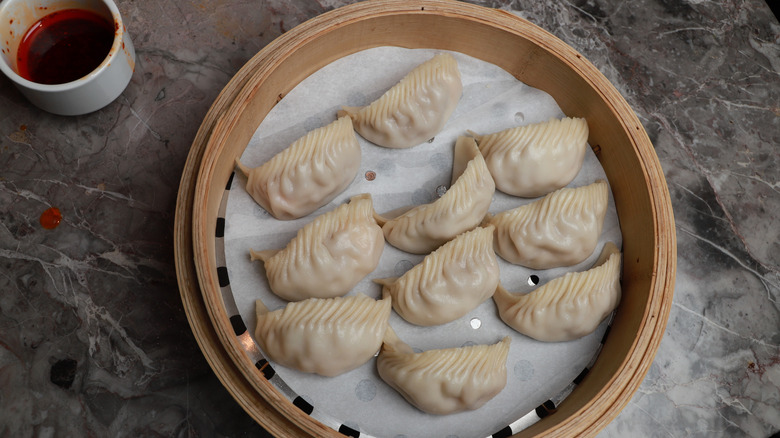
Another dumpling made partially from Kurobuta pork, the Shrimp & Kurobuta Pork Dumplings sprang forward as the easy choice of the Din Tai Fung seafood items I sampled. True to form, the dumpling house delivered an extremely tender filling of shrimp and pork meat, which harmonized on the palate as well.
Of all the non-soup dumplings, the thin walls of Din Tai Fung's dumpling skins work best in this application. And while I still might prefer a denser dumpling exterior for the gyoza (in Japan) or mandu-like (Korean) crescent-shaped dumplings, the flimsy dough worked best with the shrimp's supple texture. A star amongst an array of middling dumplings (outside Din Tai Fung's xiao lang bao stand-outs), the chain's Shrimp & Kurobuta Pork Dumplings manage to carve out a spot on the menu for seafood to shine.
Ideal for tables desiring a second order of dumplings but not wanting to order a redundant bamboo basket of xiao long bao, the Shrimp & Kurobuta Pork Dumplings outshine the soup dumpling in their ability to sit on a table without wilting. Unlike the temporal pleasure of a xiao long bao's cooling broth, the Shrimp & Kurobuta Pork Dumplings could also stand a to-go order without surrendering much of their appeal.
2. Kurobuta Pork Xiao Long Bao
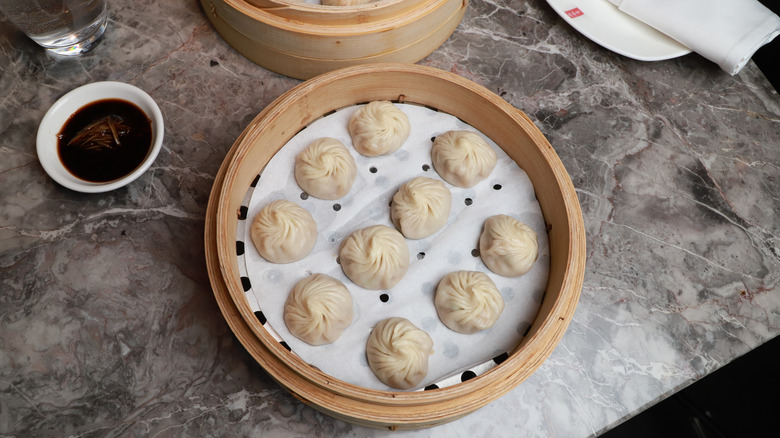
Arguably, Din Tai Fung's flagship menu item — the Kurobuta Pork Xiao Long Bao — acts both as a perfect primer for anyone new to Taiwanese cuisine and a comfort for those of us craving the hits from the restaurant giant. The kitchen team behind Din Tai Fung's famous, zoo-like kitchen window implements the chain's famous 18-fold technique while swaddling the morsels of seasoned ground pork into soupy spoonfuls of comfort.
Notably, the Kurobuta pork (which translates to "black pig" in Japanese) succeeded in remaining delicate and moist despite being put through both the grinding and cooking process. A higher-quality, and supposedly more flavorful pig, the Kurobuta melded with Din Tai Fung's gingery, aromatic broth, without becoming overshadowed by the soup's accompanying ingredients.
And like nearly all my encounters with xiao long bao, I braced myself for the broth's hot temperature, expecting to fall victim to a scorched tongue as I bit through the dumpling's casing. However, the temperature of these xiao long bao upon delivery registered as ideal, and, unlike so many of my other experiences with this dish, I wasn't forced to weigh my hunger against the potential of a minor burn.
1. Chicken Xiao Long Bao
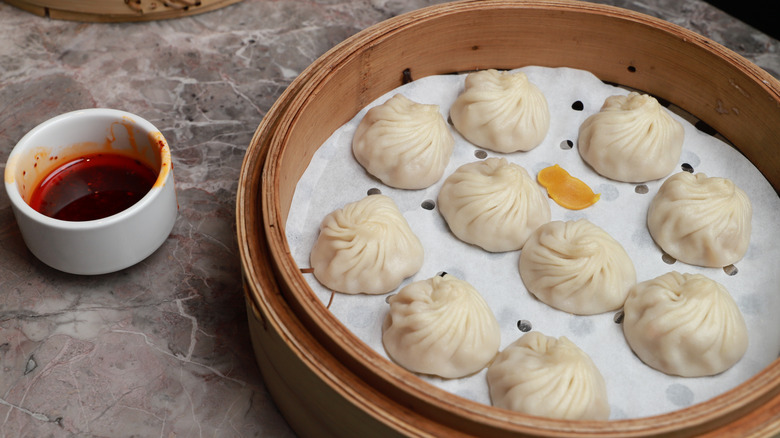
A shocking upset to what I somewhat assumed would result in a Kurobuta Pork Xiao Long Bao victory, somehow Din Tai Fung managed to make its poultry dumplings the most delicious of the pack. What tasted like the most comforting version of chicken noodle soup I've had in ages, the addition of carrots, onion, and celery resulted in a familiar mirepoix flavor I associate with the near-magical healing powers of chicken noodle soup during a sick day spent in bed.
With the addition of Asian ingredients like ginger, chili oil, and vinegar (which every table receives at the meal's commencement), the Chicken Xiao Long Bao reaches a level of dimensionality rarely achieved by dishes available at chain restaurants. Like each of the other soup dumplings, the Chicken Xiao Long Bao's temperature immediately after delivery struck the perfect balance between overpoweringly hot and room temperature.
Now a must-have during all of my future Din Tai Fung visits, I left the sleek mall restaurant almost excitedly anticipating the next time I'm struck ill just so I can claim my Chicken Xiao Long Bao and chili oil as a consolation prize for my poor health.
Methodology
As mentioned in the intro, I disregarded any menu item labeled as a bun or a wonton, as well as any specialty dumplings offered at the Portland, Oregon, location of Din Tai Fung I visited. I focused my order and ranking on the xiao long bao, folded dumplings, and shao mai featured on the Din Tai Fung official website.
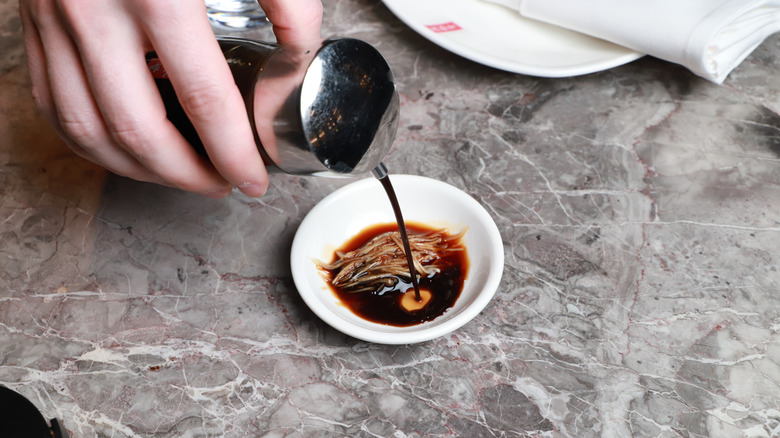
Overall, I based my ranking on how much I enjoyed each type of dumpling, factoring in flavor, texture, temperature, seasoning, originality, and how likely I felt I would order the dish again. To ensure I sampled each dumpling at its prime, I asked the attentive service staff to stagger my order in groupings of two to ensure no dumpling sat untouched for long. As instructed, I used the chili oil and vinegar sauces provided to every table upon arrival as I felt necessary. For each dumpling, I sampled a minimum of two dumplings to decide where its rightful position should be in the ranking.