

Denver Steak Is Usually Cheap, But Restaurants Found A Way To Charge More For It
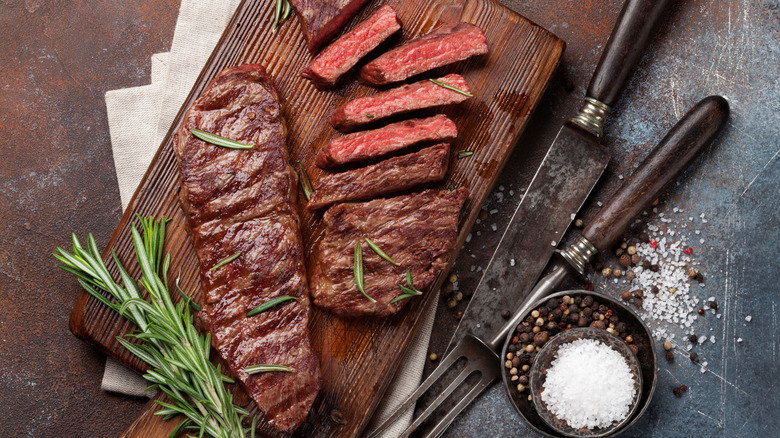
If you haven't heard of a Denver steak, it's because the cut is a relatively new addition to the American culinary scene. While it's been consumed around the world in various ways and under different names, the Denver steak was only officially recognized in 2009 as part of a drive to find more budget-friendly cuts of meat. Part of the chuck primal cut from the shoulder, it was quite the find, as the Denver steak offers the most marbling for your money. In an exclusive conversation with Chowhound, Nathan Abeyta, founder of Deep Cuts Dallas Custom Butcher Shop, explains why the Denver steak is traditionally a lower-priced piece of meat and how it's now being elevated by restaurants.
"This cut has historically been cheaper as it is a fairly complex muscle to remove cleanly and requires skilled butchery to get the best yield from the muscle," he said. "Cuts from the beef chuck are typically associated with being tougher, requiring long slow cooks. This has led the Denver to be a highly underrated gem from this section of the beef."
According to Abeyta, fine dining restaurants in the United States serve Denver cut as a boneless beef short rib or "zabuton." The latter is the Japanese word for a traditional floor cushion. Associating beef with Japan automatically elevates its image, since some of the best beef — world-renowned wagyu — comes from Japanese cattle. This allows restaurants to accordingly charge a premium for it. Like the name "Denver," which was assigned to the cut as a bit of a marketing ploy, calling it a "zabuton" also benefits the cut's image, especially when used stateside.
The succulent Denver cut is served under a name that means cushion in Japanese
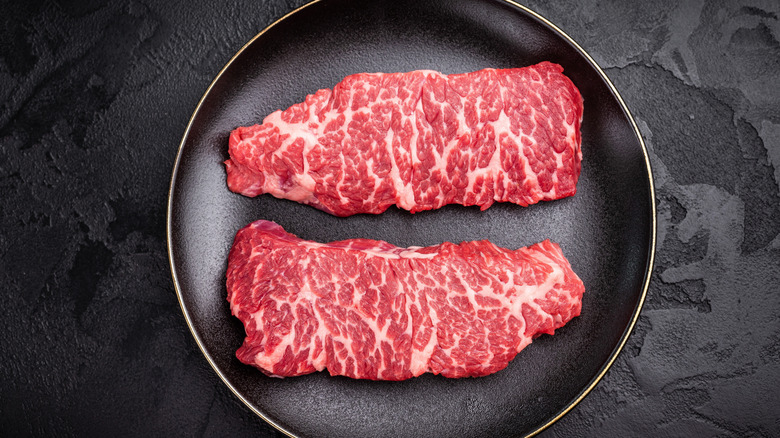
Because of its rich flavor and texture, the Denver cut has become a fixture on many high-end restaurant menus. While restaurant steaks can trick your taste buds by using loads of salt and butter to taste better than they would when made at home, the Denver steak is comparable in some ways to a much more expensive filet mignon or ribeye. It is one of the most tender beef cuts, a fact which, coupled with the cut's square shape, inspires its Japanese name. "Denver steaks are filets cut from [the underblade portion of the chuck]," Nathan Abeyta told us. "This area does not get much exercise, so the Denver remains tender, while keeping the rich beefiness which defines the chuck portion of the cow."
The Denver cut's culinary bragging rights also include its fantastic marbling, which is essentially intramuscular fat that gives the cut texture and tenderness. Being a high-quality piece of meat that cooks quickly also makes the Denver cut quite versatile, especially at its low price point, so if you don't want to pay the fine-dining premium to give it a try, consider picking up a cut and enjoying it at home. Keep in mind, supermarket prices for Denver steaks have significantly increased in tandem with their popularity and with meat prices across the United States. Some mention being able to pick up Denver steaks for under $10 per pound over a year ago, but depending on where you live, rates have risen to as high as $30 per pound for a Prime-grade Denver steak. That said, it's still less than what one would end up paying at a high-end restaurant — unless you buy a Wagyu Denver or zabuton steak, which can cost as high as $70 for a half-pounder.
Cooking a Denver steak at home
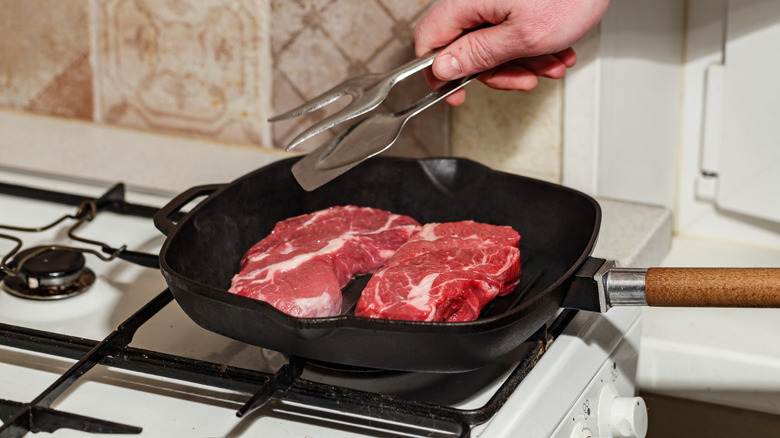
While restaurants will elevate it and charge accordingly, cooking a Denver steak at home isn't difficult. Nathan Abeyta told Chowhound that he recommends a good pan sear, which starts with salting and resting the Denver steaks for about 30 minutes. "The salt will draw moisture to the surface of the steaks, and as they hit room temp, pat the steaks dry; this will allow better contact with the heating surface and allow the Maillard reaction to help with a better sear," he said. "After this, add your high-heat cooking oil to the pan (beef tallow is highly recommended), and sear the steaks for roughly two to three minutes per side depending on your preferred doneness." A five-minute rest before slicing and a simple salt and pepper finish are all that's left for your Denver steak to taste incredible.
Of course, since it's a tender cut, you can also cook it on the grill, or even sous vide it if you're so inclined. Let the meat's rich flavor and texture do the heavy lifting, and choose a simple side to go with the Denver steak based on how it's cooked. Creamy mashed potatoes as a side dish balance the smoky goodness of a grilled steak; a salad or roasted vegetables complement a pan-seared steak's richness.
Denver steaks can sometimes be difficult to find in the grocery store because they're harder to butcher. Abeyta recommends the beef shank as another underrated gem. "It is a fairly inexpensive cut that when slow braised in beef stock with onions and garlic has some of the best flavor on the animal," he said.