

Forget Basic Scrambled Eggs: This Korean Version Is Twice As Flavorful (And Microwave-Friendly)
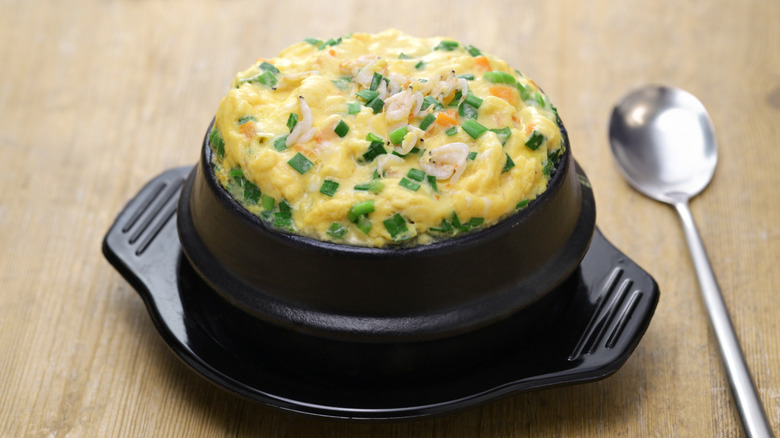
Even your most light and airy scrambled eggs have competition, and it's called gyeran-jjim. This Korean version of scrambled eggs actually translates to "steamed egg," and it has a very soft and custardy texture that is hard to beat, making it one of many Korean foods you have to try. The best part is that you can make it in the microwave in just a few minutes. And who can argue with that?
To make gyeran-jjim, simply combine beaten eggs with water or broth and steam it until the eggs puff up and create a soft, pillowy consistency. (This isn't a dish for anyone who likes their scrambled eggs dry.) It's traditionally served in a Korean earthenware pot called a ttukbaegi, though you can skip the ttukbaegi in favor of any microwave-safe bowl. In Korea, the dish is often loaded up with extra savory ingredients like anchovy broth, chopped scallions, sesame oil, and even salted, fermented shrimp. These might be less common egg additions in America, but can add a lot of flavor to the dish. The real trick, however, is achieving that signature pillowy texture using your microwave.
How to make gyeran-jjim in the microwave
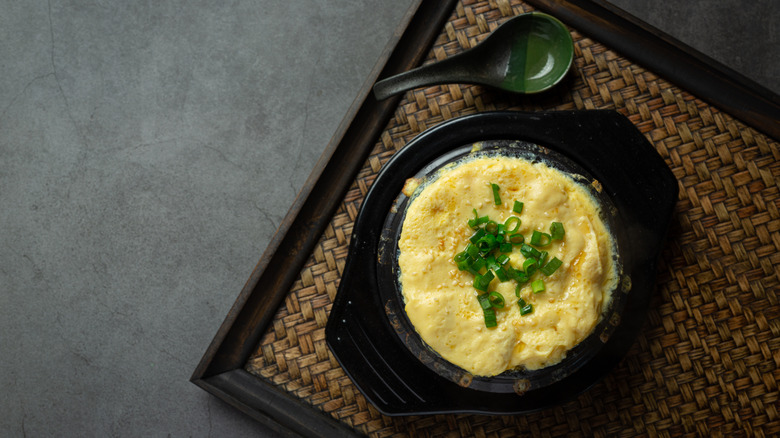
To try it yourself, beat four to five large eggs very well, then mix in a cup of water or broth. Use anchovy broth for a deeper umami flavor, or add a little fish sauce alongside soy sauce, salt, and pepper. Pour the mixture into a microwave-safe bowl that has been greased with a little oil and make sure there's enough room for the eggs to puff up.
You can cover your dish with a microwave-safe lid, plate, or damp paper towel, then microwave for two minutes. Give the mixture a gentle stir and cook for another two minutes, then check the center. If the eggs have set, they're ready. If not, continue to cook in 30-second bursts until the eggs are cooked through. They should be wobbly and jiggle slightly, but still be firm enough that there's no runny liquid. It's a balancing act: The eggs should be cooked, but overcooking them can make them rubbery.
While chopped scallions may be all you want to add, you can definitely lean into more traditional Korean flavors by adding a spoonful of gochujang or a sprinkle of gochugaru – both will bring a little heat. For a more substantial meal, add some mushrooms, cheese, or classic napa cabbage kimchi into the egg mixture before you cook it. You can serve your eggs on toast, with steamed rice, or with sauteed vegetables. In Korea, it's not necessarily just a breakfast food, so don't limit yourself — it can make a wonderful side dish to accompany a bigger meal.