

Don't Fill Your Turkey With Bread-Based Stuffing — Use This For 20x The Flavor Instead
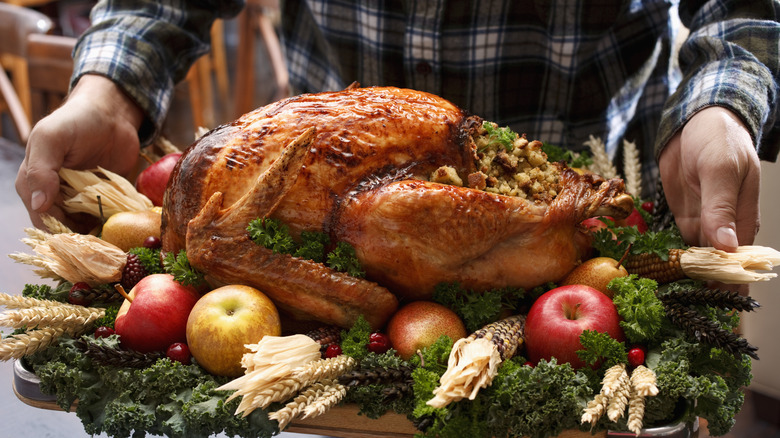
There are several Thanksgiving side dishes you just don't see anymore, but stuffing cooked inside the turkey continues to stick around, so traditional that leaving it out can be a family offense in some households. There are, however, some good reasons for using the centerpiece bird's cavity for aromatics while cooking stuffing separately or skipping it altogether in favor of experimenting with unique side dishes. First, undercooking the stuffing or turkey can present food poisoning risks from bacteria like salmonella or campylobacter. That's why it's vital to cook both the turkey and stuffing to a temperature of 165 degrees Fahrenheit (or 75 degrees Celsius). And that brings up the other problem with cooking two different dishes at once: The two cook at different speeds. You'll either have soggy, undercooked stuffing to keep the meat juicy, or deal with a dry, overcooked turkey to get the stuffing right.
Instead of stuffing, use fruits, vegetables, herbs, and spices to give your bird an irresistible flavor your guests will smell as it wafts from the kitchen. As the aromatic ingredients heat up inside the oven, they'll release fragrant steam and penetrate the meat from the inside out. You can place them inside the turkey at room temperature or even cold if you keep them in the fridge, but that can slow down the cooking process. Instead, heat up the aromatic blend in water on a stovetop or microwave oven. Place them while hot inside the cavity before taking the turkey to the oven so the process can begin almost immediately.
Find your balance between cozy spices and bright citrus
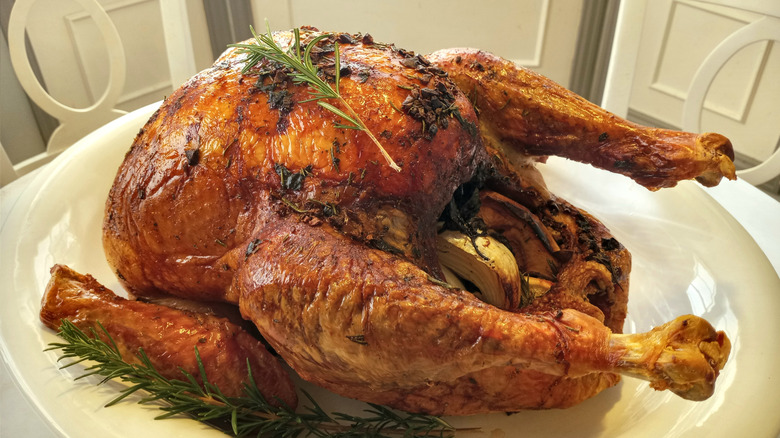
You have options when figuring out what aromatics to use in your turkey. Just like many others, my wife picked up the combination of onion, red apple wedges, a whole cinnamon stick, plus rosemary and sage stalks from Alton Brown years ago and has used it ever since. It results in just the right autumnal aromas you expect at Thanksgiving. You can also go with a brighter, almost summery profile by using citrus fruits like lemons and oranges along with celery, garlic cloves, and thyme. The beautiful thing is you can combine these to find the aroma that best suits your taste, adjusting as you warm everything over the stove before placing it inside the turkey.
Be careful to not pack the turkey with so much that you're blocking airflow. The aromas should move freely throughout the cavity and your oven to imbue the bird with a flavor that goes all the way down to the bone. You should still be able to look inside the cavity and identify what's inside. Once you're done cooking, these ingredients have done their job — giving all their juice and flavor to keep the turkey moist and tasty — and should be discarded. The final bonus of using aromatics is that the fat and juices that drip off the turkey while roasting are also infused with those aromas. Not only will they flavor the turkey giblets if you roast those at the bottom of the pan, but you can ladle some juice off the pan and onto stuffing you cook separately so that it still gets that flavor you desire without sacrificing the turkey's own succulence.