

Spraying WD-40 On Glassware: What It's For And When It's Recommended
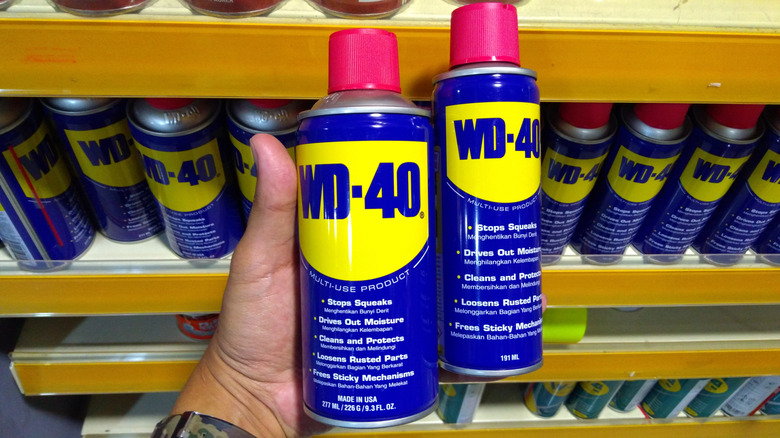
When you hear WD-40, you probably think of hardware and automotive tasks like fixing a stuck hinge or lubricating joints in a vehicle. As a multi-use product, WD-40 does everything from preventing rust to removing moisture buildup in tools, but it's not just for household projects or rugged environments. You can also use it in the kitchen for glassware — particularly with pieces that have become stuck together. Stacking your glass cups and bowls in the cabinet keeps them out of sight and out of mind, but when it's time to take them down for company, you might have a hard time separating them from each other. Spritzing WD-40 around the stuck rim and letting it sit for a few minutes lubricates the pieces so that they'll come apart without damage.
This product also removes stickers from glassware (baking soda can remove labels from glassware too) without leaving a residue. If you've already tried to remove a sticker but the adhesive remained, WD-40 can dissolve it. Spray the liquid onto the sticker or sticker residue, let it sit, and peel the sticker off or wipe up the adhesive without the need for scrubbing or scraping. As a degreaser, WD-40 cuts through grime and grease in addition to adhesives, which is why some home cooks use it to remove baked-on grease from stoves and the bottoms of their pans. Combining it with baking soda lifts off caked grease on both regular pans and glass dishes. Speaking of stubborn grease, it can even be a great oil stain remover for tablecloths.
How to safely use WD-40 for glassware
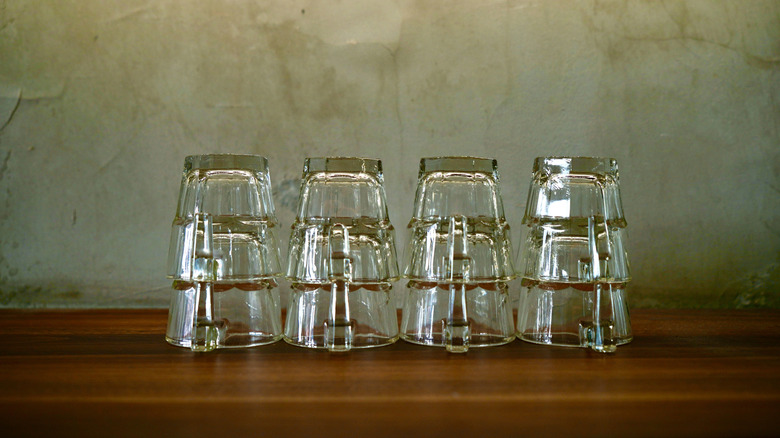
Although WD-40 can be used for kitchenware, safety precautions are necessary to avoid health hazards. Don't use it around an active stove or other heat sources; the aerosol is flammable and can create a fire if exposed to heat. Any glassware should be thoroughly washed afterward with hot water and dish soap (you can also put them in the dishwasher, but avoid the common mistakes that sabotage your glassware) so that no chemicals will come into contact with your food or drink. WD-40 can also attract dirt and dust if left on a surface. Its formula is kept top secret, but it does contain hydrocarbons that present mild toxicity risks if inhaled, ingested, or absorbed into the skin. You might want to stick to using it on the outside of your glassware to reduce these risks.
Food-grade versions of WD-40 are available under its Specialist line, but these are only sold to industrial companies. Still, regular WD-40 is safe when you implement proper cleaning and usage techniques. Only use WD-40 in a ventilated room, avoid spraying it near your eyes, and wear gloves if your skin will be in prolonged contact with it. Keep in mind that WD-40 can damage rubber over time, so don't use it on any glassware with rubber components, like sealable containers.