

Thrift Store Shoppers — Look Out For These 1850s Mason Jars That Could Be Worth $300
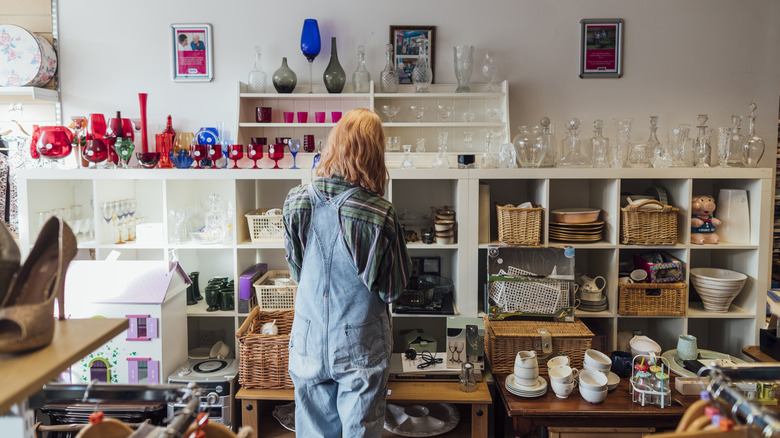
You're spoiled with inexpensive options if you're buying a brand new Mason jar for food prep, but look through thrift stores, and you might spot a gem made more than a century ago that resellers are selling for $300 or more. That would be an 1858 Hero Cross Mason Jar, which you can easily identify by its embossed text at the front, which reads, "Mason's Patent Nov 30th 1858." This notes the patent date and not the production date, which could range later into the 19th century. Some versions will have a Maltese cross symbol — also called the Hero Cross — surrounding the word "Mason's," marking that they're a product of the Hero Fruit Jar Company. It's beauty and history in one package, making it appealing to collectors.
There are also other variations with "PAT NOV 26 67" on the bottom, which is usually paired with a mold number of one to three digits, but these don't come with a cross. Most of the time, jars can also include the company's initials (H, F, J, and Co.) on each side of the cross, a version estimated to have been made between 1883 and 1900.
Typically, you can find pints, quarts, and half gallons of these antique jars. But if you come across a gallon or even 4-gallon version, you're in luck, as you might be able to sell it for a good price due to its rarity. Beyond its old-world appeal and aesthetic charm, the elusiveness of some jars makes collectors willing to shell out hundreds — sometimes even thousands — of dollars for one.
Why some 1858 Hero Cross Mason Jars go for $300 or more
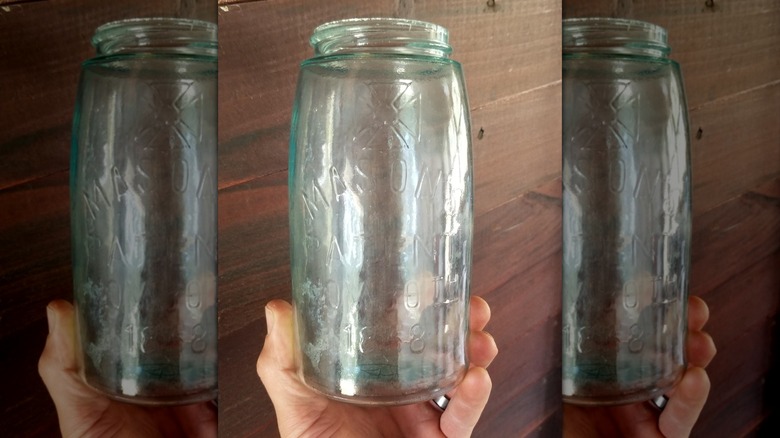
Clear is a common color for the 1858 Hero Cross Mason Jar, hence the lower price point of around $40 seen in multiple listings. Meanwhile, amber jars go for around $270 and up. Cornflower blue, olive yellow, and citron are a few of the colors to hunt for if you're looking to resell and want something that may sell for more than $300. There was even a quite rare black glass jar that sold for almost $18,000 at auction, per North American Glass. Not only was the color unique, but its original condition was quite impressively preserved, resulting in its high sale price. So, take note of the condition of the jar at the store to gauge its possible resale value.
If you understand the appeal of antiques, you understand why looking for these jars is like a treasure hunt. However, they're not recommended for food use, as vintage jar lids may contain lead, which can potentially leach into your food. It's also the reason you may wish to avoid vintage serveware from thrift stores. However, all is not lost if you're able to find ways to display your valuable jar in your kitchen, perhaps as a vase or container for potpourri — and a piece of history all in one. For some, it might just be an ordinary glass jar, but give it a second look, learn more about it, and you might find the price tag all the more worth it.