

The Overlooked Vegetable That Packs More Fiber Than Peas, Broccoli, And Squash
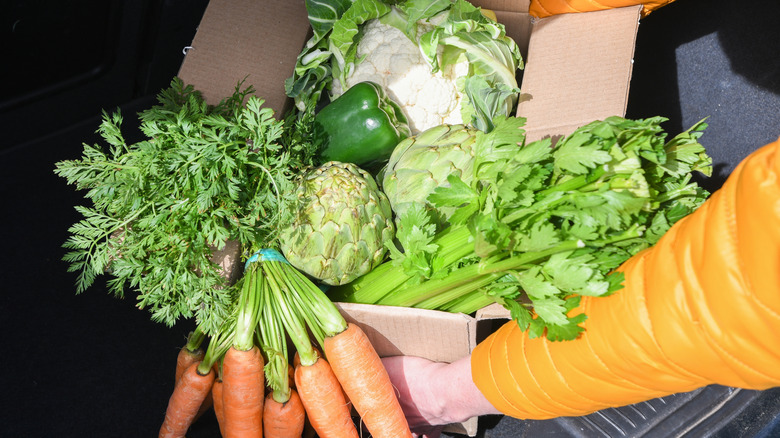
In recent years, protein has been the big food trend with millennials and Gen Z, but fiber now seems to take center stage. Americans routinely don't get enough of it, and it's essential for digestive health. "Fiber-maxxing" is evidently a good thing, and one vegetable that can help you with it is the artichoke. A medium artichoke will give you around 6 or 7 grams, and a large one can go up to 9 grams. That means it fares better than some commonly touted high-fiber veggies like green peas (4.4 grams per half-cup), broccoli (3 grams per half-cup), and winter squash (3 grams per half-cup).
Nutritionally, artichokes also have other perks: You'll also get a decent 3.5 grams of protein from a medium one, alongside a good hit of folate (which helps produce red blood cells), potassium (for regulating blood pressure), and vitamin C. The fiber in artichokes is soluble fiber, which is useful for slowing down cholesterol absorption and helping steady your blood sugar. There's also inulin, a prebiotic fiber that helps keep your gut microbiome balanced.
How to prepare this fiber-rich vegetable
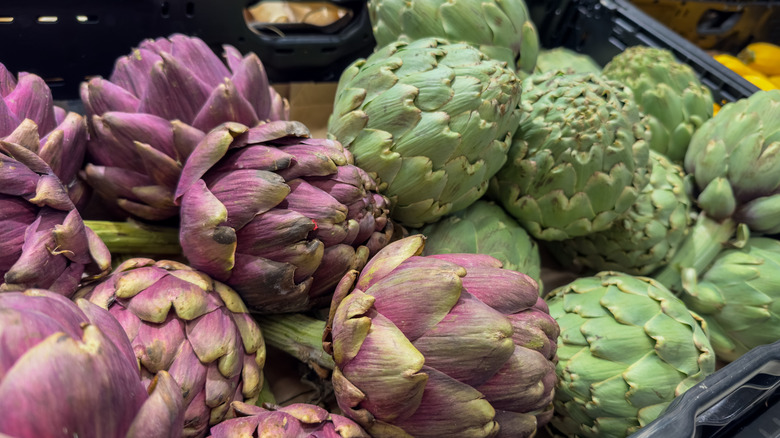
The only catch is that artichokes can be a little finicky to work with. You need to trim their stems and slice off the thorny top section. Don't start preparing artichokes too early before cooking, as the surfaces will brown if they're exposed to the air. Once the trimming is done, your options are broad: Steaming is a go-to method for artichokes, and then serving them with melted butter or a vinaigrette for dipping. Roasting or grilling requires you to slice the artichoke in half and scoop out the fuzzy "choke" in the middle.
For a fuller meal, stuffed artichokes are one option. Pack the leaves with garlic, parmesan, and breadcrumbs, then braise it all in a white wine sauce until the artichoke is tender. If wrangling full artichokes is too much for you, canned or jarred artichoke hearts will give you most of the nutritional benefits with less work. You can fold them into a pasta or grain bowl, or mash them up with olive oil and garlic, and spread them on toasted baguette slices for a twist on bruschetta.
Really, they're pretty flexible and can be worked into all sorts of recipes. Add them to a tuna melt, fold them into a frittata, or make a cheesy gratin or pasta bake with spinach and plenty of cheese. You can throw them into salads or sandwiches, where they can even replace your main proteins.