

Not Potatoes, Not Cauliflower: Mash This Earthy Root Vegetable Instead
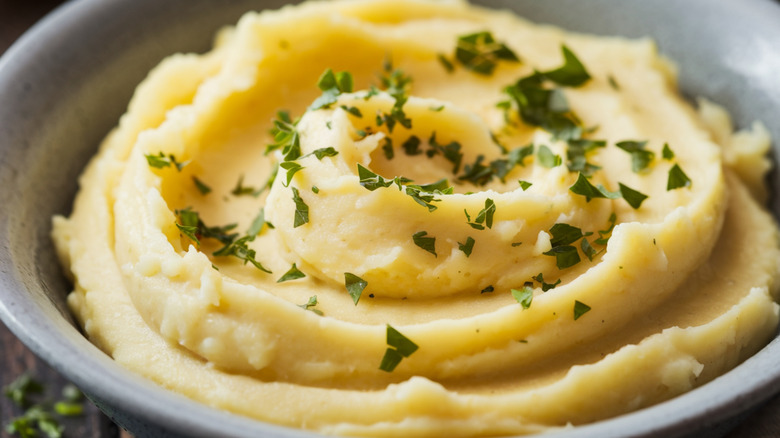
No one can deny that creamy cauliflower mash or super bacony mashed potatoes are delicious paired with everything from fried catfish and barbecued chicken thighs to a beautiful medium-rare steak. But switching up your traditional mash is also a fantastic way to explore other vegetables. In particular, rutabagas are a root veggie from the cabbage family that are high in potassium and packed with an alphabet of vitamins. On top of that, they have an earthy, bittersweet flavor that pairs beautifully with an array of seasonings. Even if you keep it simple with salt and pepper, rutabaga may become your new favorite mashed root vegetable.
While rutabagas (which aren't the same as turnips) can mash up velvety smooth, they'll always be less dense and more moist than potatoes, so don't depend on this being an exact spud substitute. Instead, you'll want to lean into the differences in their texture and flavor to create a side dish that's distinctly different from smashed russets, or even their fellow brassica, cauliflower. The basics are the same — peel, dice, boil, smash — and you'll also want to add olive oil or butter to the mix, along with good old salt and pepper.
However, you'll want to stay away from cream or milk, as that can make your rutabagas watery. Instead, focus on getting them well-drained and dry before mashing with the fat of your choice. But before you start mashing, there are a few things you should know about preparing this hearty root vegetable.
Making mashed rutabaga a luxury side dish
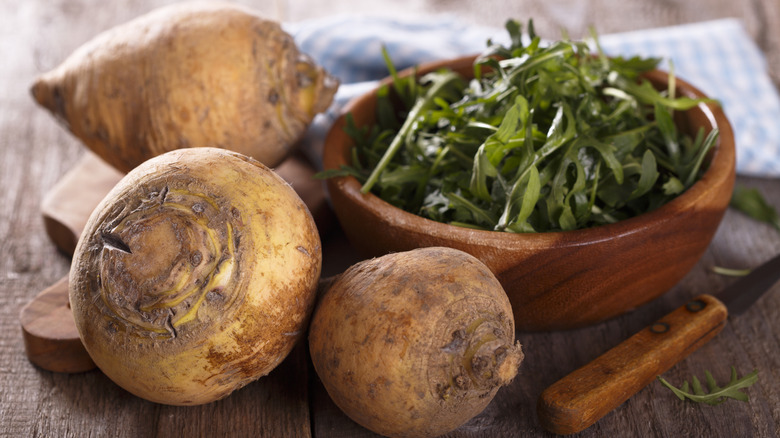
Among the common mistakes to avoid when preparing vegetables is cooking rutabagas with the skin on. These root veggies have a fibrous outer layer that's often coated in wax to preserve freshness in your grocery store's produce section. To peel this away, you'll need a very sharp instrument. Some cooks have success with veggie peelers (choose metal over ceramic or plastic), though many insist the best tool is a well-honed paring knife.
Either way, cut long strips vertically around the outside of the rutabaga until the pale inner flesh is revealed. You may have to stop every so often to carefully remove the wax from your peeler or knife. The easiest way to do this is to run it under hot water and dry with a paper towel. Once the rutabaga is fully peeled, you're free to cut it into cubes and toss into cold water to start the boil and mash process. After draining the fork-tender cubes, let them hang out in the hot pot for a few minutes before mashing to steam away as much excess moisture as possible.
Now comes the fun part: seasoning. Rutabagas have a beautifully earthy taste that pairs well with fried sage, rosemary, and caramelized onions, but are also delicious with a dab of agave nectar and cayenne pepper. You can also lean into their natural sweetness with a drizzle of hot honey, a pinch of nutmeg, or a light sprinkling of cinnamon. Or for something a little different, supplement them with stewed apples and drizzle on the maple syrup with a dusting of chai masala, which is especially delicious served with pork.