

Skip The Deli Counter — How To Make The Best Reuben Sandwich
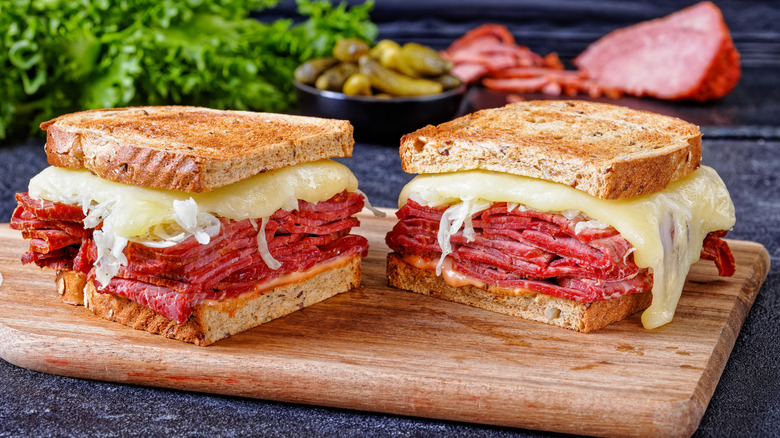
The Reuben is one of the most iconic sandwiches of all time. It's tangy, rich, meaty, cheesy, and sharp all at once. There's some history behind this sandwich, too. You may have thought it was a New York sandwich, but the Reuben is actually Nebraska's most iconic sandwich export. You'd also be forgiven for thinking it's a sandwich you can only enjoy after a trip to the deli counter, but truthfully, there are just a few key moves standing between you and the best deli-worthy Reuben sandwich made in your own home.
You can't just grab the first packet of sliced beef you spot at the grocery store and throw it into bread, but follow this process properly and you might be surprised with what you get. A Reuben is a combination of corned beef (or pastrami if you prefer), Swiss cheese, sauerkraut, and Russian dressing, all stacked between slices of rye bread. At its core, it's a sandwich built on contrasts, a technique that plays a big role in creating flavor balance, like many instruments played at once in an orchestra.
To assemble the perfect Reuben, start by buttering your bread, then spread Russian dressing across the non-buttered side of each slice. Next, layer on the corned beef on one slice, followed by the Swiss cheese, then some well-drained sauerkraut, and finally top it all with the second slice of bread, dressing-side down. Grill until it's golden and crisp, and serve with a pickle on the side.
Choose your fillings with consideration
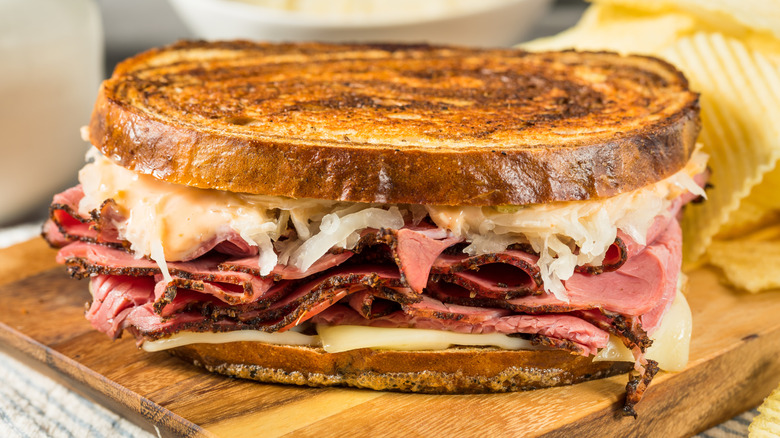
Before we start building out our Reuben, we need to make sure we have each component right. Starting with the bread, traditionally, Reubens are made on rye, which has an earthy, sturdy structure so it can hold its own against a heavily filled sandwich. A classic rye, or even a marbled rye, both work, but the quality of the bread matters. A bakery-fresh loaf always yields better results than a pre-sliced supermarket one.
The real star of the show is the beef, so don't skimp on quality. Choose a good-quality packet with thin, even slices, and check the ingredients to avoid heavily processed luncheon meat. For the cheese, traditionally, you reach for Swiss. Emmental has a mild, nutty flavor that doesn't overpower the richness of the meat, plus it melts well. Gruyère also works, although may be a little richer and more complex, which is where the sauerkraut comes in.
With its long, winding history, sauerkraut brings much needed acidity at this stage of the sandwich build. It cuts through the richness of the beef and the cheese and brings some lovely crisp and crunch to otherwise soft textures. However, excess liquid is the enemy of a crisp sandwich. It's key to drain the sauerkraut thoroughly before you add it. Finally, the Russian dressing ties it all together by bringing in a little creamy tang and spice.